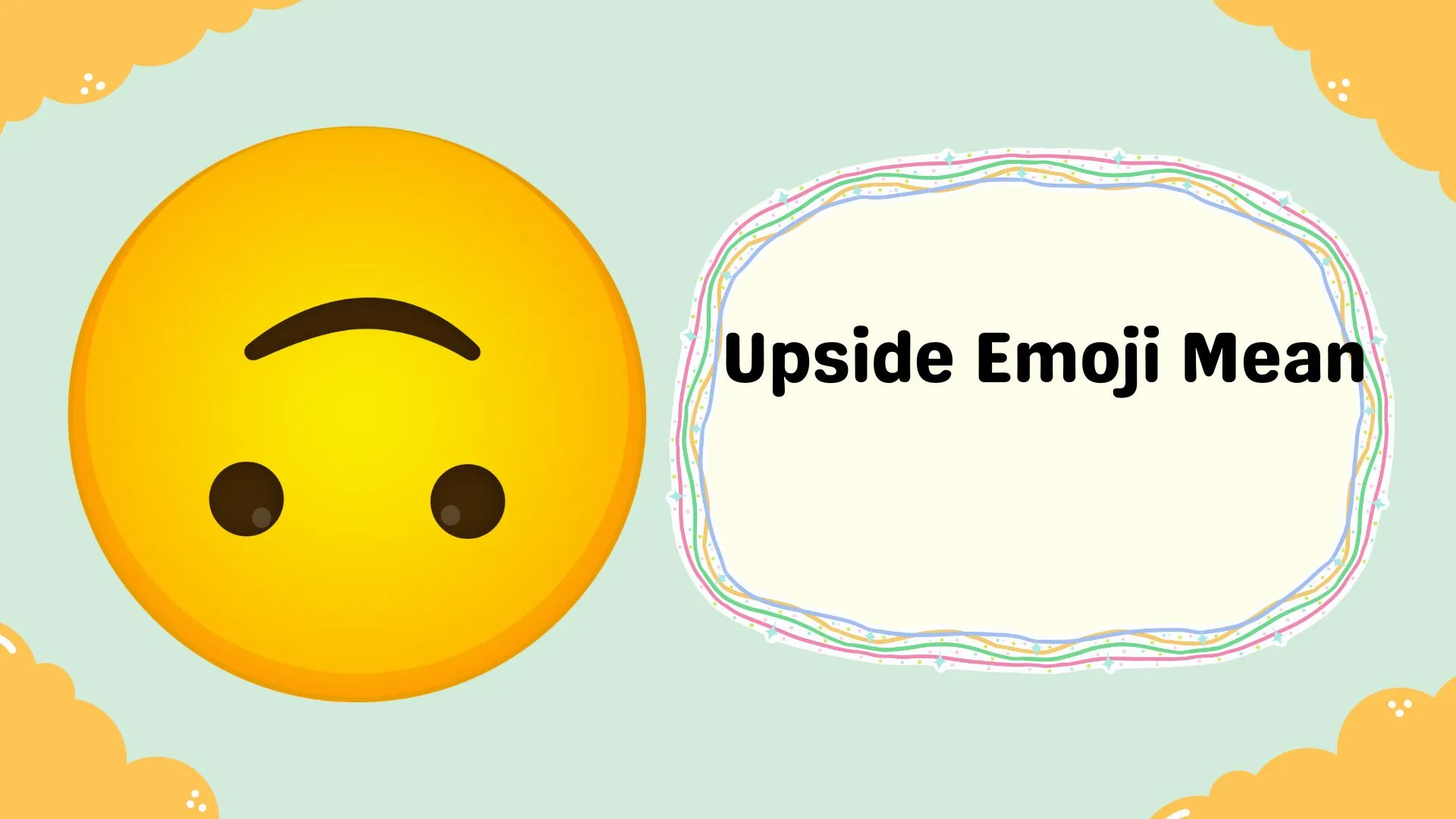
Have you ever received an upside emoji and wondered what the sender was actually trying to say? 🤔 The Upside Emoji Meaning can be surprisingly different depending on the conversation, tone, and relationship between the people using it.
Sometimes, an upside-down emoji can express humor, sarcasm, awkwardness, confusion, or a playful reaction when ordinary words simply do not feel enough.
On social media and messaging apps, emojis often carry hidden emotions, making them an important part of modern online communication.
Quick Answer
Many people see the upside-down emoji 🙃 in dreams as a sign of mixed feelings, hidden sarcasm, or a need to look at a situation from a different angle. Some dream experts suggest it reflects playful irony, emotional flip-flops, or the feeling that things are not quite as they seem. The meaning often depends on how the emoji appeared and how you felt about it. Dream interpretation varies depending on personal experiences.
Table of Contents
- Upside Emoji Mean?
- Spiritual Meaning
- Biblical Meaning
- Psychological Meaning
- Emotional Meaning
- Positive Meanings
- Negative Meanings
- Common Dream Scenarios
- Dream Meaning by Color
- Dream Meaning by Location
- Cultural Interpretations
- Is This Dream Good or Bad?
- What Should You Do After Having This Dream?
- Comparison Table
- FAQs
- Final Thoughts
What Does Upside Emoji Mean?
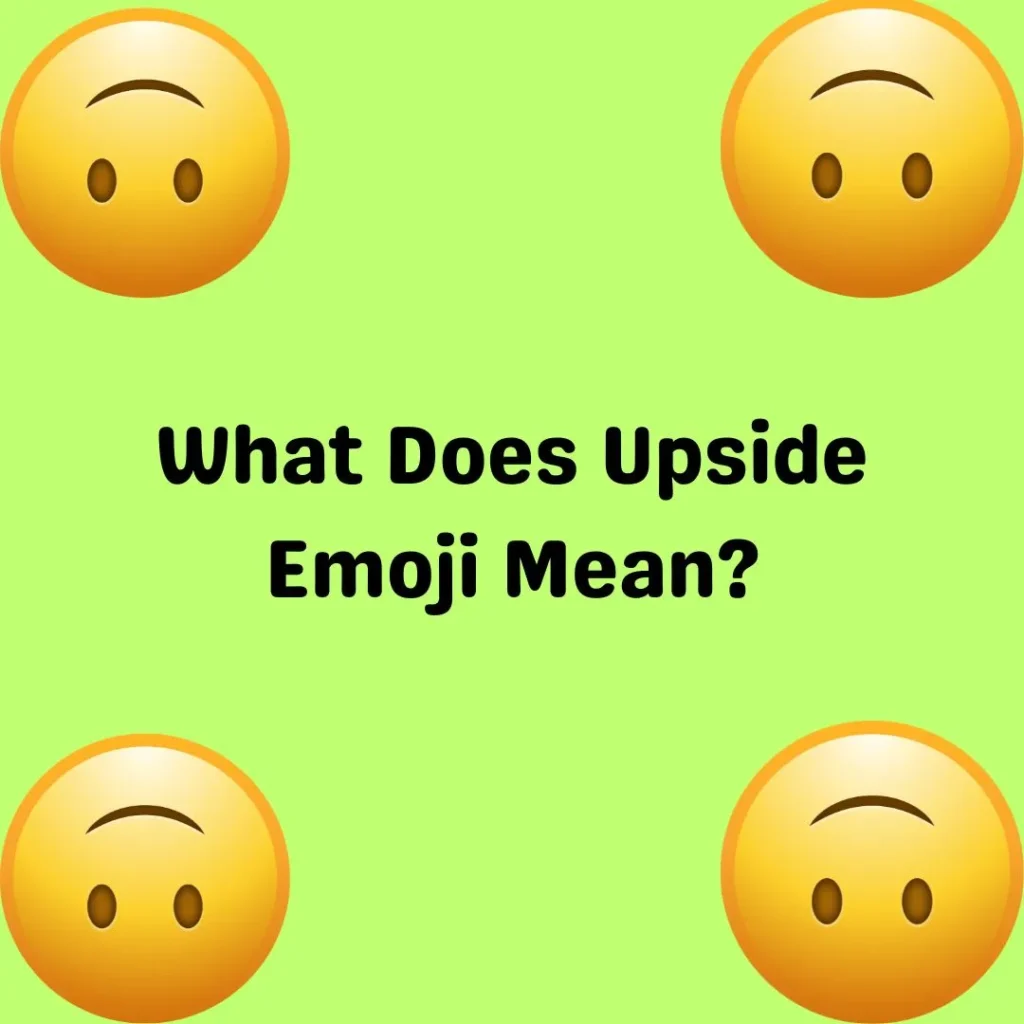
The upside-down face emoji 🙃 usually shows a smile turned the wrong way. In waking life people use it for sarcasm, silliness, irony, or the idea that everything is “fine” when it might not be. When this image appears in a dream, many believe it carries similar layers of meaning.
Symbolically, the upside-down emoji can point to a reversal of perspective. Something in your life may feel flipped. What looked good on the surface might hide something else underneath. Emotionally it can reflect a gap between how you feel inside and how you show yourself to others. Practically, the dream may nudge you to question assumptions or to notice where you are using humor as a shield.
Some dream experts suggest the upside-down face highlights situations that feel slightly off-balance. You might be joking about something serious, or you might be serious about something others treat lightly. The emoji itself is light and digital, so the dream often stays playful even when the message underneath is deeper. Dream interpretation varies depending on personal experiences, so the details of your dream matter more than any single fixed meaning.
Spiritual Meaning
From a spiritual view, the upside-down emoji can symbolize the need to turn a situation around or to see the sacred in the ordinary and the silly. Many spiritual traditions talk about looking at life from a fresh angle. The flipped face can represent that invitation.
Some people link upside-down imagery to the idea of divine humor or the universe gently teasing us into greater awareness. The emoji’s playful nature may point to spiritual lightness, learning not to take every challenge with heavy seriousness. In certain modern spiritual circles, digital symbols that appear in dreams are seen as messages from the subconscious or higher self asking for honesty beneath the smile.
According to traditional dream symbolism in some contemporary interpretations, reversed faces can also suggest that spiritual energy is flowing in unexpected ways. What feels inverted may actually be aligning you with a new truth. Still, spiritual meanings remain personal. One person may feel the dream as a gentle nudge toward authenticity; another may sense it as a call to release forced positivity.
Biblical Meaning
There is no direct biblical reference to emojis, of course. The Bible was written long before digital faces existed. However, the broader idea of upside-down or reversed things does appear in Scripture in symbolic ways.
In some biblical stories, God turns situations upside down, exalting the humble and bringing down the proud. The first become last, and the last become first. A dream of an upside-down face could, for some readers, echo that theme of reversal and divine reordering. It might gently ask whether pride, pretense, or surface smiles need to be examined.
At the same time, the playful emoji does not map cleanly onto biblical imagery of judgment or prophecy. Most dream interpreters who work with Christian frameworks would treat this symbol cautiously and focus more on the dreamer’s own heart posture than on forcing a scriptural parallel. If the dream left you feeling convicted about honesty or humility, that personal response carries more weight than any invented biblical link. There is no strong traditional biblical association with this modern symbol, and it is better to admit that than to stretch the text.
Psychological Meaning
Modern psychology often views dreams as the mind’s way of processing daily experiences, unresolved feelings, and social interactions. The upside-down emoji 🙃 is a social signal. When it shows up in a dream, it may reflect how you manage social masks.
Psychologists who study digital life note that people use the upside-down face to soften criticism, express mild frustration, or signal that a statement should not be taken too seriously. Dreaming of it can point to the same habits in waking life. You might be using humor to avoid difficult conversations. You might feel that others are not taking your concerns seriously. Or you might be the one presenting a cheerful face while feeling something else inside.
The dream can also touch on cognitive dissonance, the uncomfortable feeling that arises when your inner state and outer expression do not match. Stress, social anxiety, or the pressure to stay “positive” online and offline can feed these dreams. Subconscious thoughts about authenticity, people-pleasing, or the fear of being misunderstood often surface through light, modern symbols like emojis. Relationships may also play a role: perhaps a recent text exchange or social media interaction left you unsettled, and the dream is replaying that emotional tone.
Emotional Meaning
Emotionally, the upside-down emoji dream commonly reflects mixed or conflicting feelings. You may feel amused and uneasy at the same time. The smile that is flipped can mirror the experience of smiling through discomfort.
Many people report that this dream appears during periods when they feel the need to lighten a heavy mood, or when they sense sarcasm directed at them (or coming from them). It can also surface when you are tired of pretending everything is fine. The emotional tone of the dream itself matters greatly. A light, laughing dream may simply process the playful side of communication. A dream that feels awkward or forced may highlight emotional labor, the energy spent managing how others see you.
Underlying emotions often include mild frustration, ironic detachment, or a quiet longing for more genuine connection. The dream rarely carries pure fear or pure joy; it tends to sit in the middle, reflecting the complicated emotional reality of modern social life.
Positive Meanings
Many believe the upside-down emoji in a dream can carry encouraging messages when the overall feeling is light or curious.
- It may signal growing self-awareness about how you use humor and irony.
- It can point to creativity and the ability to reframe difficult situations with lightness.
- Some dream experts suggest it encourages flexibility, learning to look at problems from a new angle.
- The dream may reflect resilience: the capacity to smile even when things feel a bit topsy-turvy.
- It can celebrate playfulness and the refusal to take every setback with grim seriousness.
- In relationship contexts it sometimes hints at shared private jokes and easy rapport.
- It may mark a period of emotional growth where you become more honest about mixed feelings instead of forcing a single positive narrative.
These positive readings grow stronger when the dream leaves you feeling thoughtful rather than drained.
Negative Meanings
On the other side, the same symbol can carry cautionary notes.
- It may highlight emotional hiding, smiling on the outside while struggling inside.
- Some interpretations link it to passive-aggressive communication or unresolved irritation expressed through sarcasm.
- The dream can surface feelings of being misunderstood or of having your seriousness dismissed.
- It sometimes reflects burnout from constantly managing your public image.
- Warning signs appear if the upside-down face feels mocking, cold, or isolating in the dream.
- It may point to situations where humor is being used to avoid necessary honesty.
- In some cases it signals mild cynicism or the sense that sincerity is hard to find.
Negative meanings tend to stand out when the dream feels uncomfortable or leaves a lingering sense of unease upon waking.
Common Dream Scenarios
Dream of Seeing the Upside Emoji
Simply noticing the 🙃 floating in front of you or appearing on a screen is one of the most common versions. Many believe this reflects recent digital interactions that left an emotional residue. The dream may be processing a text, a comment, or a conversation that mixed humor with something more serious. Interpretation is often neutral to mildly positive if the emoji felt friendly, and more cautionary if it felt dismissive. The key is how you felt while looking at it.
Dream of the Upside Emoji Talking to You
When the flipped face speaks, the message itself becomes important. Some dream experts suggest the words carry a message your waking mind has been avoiding. The upside-down nature may mean the advice is delivered with irony or needs to be turned around to make sense. This scenario often feels personal and can lean positive when the message encourages honesty, or negative when it feels mocking. Pay attention to both the words and the tone.
Dream of Sending the Upside Emoji
Dreaming that you are the one posting or texting the 🙃 can point to your own communication style. It may highlight moments when you choose irony over directness. According to traditional dream symbolism adapted to modern life, this can be a gentle prompt to check whether your humor is connecting people or creating distance. The meaning is generally neutral and invites self-reflection rather than judgment.
Dream of Many Upside Emojis
A flood of upside-down faces can feel overwhelming or humorous depending on the atmosphere. Many people link this to information overload or the sense that everyone around them is speaking in coded, ironic language. It can also reflect the feeling of being surrounded by mixed signals. Interpretation often leans slightly negative if the multiplicity creates confusion, and more playful if the dream feels like a light-hearted party of faces.
Dream of a Giant Upside Emoji
An oversized 🙃 dominating the dream landscape tends to amplify the emotional weight of the symbol. Some dream experts suggest it represents a situation that has grown larger than it should, perhaps a small sarcasm that turned into a bigger misunderstanding. The scale can make the dream feel more urgent. Meaning is usually neutral to cautionary and asks you to notice where something small has become disproportionately important in your mind.
Dream of an Angry or Distorted Upside Emoji
When the upside-down face looks irritated, cracked, or unfriendly, the dream often taps into feelings of hidden tension. The usual playful symbol has turned sharp. This scenario commonly reflects unspoken frustration or the sense that someone’s “joke” carried a real edge. Interpretation leans negative and may encourage honest conversation in waking life rather than continued surface politeness.
Dream of Transforming into the Upside Emoji
Becoming the emoji yourself is a vivid and personal image. Many believe it speaks to identity and the masks we wear. You may be exploring how much of your social self feels flipped or performed. This dream can feel liberating if the transformation is chosen, or unsettling if it happens against your will. Overall tone is often neutral with strong potential for self-insight.
Dream Meaning by Color
Although the classic upside-down emoji is yellow, dreams sometimes tint it differently.
- A bright golden or yellow version usually keeps the standard meanings of irony and playfulness.
- A white upside-down face can feel cleaner or more innocent, sometimes pointing to pure silliness rather than sarcasm.
- A black or dark version may deepen the sense of hidden feelings or emotional shadow.
- A red-tinted emoji can intensify frustration or passionate mixed feelings.
- A blue version sometimes softens the energy into thoughtful or slightly melancholic irony.
- Green tones may link the symbol to growth, envy, or the need for emotional balance.
Color shifts are less common but useful when they appear, because they add an extra layer of emotional coloring to the core symbol.
Dream Meaning by Location
Where the upside-down emoji appears can change the flavor of the dream.
- In your house it often relates to private feelings and family or close relationships.
- Outside or in public spaces it may touch on social image and how you present yourself to the wider world.
- On a phone or computer screen it stays close to digital communication and recent online interactions.
- In water the symbol can take on emotional fluidity, feelings that are hard to pin down.
- At work it frequently points to professional relationships, office humor, or the pressure to stay positive on the job.
- In the sky or floating freely it can feel more philosophical, inviting a broader perspective on life’s reversals.
Location helps ground the abstract emoji in the concrete areas of your life that need attention.
Cultural Interpretations
Different cultural lenses shape how people read modern dream symbols.
In Western contexts the upside-down emoji is widely understood as sarcasm or playful irony, so dreams often carry those everyday associations. Online culture strongly influences the reading.
In many Islamic dream traditions, faces and expressions are taken seriously as reflections of the heart. A reversed or unusual face might prompt reflection on sincerity and intention, though the digital emoji itself is a recent arrival and not part of classical texts.
Christian dream reflection, as noted earlier, tends to focus more on the dreamer’s inner honesty than on the symbol’s novelty.
In some East Asian digital cultures, emojis and stickers carry rich layers of social nuance. An upside-down face might be read as a polite way of softening disagreement, so the dream could highlight relational harmony or the cost of keeping that harmony.
Hindu and broader South Asian perspectives sometimes view dreams as messages from the deeper self or from deities. A flipped face could be seen as an invitation to reverse one’s usual viewpoint and look for spiritual humor or detachment.
Native and indigenous traditions vary widely, but many emphasize the importance of balance and the teaching that comes from reversed images. The modern emoji would be interpreted through the dreamer’s own cultural framework rather than forced into older symbols.
Across cultures the consistent thread is that the dream invites attention to authenticity and perspective.
Is This Dream Good or Bad?
The upside-down emoji dream is rarely purely good or purely bad. Its value lies in the invitation it offers. When the dream feels light and curious, it can be a helpful reminder to stay flexible and honest. When it feels awkward or heavy, it may be pointing to places where surface smiles are costing you emotional energy.
Most people find that the dream is more useful than frightening. It does not usually signal catastrophe. Instead it acts like a mirror held at a slight angle, showing you something you already half-know. The “goodness” or “badness” depends far more on your response than on the image itself. Reflecting on the dream with curiosity almost always yields more benefit than worry.
What Should You Do After Having This Dream?
Start by writing down everything you remember, colors, feelings, other people or objects present, and how the emoji behaved. Details fade quickly, and they matter.
Next, notice any recent conversations or online exchanges that involved irony, sarcasm, or the phrase “I’m fine.” The dream may be replaying emotional leftovers from those moments.
Ask yourself gentle questions: Where am I smiling when I do not fully mean it? Where might humor be helping or hindering real connection? Is there a situation I need to look at from a completely different angle?
If the dream left you uneasy, consider one small act of greater honesty in waking life, perhaps a clearer conversation or a decision to drop a forced cheerful tone. If the dream felt playful, you might simply enjoy the reminder that not everything has to be heavy.
Finally, give the dream a few days. Sometimes the meaning becomes clearer after the immediate emotion settles. Treat the upside-down face as a friendly, slightly mischievous messenger rather than a strict judge.
Comparison Table
| Positive Symbolism | Negative Symbolism |
| Fresh perspective | Hidden frustration |
| Playful resilience | Emotional masking |
| Creative reframing | Avoidance through sarcasm |
| Growing self-awareness | Feeling misunderstood |
| Lightness in difficulty | Burnout from forced positivity |
| Authentic mixed feelings | Passiveive humor |
| Flexibility and humor | Cynicism or detachment |
FAQs
What does it mean if the upside-down emoji keeps appearing in my dreams?
Repeated appearances often signal an ongoing theme in your emotional or social life. Many believe the mind is highlighting a pattern of mixed signals or the need for more direct communication. Pay attention to what is happening in the days surrounding the dreams for clearer personal insight.
Can dreaming of the upside emoji predict the future?
Most dream researchers and psychologists say no. Dreams more commonly process current feelings and recent experiences than forecast events. The upside-down face is best understood as a reflection of present inner states rather than a prophetic sign.
Is the upside-down emoji dream related to social media use?
It frequently is. Because the symbol is so common in digital communication, dreams often recycle the emotional tone of recent texts, comments, or posts. Reducing screen time for a few days sometimes changes the frequency of these dreams.
Why did the emoji feel sad even though it was smiling upside down?
The flipped smile can carry emotional contradiction. Feeling sadness beneath the image is common when the dream touches on the gap between outer expression and inner experience. This contrast itself is often the core message.
Should I be worried if the upside-down face looked menacing?
A menacing version usually points to tension or unspoken irritation rather than literal danger. It is worth examining recent interactions where humor may have carried a sharp edge. Addressing the underlying feeling tends to ease the dream’s intensity.
How is this different from dreaming of a regular smiley face?
A regular smile often feels straightforward and warm. The upside-down version introduces irony, reversal, or complexity. That small tilt changes the emotional flavor and usually invites deeper self-reflection about authenticity.
Final Thoughts
Dreams of the upside-down emoji 🙃 invite us to notice the small flips and mixed feelings that color everyday life. They remind us that communication is rarely pure and that our inner world often holds more than one emotion at once. Whether the dream felt playful, puzzling, or slightly uncomfortable, it offers a chance to look at how you show up, with others and with yourself.
No single interpretation fits every person. Your own memories, relationships, and current stresses shape the meaning far more than any general guide. Take what resonates, leave the rest, and stay curious about the quiet messages your mind sends while you sleep. In the end, the most useful response is gentle self-awareness and the freedom to smile, right side up or upside down, when it feels true.

I am James Wilson, a passionate writer dedicated to creating informative, engaging, and valuable content for readers around the world. I am focused on sharing well-researched ideas, practical insights, and helpful information that inspires learning and growth. With a strong interest in writing and exploring different topics, I aim to provide content that is clear, meaningful, and easy to understand.