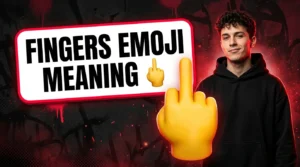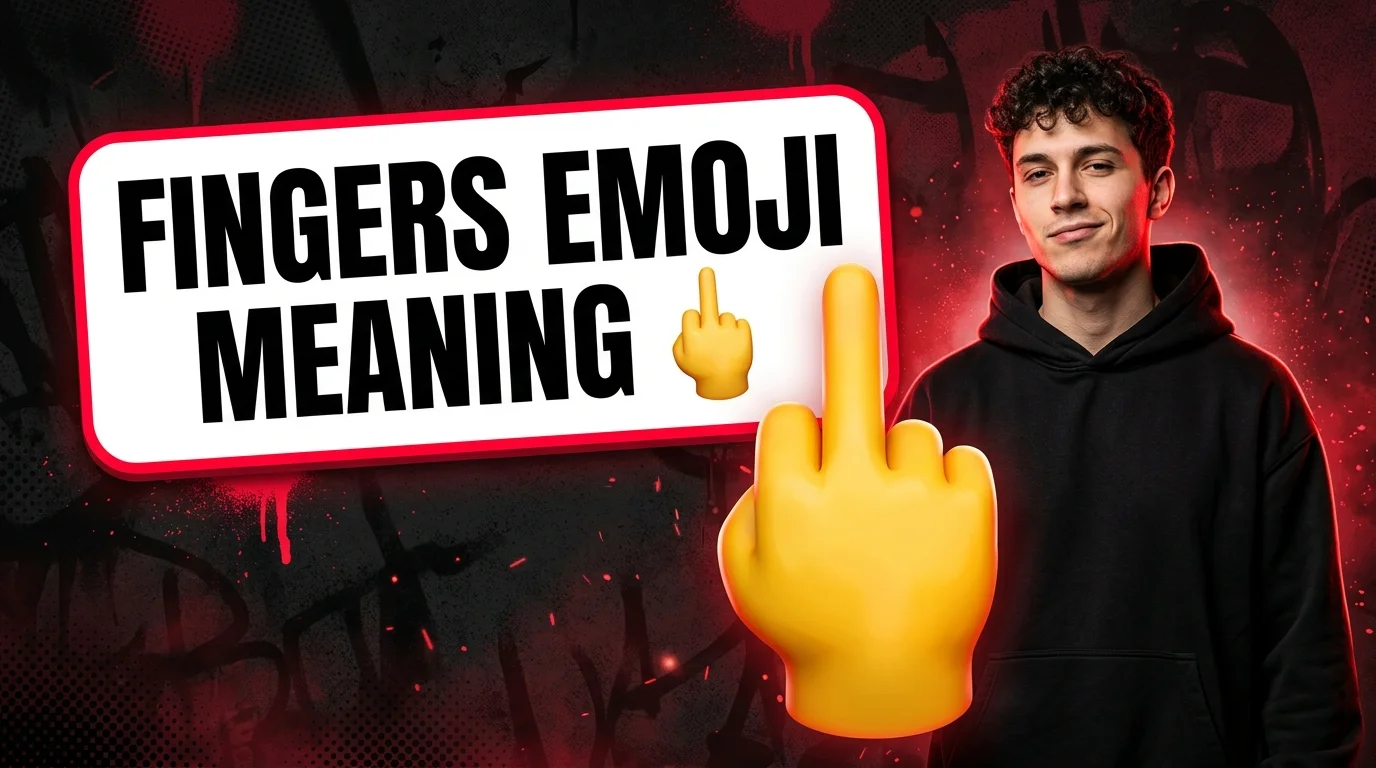
Have you ever received the 🖕 emoji in a message and wondered whether someone was angry, joking, or trying to insult you? The Fingers Emoji Meaning 🖕 usually refers to the middle finger gesture, which expresses anger, disrespect, frustration, or defiance. People often use it in text messages, social media comments, and online conversations to show that they are annoyed or do not care about someone’s opinion.
However, the meaning can change depending on the conversation and the relationship between the people involved. Close friends might use this emoji jokingly, while others may consider it offensive or aggressive. It can also express sarcasm, rebellion, or a strong reaction to an irritating situation.
If someone sends you the 🖕 emoji, look at the surrounding messages before deciding what they mean. In this guide, you’ll discover what the middle finger emoji means in texting, on Snapchat, and across social media, along with examples of how people use it in different situations.
Quick Answer 🖕
The 🖕 emoji usually represents the middle finger. People commonly use it to express anger, frustration, disrespect, defiance, rejection, or annoyance.
However, the meaning depends heavily on context.
| Situation | Possible meaning of 🖕 |
| Serious argument | Anger or insult |
| Close friendship | Playful teasing |
| Joke | Sarcasm or humor |
| Online argument | Defiance or disrespect |
| Romantic relationship | Playful annoyance or anger |
| From a stranger | Usually rude or confrontational |
| Between close friends | May be harmless banter |
The safest interpretation is to look at the whole conversation, rather than assuming the emoji has only one meaning.
What Does the 🖕 Fingers Emoji Mean?
The 🖕 emoji shows a hand with the middle finger raised. In everyday communication, this gesture is widely understood as an offensive or rude hand signal.
When someone sends it in a text, they may be communicating a feeling that would normally be expressed through a physical gesture.
For example:
“You forgot my fries again 🖕”
This could be genuinely angry, but between close friends it might be a funny way of saying, “Seriously? You did it again?”
On the other hand:
“Leave me alone 🖕”
has a much more aggressive tone.
The words surrounding the emoji matter just as much as the emoji itself.
What Is the Middle Finger Emoji Called?
The 🖕 emoji is commonly called the:
- Middle finger emoji
- Flipping the bird emoji
- Raised middle finger emoji
- Rude finger emoji
- Finger emoji
- Fingers emoji
Its official name is Reversed Hand With Middle Finger Extended.
People don’t normally use the formal name in everyday conversations. Most users simply call it the middle finger emoji or finger emoji.
Fingers Emoji Meaning in Texting
In texting, 🖕 usually adds a strong emotional tone to a message.
Unlike a smiling face or heart, it can make a sentence sound more aggressive, rebellious, or sarcastic. Sometimes the emoji replaces an entire phrase.
For example:
“No way 🖕”
The sender may be saying, “Absolutely not.”
Another example:
“You ate my pizza again 🖕😂”
Here, the laughing emoji changes the tone. The sender is probably teasing rather than seriously attacking the other person.
Common texting meanings
The 🖕 emoji can communicate:
- “I’m annoyed.”
- “Leave me alone.”
- “No.”
- “Forget you.”
- “I disagree.”
- “You’re annoying.”
- “I’m joking with you.”
- “I’m not taking this seriously.”
- “I’m angry.”
- “I’m being sarcastic.”
The same emoji can therefore carry very different emotions.
🖕 Meaning on Social Media
On social media, the 🖕 emoji often appears in comments, captions, memes, messages, and reaction posts.
People may use it to show frustration with a situation. Others use it for humor, rebellion, or a deliberately rude attitude.
For example, someone might post:
“Monday morning again 🖕”
They probably aren’t directing the gesture at a specific person. Instead, they’re joking about how much they dislike Mondays.
A person might also caption a photo:
“Doing my own thing 🖕”
In that context, the emoji can suggest defiance or independence.
Social media also makes tone harder to judge because you can’t hear the person’s voice or see their facial expression. That’s why the surrounding caption and conversation are important.
🖕 Meaning From a Girl
If a girl sends you 🖕, don’t immediately assume that she’s angry with you.
Her meaning depends on your relationship and the conversation.
If you’re close friends, she may use it as playful teasing.
For example:
You: “You’re always late.”
Her: “Shut up 🖕😂”
The combination of the words and laughing emoji can indicate playful banter.
But if you’re arguing and she sends:
“I’m done talking to you 🖕”
the emoji is much more likely to express anger, frustration, or rejection.
If a girl sends 🖕 jokingly
A girl may send the emoji when:
- You’re teasing her.
- She wants to tease you back.
- You made a silly comment.
- You’re having playful banter.
- She feels comfortable joking around with you.
If a girl sends 🖕 during an argument
The meaning can become much more serious.
It may communicate:
- “I’m angry.”
- “Stop.”
- “I don’t agree.”
- “Leave me alone.”
- “I’m frustrated with you.”
The relationship and tone matter more than gender.
🖕 Meaning From a Guy
A guy may use 🖕 in much the same way.
Among male friends, it can sometimes appear in casual joking or competitive conversations.
For example:
“I beat you again 🖕😂”
This could simply be friendly trash talk.
But:
“Don’t message me again 🖕”
is much more direct and hostile.
If a guy sends 🖕 after you make a joke, it may be playful. If he sends it during a serious disagreement, it may show genuine anger or disrespect.
Don’t interpret the emoji based only on the fact that it came from a guy. Look at his wording and the situation.
🖕 Meaning From a Crush
Getting 🖕 from a crush can be confusing because you may wonder whether there’s a hidden romantic meaning.
Usually, the emoji itself isn’t a clear sign of attraction. It is more often associated with teasing, sarcasm, annoyance, or anger.
For example:
You: “I know you secretly like me.”
Crush: “Keep dreaming 🖕😂”
This may be playful teasing.
Another example:
You: “Want to get coffee?”
Crush: “Nope 🖕”
That message is much more direct.
Don’t treat 🖕 alone as proof that your crush likes or dislikes you. Look at the larger pattern of communication.
🖕 Meaning From a Partner
Partners may use the middle finger emoji in both serious and playful situations.
Couples who regularly tease each other may use it almost like a humorous “You’re ridiculous” reaction.
For example:
“You stole the blanket again 🖕❤️”
The heart changes the emotional atmosphere. It can make the gesture feel more playful.
However, if a partner uses 🖕 during a serious disagreement, it may communicate anger or disrespect.
For example:
“I’m trying to talk to you seriously, and you’re laughing 🖕”
Here, the emoji likely adds frustration to the message.
Friendly Meaning of the 🖕 Emoji
Although 🖕 is traditionally an offensive gesture, close friends can give it a completely different tone.
Friend groups often develop their own communication style. A gesture that would be rude from a stranger can become a joke between people who know each other well.
For example:
“You seriously forgot my birthday? 🖕😂”
The sender may be pretending to be angry.
Another example:
“Good luck on your exam 🖕🤣”
This might be friendly teasing rather than an actual insult.
The key is shared context.
If you and the sender frequently joke this way, the emoji may not carry the same weight it would in a formal or unfamiliar conversation.
Romantic Meaning of 🖕
The 🖕 emoji isn’t normally considered a romantic emoji.
Unlike ❤️, 😘, 🥰, or 💕, it doesn’t directly communicate love or affection.
However, couples can give almost any emoji a personal meaning.
A partner might write:
“You’re impossible 🖕❤️”
The finger gesture may represent playful frustration while the heart makes the affection clear.
Therefore, the romantic meaning of 🖕 comes from the surrounding communication, not from the emoji itself.
Angry Meaning of 🖕
One of the most common interpretations of 🖕 is anger.
When someone feels irritated, insulted, or provoked, the emoji can serve as a digital version of raising the middle finger.
For example:
“You lied to me 🖕”
This is clearly more serious than:
“You ate my fries 🖕😂”
The absence or presence of humor markers can change the tone.
When the message contains angry words, repeated punctuation, or other hostile language, the emoji is more likely to be genuinely aggressive.
Playful Meaning of 🖕
Sometimes people use 🖕 because they want to sound cheeky rather than hostile.
This happens especially among friends, siblings, couples, and people who already have a teasing relationship.
For example:
“You’re so annoying 🖕🤣”
The laughing emoji signals that the sender may not mean the insult literally.
Another example:
“Fine, you win 🖕😂”
Here, the emoji can turn a simple statement into playful competition.
The same message from a stranger might feel completely different.
Sarcastic Meaning of 🖕
The 🖕 emoji can also be sarcastic.
Someone might use it to exaggerate their reaction for comedic effect.
For example:
“Oh great, another meeting 🖕”
The person may not be angry at anyone in particular. They’re simply showing that they’re unhappy about the situation.
Another example:
“Thanks for waking me up at 6 AM 🖕😂”
The sender may actually appreciate the person, but they’re joking about being disturbed.
Funny Meaning of the Fingers Emoji
The emoji can become funny when it appears in an unexpected situation.
For example:
“My alarm clock at 5 AM: ⏰
Me: 🖕”
Here, the emoji expresses exaggerated frustration.
Memes frequently use the gesture in a similar way. The humor comes from treating an ordinary inconvenience as if it were a serious enemy.
This is why the fingers emoji meaning isn’t always literal.
Negative Meaning of 🖕
The negative interpretations are generally easier to understand when the conversation is serious.
The emoji can suggest:
- Anger
- Disrespect
- Hostility
- Rejection
- Frustration
- Defiance
- Insult
- Contempt
- “Go away”
- “I don’t care”
For example:
“Don’t ever talk to me again 🖕”
This is clearly negative.
If you receive the emoji in a serious conversation, don’t automatically assume the sender is joking.
Positive or Lighthearted Meaning of 🖕
The emoji doesn’t have a traditionally positive meaning, but people can use it in lighthearted ways.
Its tone can become softer when combined with:
- 😂
- 🤣
- 😭
- ❤️
- 😭😂
- Friendly teasing
- An obvious joke
For example:
“You really thought you could beat me 🖕😂”
This is probably playful competition.
Still, the emoji itself remains a rude gesture. The positive or friendly feeling comes from the context around it.
What Does 🖕 Mean From a Friend?
When a friend sends 🖕, consider how you normally communicate.
If your friendship involves sarcasm and teasing, the emoji may simply be part of your normal banter.
For example:
Friend: “You owe me $5.”
You: “For what?”
Friend: “For listening to you complain all day 🖕😂”
That’s probably playful.
However, if your friend suddenly sends:
“I’m seriously disappointed in you 🖕”
the situation deserves more attention.
A sudden change in tone can be more meaningful than the emoji itself.
What Does 🖕 Mean From Someone You Don’t Know?
When a stranger sends 🖕, it’s generally safer to interpret it as a rude or hostile gesture.
You don’t have the shared relationship that would normally soften the meaning.
For example, if someone replies to your social media comment with:
“🖕”
they may simply be expressing disagreement or hostility.
You don’t need to assume a deeper meaning unless the conversation provides one.
What Does 🖕 Mean in WhatsApp?
On WhatsApp, the middle finger emoji can be used in private chats, group conversations, status updates, and replies.
Its interpretation follows the same general rules as texting.
A friend might send:
“You didn’t invite me 🖕😂”
while someone in an argument might send:
“I’m done with this conversation 🖕”
WhatsApp also makes it easy to combine emojis. Those combinations can significantly change the tone.
What Does 🖕 Mean on Snapchat?
On Snapchat, 🖕 may appear in snaps, captions, chats, or replies.
Snapchat conversations are often informal, so the emoji may be used for humor or teasing.
For example:
“You screenshotted my snap 🖕😂”
might be a joking complaint.
However, if someone sends only 🖕 after a disagreement, it may be intended as a direct insult.
Again, context matters.
What Does 🖕 Mean on Instagram?
On Instagram, users may put 🖕 in captions, comments, replies, or direct messages.
In a caption, it may communicate an attitude of defiance, rebellion, frustration, or independence.
For example:
“I don’t need anyone’s approval 🖕”
Here, it can emphasize the idea of ignoring criticism.
In a comment, however, the emoji may be directed at a particular person.
Fingers Emoji Meaning in Different Situations
The following comparison can help you understand how the same emoji changes depending on the situation.
| Context | Likely interpretation |
| Best friend sends it with 😂 | Playful teasing |
| Stranger sends it alone | Rude or hostile |
| Partner sends it with ❤️ | Playful annoyance |
| Crush sends it after a joke | Possible teasing |
| Argument with someone | Anger or disrespect |
| Meme caption | Humor or exaggerated frustration |
| Gaming chat | Trash talk or playful competition |
| Group chat | Often joking, depending on the group |
| Serious disagreement | Defiance or rejection |
| Casual conversation | May be humorous or sarcastic |
These are possibilities, not fixed rules.
How to Know if 🖕 Is a Joke
There are several clues that can help you understand whether someone is joking.
Look at the rest of the message first.
A message such as:
“You’re ridiculous 🖕😂”
is very different from:
“Don’t contact me again 🖕”
The first includes a clear humor signal. The second communicates a boundary or conflict.
Also consider your relationship.
If the person regularly jokes with you, playful use is more likely. If you barely know each other, be more cautious about assuming a friendly meaning.
How to Respond When Someone Sends 🖕
Your response should match the tone of the conversation.
If it’s clearly a joke, you can joke back.
“Right back at you 😂”
If a friend is teasing you:
“Love you too, idiot 😂”
If you’re unsure what they mean:
“Haha, are you actually mad?”
That gives them an opportunity to clarify.
If someone appears genuinely angry, avoid escalating the situation with another insult.
You could say:
“Okay, I can see you’re annoyed. Let’s talk about it.”
A calm response often works better than matching an aggressive tone.
How to Respond to 🖕 From a Friend
If your friend clearly uses the emoji jokingly, you can keep the response casual.
Examples include:
“😂 Whatever!”
“You wish!”
“Cry about it 😂”
“Same energy 🖕😂”
Only use equally rude humor if you know the person is comfortable with that style.
How to Respond to 🖕 From a Crush
If your crush sends 🖕 jokingly, you can respond with light teasing.
For example:
“Wow, rude 😂”
Or:
“That’s how you talk to me? 😭😂”
If you’re not sure whether they’re genuinely annoyed, don’t immediately turn the conversation into flirting.
Instead, you can say:
“Wait, are you joking or are you actually annoyed?”
Their answer will give you much better information than trying to decode the emoji alone.
How to Respond to 🖕 From a Partner
If your partner uses it playfully, a playful response may fit.
For example:
“Someone woke up dramatic today 😂”
If the conversation is serious, respond to the underlying issue rather than the emoji.
For example:
“I don’t want us to argue like this. Tell me what’s bothering you.”
The goal isn’t to win an emoji battle. It’s to understand the actual message.
Similar Finger Emojis and Their Meanings
The 🖕 emoji is not the only hand or finger emoji people use in digital communication.
Here are some related emojis that are easy to confuse.
🤞 Fingers Crossed
The 🤞 emoji usually represents hope, luck, wishing for a good outcome, or keeping your fingers crossed.
Example:
“I hope I get the job 🤞”
This is completely different from 🖕.
🫰 Finger Heart
The 🫰 emoji is often called the finger heart.
It can express affection, love, appreciation, or a cute gesture.
Example:
“Thank you for helping me 🫰”
Unlike 🖕, it generally has a warm or affectionate tone.
👉 Backhand Index Pointing Right
The 👉 emoji points toward something on the right.
People may use it to direct attention.
Example:
“The answer is right here 👉”
👈 Backhand Index Pointing Left
The 👈 emoji points toward the left.
It may be used for emphasis, jokes, or directing attention.
☝️ Index Pointing Up
The ☝️ emoji can mean “one,” “wait,” “one moment,” or emphasize an important point.
Example:
“One more thing ☝️”
👆 Backhand Index Pointing Up
The 👆 emoji points upward.
People often use it to direct attention toward something above it, such as a previous message or a link.
👇 Backhand Index Pointing Down
The 👇 emoji points downward.
It can draw attention to something below.
For example:
“Check the details below 👇”
These emojis demonstrate why the exact hand gesture matters. Not every finger emoji carries an offensive meaning.
Common Misunderstandings About the 🖕 Emoji
“🖕 Always Means Someone Is Angry”
Not necessarily.
A person can use it jokingly with a close friend or partner.
“🖕 Means Someone Hates You”
The emoji alone doesn’t prove hatred.
It can represent frustration, sarcasm, teasing, or a temporary reaction.
“If a Girl Sends 🖕, She Is Flirting”
There isn’t a universal romantic meaning.
If the conversation is playful, she may simply be teasing you. The emoji itself isn’t a reliable indicator of attraction.
“If a Guy Sends 🖕, He Is Serious”
Not always.
Guys may use it as playful banter with friends, just as girls may.
“The Emoji Has Only One Meaning”
This is probably the biggest misunderstanding.
Digital communication depends on context, relationship, tone, timing, and personal habits.
Why Context Matters So Much
Emojis don’t work exactly like dictionary words.
When someone says “fine,” for example, you might need to hear their voice to know whether they mean it sincerely or sarcastically. Emojis have a similar problem.
Consider these two messages:
“You’re so annoying 🖕😂”
and:
“You’re so annoying 🖕”
The first is more likely to be playful because of 😂.
The second can sound more aggressive.
Now consider:
“You won again 🖕❤️”
Between a couple or close friends, this could simply be affectionate teasing.
This is why you shouldn’t decode an emoji in isolation.
Does 🖕 Have a Flirty Meaning?
The 🖕 emoji isn’t inherently flirty.
However, flirting often involves teasing, sarcasm, and playful insults. As a result, someone may use the emoji during flirtatious banter.
For example:
“You’re trouble 🖕😂”
If the conversation already has obvious romantic energy, the gesture might become part of that playful dynamic.
Still, don’t treat the emoji as evidence of romantic interest by itself.
Can 🖕 Mean “No”?
Yes.
Sometimes the emoji acts as an exaggerated version of “no,” especially in casual conversations.
For example:
“Are you coming with us?”
“Nope 🖕😂”
Here, the sender may be jokingly refusing.
A similar use can appear when someone rejects an idea:
“You want me to wake up at 5 AM? 🖕”
The emoji emphasizes the refusal.
Can 🖕 Mean “Leave Me Alone”?
Yes.
When combined with words such as “go away,” “stop,” or “don’t message me,” it can reinforce a request for distance.
For example:
“Please stop texting me 🖕”
This should generally be taken more seriously than playful use among friends.
If someone clearly asks you to stop contacting them, respect that boundary rather than focusing only on what the emoji means.
Can 🖕 Be Used as a Joke?
Absolutely.
Among people who have an established joking relationship, the middle finger emoji can function as exaggerated mock anger.
For example:
“You ate the last cookie 🖕🤣”
The sender may be pretending to be furious.
The joke works because both people understand that the reaction is exaggerated.
Does Culture Affect the Meaning?
Yes.
Hand gestures can carry different social meanings across cultures and communities. Even when a gesture has a broadly recognized interpretation, the level of offensiveness can vary.
Online communication also creates its own norms. A group of friends may use 🖕 casually even though they understand that the gesture can be offensive in other situations.
That’s another reason to consider the people involved and the communication setting.
When You Should Avoid Using 🖕
Although the emoji can be funny in the right setting, it’s not suitable for every conversation.
Be careful when communicating with:
- Teachers
- Employers
- Customers
- Professional contacts
- Older relatives
- People you don’t know well
- Someone who is already upset
Even if you intend it as a joke, the other person may interpret it literally.
If you want to keep a message polite, choose a less aggressive emoji or simply explain what you mean with words.
Fingers Emoji Meaning: The Main Takeaway
The fingers emoji meaning usually refers to the 🖕 middle finger emoji, which represents a raised middle finger. Its common meanings include anger, annoyance, disrespect, rejection, defiance, sarcasm, and playful teasing.
However, the emoji doesn’t have one fixed emotional meaning in every conversation.
Between close friends, 🖕 can be harmless banter. Between romantic partners, it may express playful annoyance. During an argument, it can become a genuinely hostile gesture. From a stranger, it is usually safer to interpret it as rude unless the surrounding context suggests otherwise.
The most important thing is to read the whole message, not just the emoji. Pay attention to the words, other emojis, relationship, previous conversation, and the sender’s usual communication style.
Frequently Asked Questions About Fingers Emoji Meaning
What does the 🖕 emoji mean?
The 🖕 emoji represents the raised middle finger. It commonly expresses anger, annoyance, disrespect, rejection, defiance, or frustration. Close friends may also use it jokingly.
What does 🖕 mean from a girl?
From a girl, 🖕 can mean anything from playful teasing to genuine anger. The meaning depends on your relationship, her wording, and the situation. It isn’t automatically a sign of flirting or dislike.
What does 🖕 mean from a guy?
A guy may use 🖕 to express annoyance, rejection, sarcasm, or anger. Among friends, it can also be used as playful banter. Look at the surrounding conversation before deciding what he means.
Does 🖕 mean someone is angry?
It can mean anger, but not always. Friends and couples sometimes use the emoji humorously or sarcastically. Words, other emojis, and the relationship help determine the tone.
Does 🖕 have a romantic meaning?
The 🖕 emoji does not have an inherently romantic meaning. A couple may use it playfully during affectionate teasing, but the emoji alone does not indicate love or attraction.
What does 🖕 mean in texting?
In texting, 🖕 can mean “no,” “go away,” “I’m annoyed,” “forget it,” or “you’re annoying.” It can also be a humorous reaction among people who regularly tease each other.
Is the 🖕 emoji rude?
Yes, the middle finger is generally considered a rude or offensive gesture. However, close friends may use it casually or humorously when they share that communication style.
What is the difference between 🖕 and 🤞?
🖕 represents the middle finger and can communicate anger, disrespect, or playful defiance. 🤞 usually means hoping for luck, wishing for a good result, or “fingers crossed.” Their meanings are very different.
Conclusion
The fingers emoji meaning is most commonly connected with the 🖕 middle finger emoji. It can express anger, frustration, rejection, disrespect, defiance, or annoyance, but it can also become playful when used between close friends or partners.
There is no single interpretation that works for every message. A 🖕 followed by 😂 may feel completely different from a 🖕 sent during a serious argument.
When you’re trying to understand what someone means, consider the context, relationship, wording, other emojis, and usual communication style. Those clues will usually tell you much more than the emoji by itself.

I am William Parker, a passionate writer dedicated to creating informative, engaging, and meaningful content for readers around the world. I enjoy exploring different topics, sharing valuable insights, and presenting ideas in a simple and easy-to-understand way. I am committed to providing well-researched articles that help readers learn, grow, and discover new perspectives.