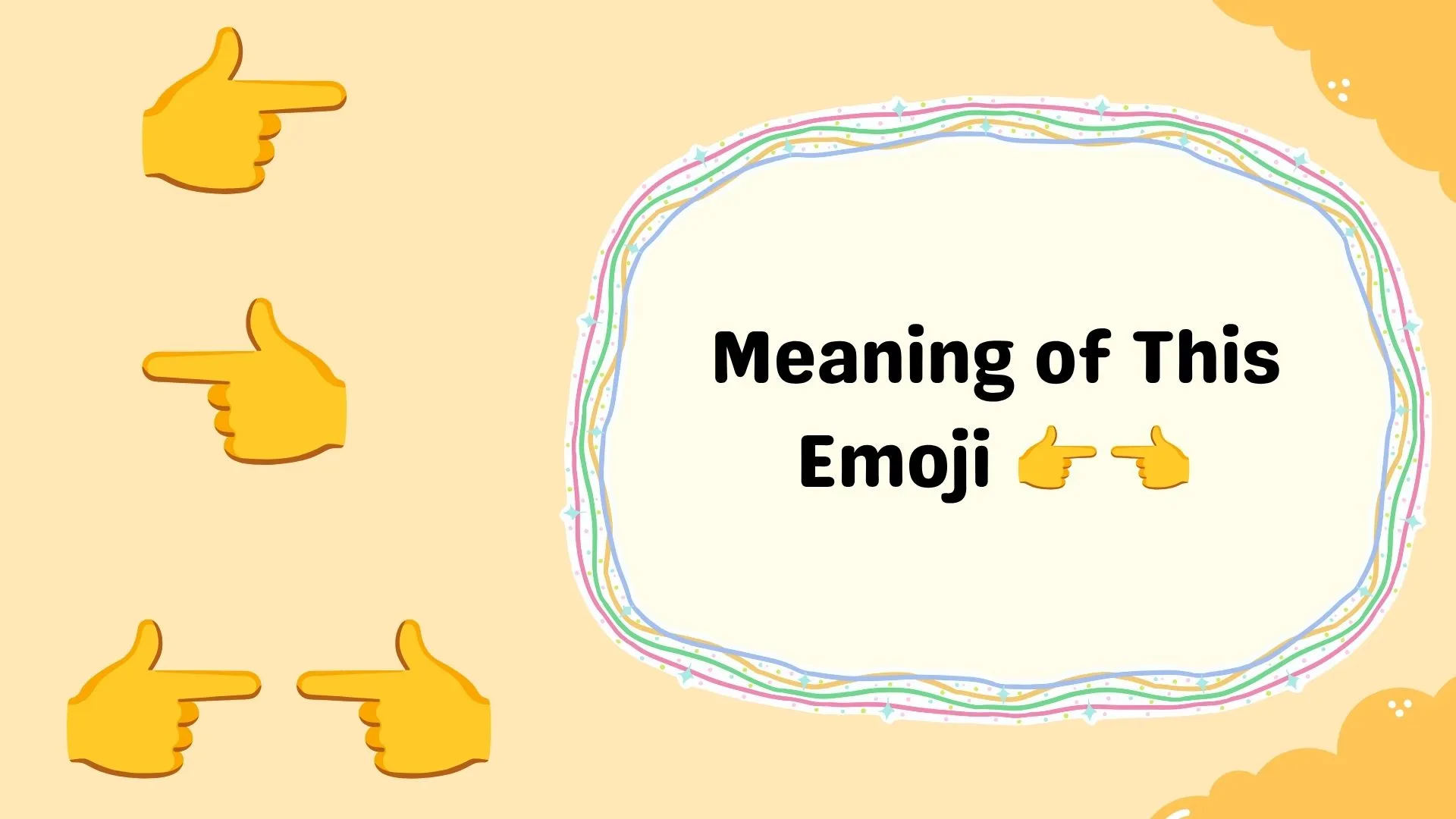
Two tiny pointing fingers can create a surprisingly expressive message. 👉👈 is one of those emoji combinations that often carries an emotional meaning beyond what it literally shows.
In texting, people commonly use these shy-looking fingers to suggest nervousness, awkwardness, hesitation, cuteness, or a desire to ask for something without sounding too direct. Depending on the conversation, 👉👈 can make a message feel sweet, innocent, playful, or even subtly flirty.
Someone might send it after making a shy request, admitting something embarrassing, or trying to get another person’s attention in a cute way. Its meaning can also change based on who sends it and the words that come before or after it. So, does 👉👈 mean shyness, flirting, embarrassment, or something else?
Meaning & Definition
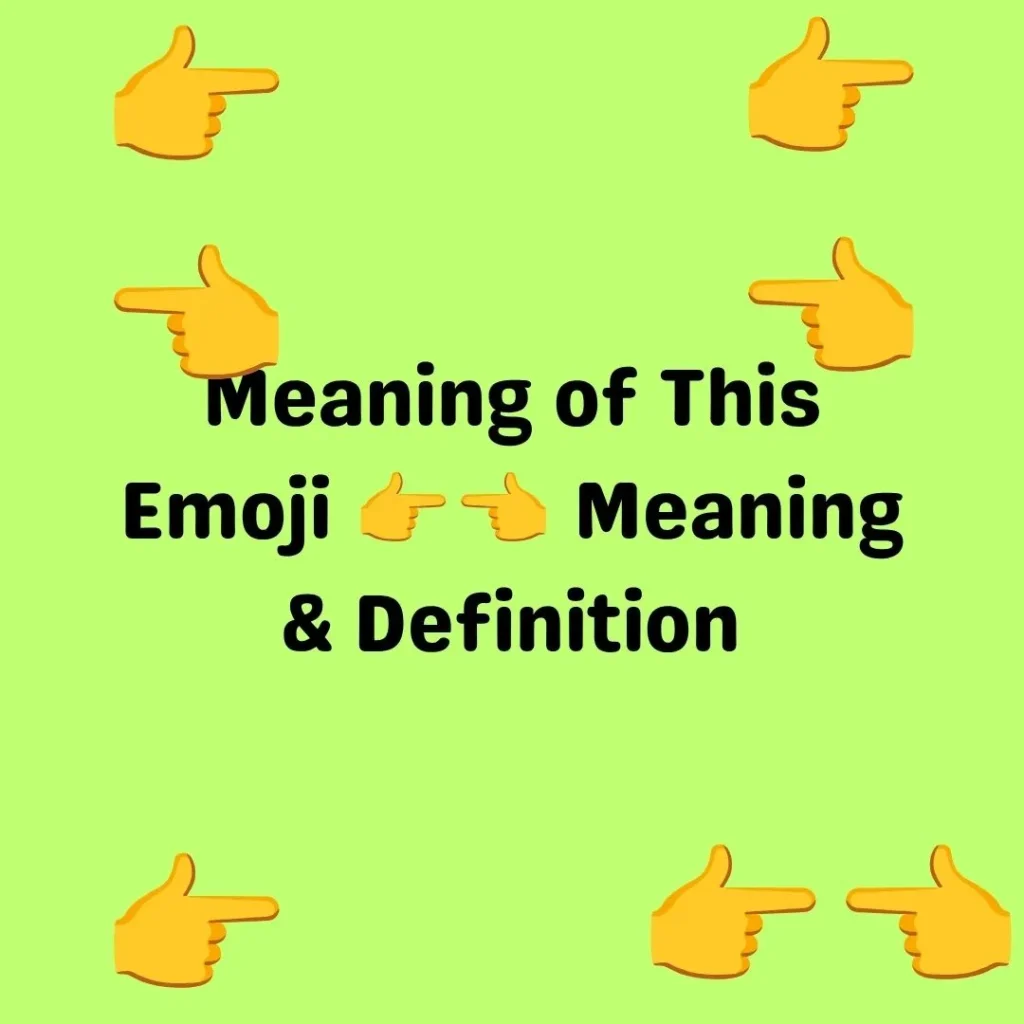
The primary meaning of 👉👈 is shyness, nervousness, or hesitation. It recreates the real-life body language of someone pressing or tapping their index fingers together while looking down, blushing, or working up the courage to say something. In texting and social media, it softens a statement and signals that the person feels a little timid or awkward about what they just typed.
Secondary or alternative meanings include gentle pleading, cute flirting, polite requests, or mild embarrassment. It is almost never used for pure direction (that’s what a single 👉 or 👈 does). Rare niche or joke interpretations sometimes appear online, but the overwhelming everyday use remains the shy/nervous vibe.
Examples in messages:
- “Would you maybe want to hang out this weekend? 👉👈”
- “I kind of like you… 👉👈🥺”
Background & Origin
The individual emojis (Backhand Index Pointing Right 👉 and Left 👈) were added to Unicode in 2010 and became available on major platforms around 2011. Early isolated uses of the pair existed, but the combination did not explode until early 2020.
It drew heavy inspiration from anime and manga, where characters (most famously shy figures like Hinata from Naruto) touch their index fingers together when nervous or embarrassed. The trend went viral on Twitter after Lil Nas X paired 👉👈 with the pleading face 🥺 in a February 2020 tweet that racked up hundreds of thousands of likes. Shortly afterward it flooded TikTok captions, comments, and challenges, especially during the early pandemic when people were communicating more online and leaning into soft, vulnerable expression. From there it spread across every major platform.
Usage in Different Contexts
Texting or Chat Messages
Perfect for softening a request or confession.
Example: “Can I borrow your notes for class? 👉👈”
Social Media Platforms
Used in captions, comments, and replies to look cute or self-deprecating.
Example: “Just posted this outfit… thoughts? 👉👈”
Professional or Technical Settings
Rare and generally avoided in formal work emails. In casual team chats (Slack, Discord, internal messengers) it can appear as light self-deprecation: “Sorry for the late reply 👉👈.” Outside of informal digital culture it carries almost no technical or official meaning.
Platform-Specific Meanings
| Platform | Common Meaning | Example Use |
| Shy request or soft apology | “Can we talk later? 👉👈” | |
| Cute caption energy or flirty comment | “This pic is a bit much 👉👈” | |
| TikTok | Nervous/shy vibe, often with 🥺 | Caption under a soft video: “first post 👉👈” |
| Snapchat | Playful hesitation in private snaps | “Miss you a little 👉👈” |
| Twitter/X | Meme-style shyness or ironic pleading | “anyone else feel like this today 👉👈” |
Other Fields Using the Abbreviation
Unlike letter abbreviations (DL, DM, etc.), 👉👈 is almost exclusively an emoji phenomenon. It has no established meaning in technology, medicine, law, or official documentation. Occasional creative uses appear in fan communities or gaming chats, but they still revolve around the same shy/nervous connotation. There is no “download,” “driver’s license,” or scientific expansion attached to these two finger emojis.
Common Misconceptions & Mistakes
People sometimes assume 👉👈 is just two random pointing fingers or means “look here.” Others confuse it with sexual slang after seeing fringe Urban Dictionary entries. A common pitfall is reading it as aggressive or sarcastic when the sender intended pure cuteness. Context and accompanying emojis (especially 🥺 or 🙈) almost always clarify the shy intention. Misreading it can make a soft message feel colder or more direct than intended.
Similar Terms & Alternatives
- 🥺 (Pleading Face) – often paired with 👉👈 for extra puppy-dog energy
- 🙈 (See-No-Evil Monkey) – embarrassment or “I can’t look”
- 😅 or 😊 – lighter nervousness or awkward smile
- 👉👈🥺 – the full classic “simp” or ultra-shy combo
- Finger-twiddling or “uwu” text styles – verbal equivalents of the same vibe
Example: Instead of “Can I sit with you? 👉👈” someone might write “Can I sit with you? 🥺” or “Can I sit with you? fidgets.”
How to Respond — Chat Examples
With a Friend
Them: “Wanna come over and watch something? 👉👈”
You: “Of course! What time works? I’ll bring snacks 😊”
With a Crush
Them: “I keep thinking about our last conversation… 👉👈”
You: “Same here 😊 Want to continue it over coffee sometime?”
With a Colleague (Casual Chat)
Them: “Sorry the file is a bit messy 👉👈”
You: “No worries at all, I can clean it up easily. Thanks for sending!”
Differences from Similar Words
Secret, private, and confidential all signal restricted information or exclusivity. 👉👈 does none of that. It communicates emotional tone—vulnerability and hesitation—rather than the status of the content itself. You can share something public with 👉👈 attached simply because you feel shy about saying it. The nuance is purely affective, not informational.
Relevance in Online Conversations & Dating Apps
On dating apps and casual social media, 👉👈 has become a low-risk way to express interest without sounding too bold. It lowers the emotional stakes of a first message or a soft confession.
Examples:
- “Your profile made me smile 👉👈”
- “Would you maybe want to grab a drink sometime? 👉👈”
It signals approachability and emotional awareness, which many people find attractive in the often-blunt world of online dating.
Popularity & Trends Over Time
Search interest and social usage spiked dramatically in March 2020 and remained high through the following years as the combination entered meme culture and everyday Gen-Z/Millennial texting. It still appears regularly in soft aesthetic posts, anime fandoms, and flirtatious DMs. While newer emoji trends come and go, 👉👈 has settled into a stable, recognizable shorthand for digital shyness.
FAQs
What does 👉👈 mean in texting?
It usually means the sender feels shy, nervous, or a little hesitant about what they just said.
Is 👉👈 flirty?
It can be, especially when paired with other soft emojis or used in romantic contexts. The core feeling is cuteness mixed with vulnerability.
Should I use 👉👈 at work?
Only in very casual team chats. Avoid it in formal emails or professional documents.
What emoji goes best with 👉👈?
The pleading face 🥺 is the classic partner. 🙈 and soft smile emojis also work well.
Does 👉👈 have any other meanings?
In everyday use, almost always shyness or gentle pleading. Fringe joke interpretations exist but are not the norm.
Conclusion
The emoji combination 👉👈 is a simple yet powerful way to add emotional texture to digital messages. Its main job is to express shyness, nervousness, or soft hesitation in a cute, approachable package. Whether it appears in a text to a friend, a flirty DM, a TikTok caption, or a dating-app opener, the meaning stays remarkably consistent once you recognize the gesture it mimics.
Next time you see those two pointing fingers, read the message with a little extra warmth the sender is probably just feeling a bit timid. And if you ever need to say something gently yourself, you now know exactly which emojis to reach for.
I am Grace Wilson, a passionate writer dedicated to creating helpful, engaging, and informative content for readers around the world. I am committed to sharing well-researched ideas, practical knowledge, and meaningful stories that inspire and educate. With a focus on clarity and authenticity, I am always exploring new topics and bringing valuable insights to my audience.