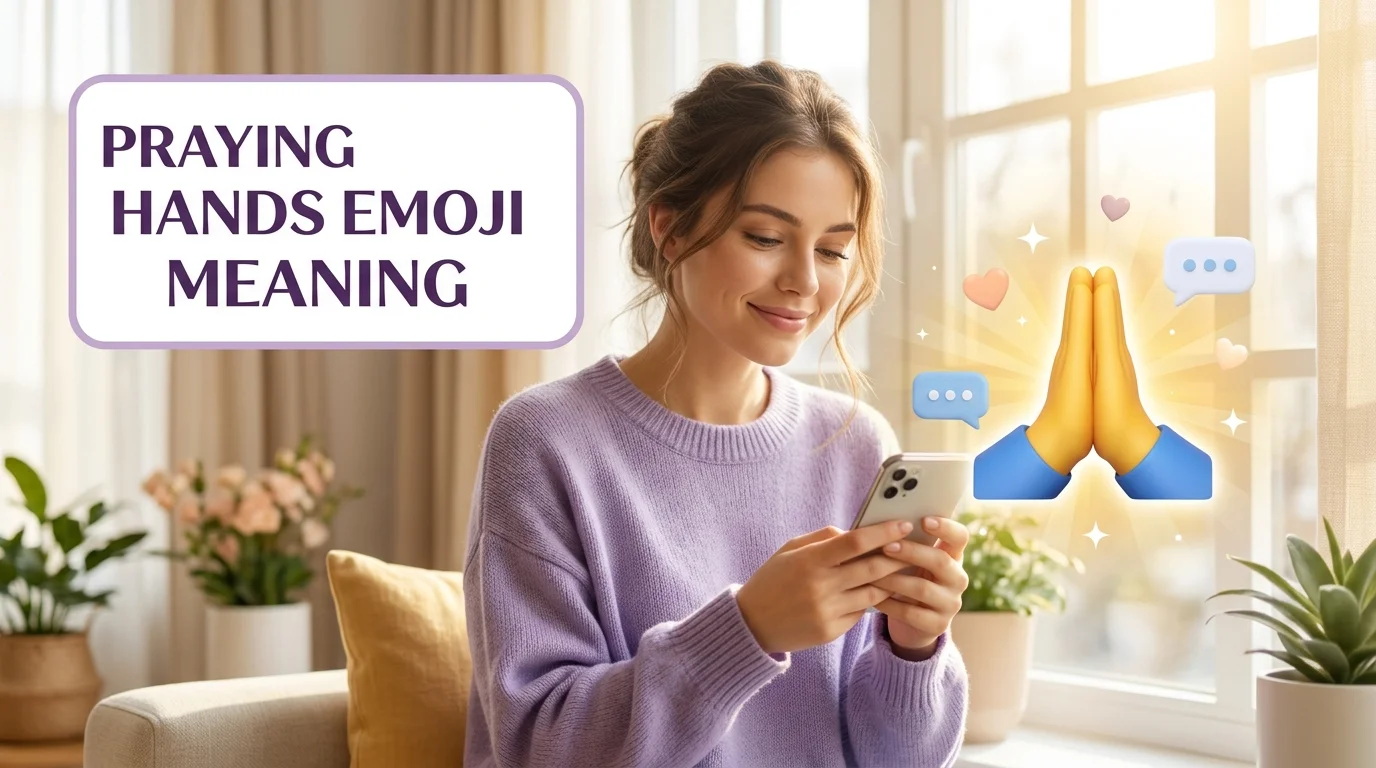
Sometimes a simple emoji can express hope, gratitude, faith, or a heartfelt request without needing many words. The 🙏 praying hands emoji is widely used in texts, chats, comments, and social media, but its exact meaning can change depending on the situation and the relationship between the people communicating.
If you’re searching for the Praying Hands Emoji Meaning, this guide will help you understand the different ways people use 🙏 in everyday conversations. It can represent prayer, blessings, gratitude, appreciation, hope, or asking for something sincerely. In casual texting, it may also be used to say “please,” “thank you,” or “I hope so.”
Whether you received 🙏 from a friend, family member, partner, or coworker, the surrounding message can help reveal the intended meaning. Let’s explore its common interpretations, examples, and uses in modern texting.
Praying Hands Emoji Meaning at a Glance 🙏

The 🙏 emoji generally communicates a sincere emotional tone. Its exact meaning changes with the situation.
| Situation | Possible meaning of 🙏 |
| Prayer | Asking for help, guidance, or a good outcome |
| Gratitude | Thank you or deep appreciation |
| Request | Please or I’m asking you sincerely |
| Hope | I really hope this happens |
| Support | Sending prayers, encouragement, or good wishes |
| Respect | Showing sincerity or respect |
| Relief | Thank goodness or I’m grateful |
| Friendship | Caring support or appreciation |
| Romance | A sincere request, gratitude, or emotional support |
| Humor | Dramatically asking for something |
| Social media | Hope, thanks, praise, or reaction to an emotional post |
The key point is context. You should look at the message, the conversation, and the relationship before deciding exactly what someone means.
What Does the Praying Hands Emoji 🙏 Mean?
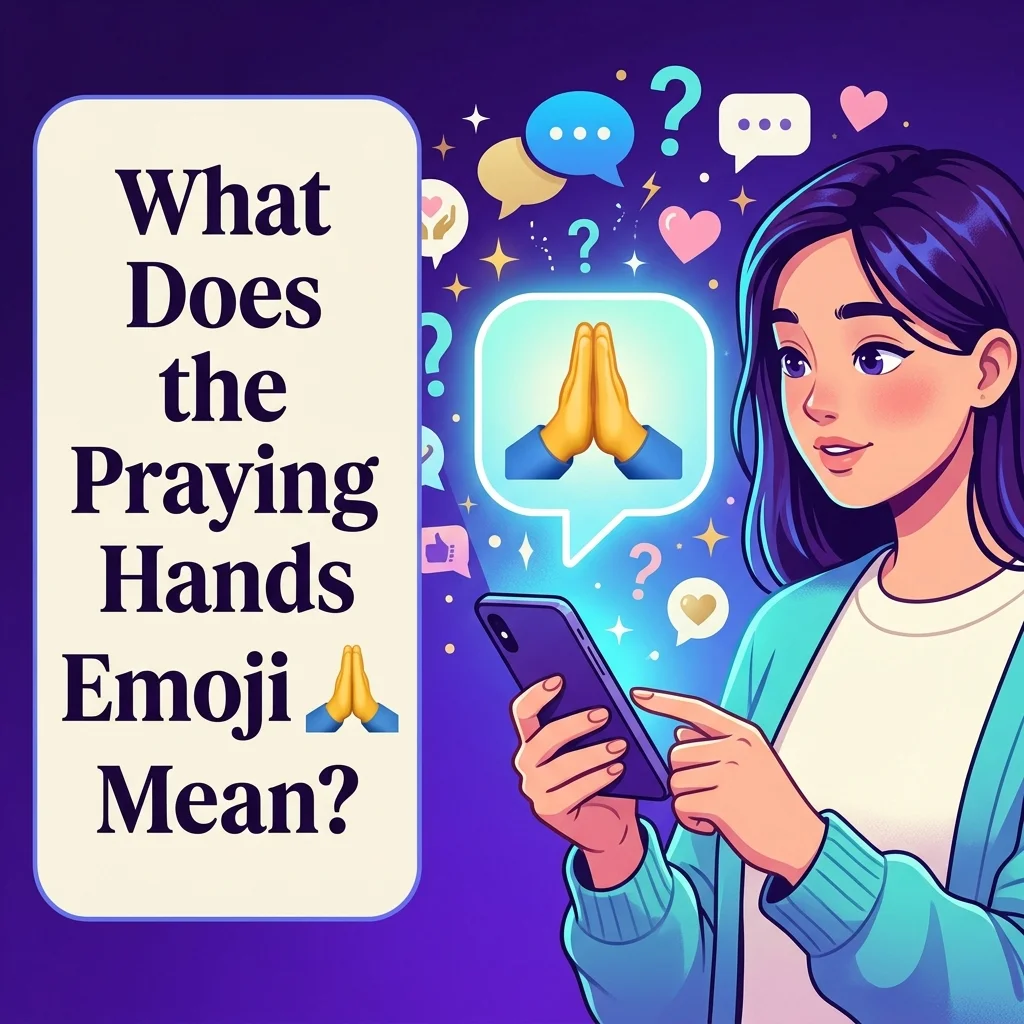
The praying hands emoji 🙏 commonly represents prayer, hope, gratitude, sincerity, and a heartfelt request.
When someone adds 🙏 to a message, they may be trying to make their words sound more genuine or emotional. The emoji can make a simple sentence feel warmer.
For example:
“I hope everything works out 🙏”
Here, the emoji adds a feeling of hope and sincerity.
Another example is:
“Thank you for helping me 🙏”
In this case, 🙏 emphasizes gratitude.
It can also mean:
“Please give me one more chance 🙏”
Now the emoji works almost like “please” or “I’m really asking you.”
This flexibility explains why the emoji appears in so many different types of conversations.
Praying Hands Emoji Meaning in Texting 🙏
In texting, 🙏 often makes a message sound more sincere, polite, emotional, or hopeful.
People frequently use it after making a request:
“Can you send me the notes? 🙏”
The sender is asking politely and may be emphasizing that they really need the notes.
It can also follow a thank-you message:
“You seriously saved me today. Thank you 🙏”
Here, the emoji communicates heartfelt appreciation rather than prayer.
Another common use is hope:
“Hopefully we get good news tomorrow 🙏”
The sender wants a positive result and uses the emoji to express that feeling.
Common texting meanings of 🙏
Depending on the message, 🙏 can mean:
- Please
- Thank you
- I hope so
- I’m praying for you
- I really appreciate it
- I need your help
- Good luck
- I’m wishing you well
- I respect that
- Thank goodness
Because of this range, reading only the emoji isn’t enough. The surrounding words matter.
Praying Hands Emoji Meaning on Social Media 📱
On social media, people often use 🙏 in comments and captions to show support, gratitude, hope, sympathy, or respect.
For example, someone might post about an important exam, job interview, competition, or personal challenge. A friend could comment:
“You’ve got this 🙏”
This doesn’t necessarily mean the friend is literally praying. It can simply mean “I’m wishing you the best.”
If someone shares sad news, people may comment:
“Keeping you in my prayers 🙏”
In this context, the emoji has a more direct connection to prayer and emotional support.
It can also appear after praise:
“That performance was incredible 🙏”
Here, the emoji can communicate strong appreciation or admiration.
Praying Hands Emoji Meaning in Friendship 👯
Between friends, 🙏 is usually friendly, supportive, appreciative, or playful.
A friend might send:
“Thanks for covering for me today 🙏”
This shows gratitude.
Or:
“Please don’t tell anyone 😂🙏”
This can be a humorous way of begging a friend to keep a secret.
Another example:
“Good luck with your interview tomorrow 🙏”
Here, the emoji expresses encouragement and good wishes.
The friendship meaning depends heavily on your normal communication style. If you and your friend regularly use emojis jokingly, 🙏 may sound playful rather than serious.
Praying Hands Emoji Meaning in a Romantic Relationship ❤️
In a romantic relationship, 🙏 can still have its normal meanings. It doesn’t automatically mean love or romantic interest.
For example:
“Thank you for always being there for me 🙏❤️”
Here, 🙏 expresses sincere appreciation while the heart adds romantic or affectionate emotion.
A partner might also say:
“Please come home early tonight 🙏”
In this situation, 🙏 makes the request sound more heartfelt.
Or:
“I hope everything gets better for us 🙏❤️”
Here, it can communicate hope and emotional support within the relationship.
The important thing is that 🙏 by itself is not a reliable romantic signal. Look at the full conversation and the person’s usual communication style.
Praying Hands Emoji Meaning From a Girl 👩
When a girl sends 🙏, the emoji can have many meanings, just as it can when sent by anyone else.
She might use it to say:
- “Please.”
- “Thank you.”
- “I really appreciate you.”
- “I’m hoping for the best.”
- “I’m praying for you.”
- “Please help me.”
- “I’m begging you.”
- “Good luck.”
- “I mean this sincerely.”
For example:
“Please don’t cancel our plans 🙏”
This is probably a sincere request.
But:
“You actually did it 😂🙏”
could be playful or humorous depending on the conversation.
If she sends:
“Thank you so much for listening 🙏❤️”
the combination of words and emojis suggests warmth and appreciation.
There is no universal “girl meaning” for 🙏. Her individual communication habits and the context matter more than gender.
Praying Hands Emoji Meaning From a Guy 👨
A guy may use 🙏 to express gratitude, hope, respect, support, or a request.
For example:
“Bro, please help me with this 🙏”
Here, the emoji emphasizes the request.
Another example:
“Thanks for having my back 🙏”
This expresses appreciation.
If he says:
“Wish me luck tomorrow 🙏”
the emoji communicates hope or a desire for encouragement.
In a romantic conversation, he could use:
“Please give me another chance 🙏❤️”
In that situation, the emoji strengthens the emotional request.
Again, the emoji itself doesn’t prove romantic feelings. The surrounding language provides the stronger clue.
Praying Hands Emoji Meaning From a Crush 💕
If your crush sends 🙏, it’s natural to wonder whether it has a hidden romantic meaning. However, the emoji alone isn’t enough to establish that.
Suppose your crush says:
“Please come to the party 🙏”
That may simply be a genuine request to see you there.
If they say:
“Thank you for helping me today 🙏”
the emoji most likely adds sincerity and appreciation.
However, if 🙏 appears alongside affectionate language, romantic emojis, or clearly flirtatious conversation, it may contribute to a warmer tone.
For example:
“You really made my day. Thank you 🙏❤️”
The overall message feels more affectionate because of the words and the heart together.
When interpreting a crush’s emoji, look at the complete conversation instead of treating one emoji like a secret code.
Praying Hands Emoji Meaning From a Partner
Partners often use 🙏 to communicate emotional sincerity.
A partner might write:
“I hope you feel better soon 🙏❤️”
This can express care and concern.
They could also say:
“Please don’t worry. Everything will be okay 🙏”
Here, the emoji reinforces reassurance and hope.
Another example:
“Thank you for everything you do for me 🙏”
This shows appreciation.
In relationships, the emoji can become especially meaningful because partners develop their own communication patterns. If someone regularly uses 🙏 when expressing affection or support, it may carry a personal meaning within that relationship.
Friendly Meaning of 🙏
The friendly meaning of 🙏 often relates to appreciation, requests, support, or good wishes.
Examples include:
“Thanks for the ride 🙏”
“Please send me the address 🙏”
“Good luck today 🙏”
“I hope you get the job 🙏”
None of these messages necessarily has a romantic meaning.
The emoji simply gives the message a more heartfelt or polite tone.
Romantic Meaning of 🙏
The romantic meaning of 🙏 depends on the surrounding message.
By itself, 🙏 usually isn’t a romantic emoji like ❤️, 😘, or 🥰. However, it can appear in romantic messages where the sender wants to show sincerity.
For example:
“I really hope we can work things out 🙏❤️”
The emoji combination communicates hope and emotional warmth.
Another example:
“Please don’t be mad at me 🙏🥺”
Here, 🙏 may make the apology or request feel more earnest.
So, when someone uses 🙏 romantically, it often supports the emotional meaning of the words rather than creating the romantic meaning by itself.
Emotional Meaning of the Praying Hands Emoji
The emoji can carry a strong emotional tone when someone is dealing with an important situation.
People may use it when discussing:
- A difficult exam
- A job interview
- A family problem
- An important decision
- A health-related situation
- A personal goal
- A difficult period in life
- Someone who needs support
For example:
“I hope everything goes well tomorrow 🙏”
The emoji adds emotional weight to the statement.
Similarly:
“Sending you love and prayers 🙏”
shows support and sympathy.
Does 🙏 Always Mean Prayer?
No. 🙏 does not always mean literal prayer.
Some people use it specifically for religious or spiritual messages. Others use it more casually to mean please, thank you, hope, or appreciation.
Compare these examples:
“Praying for your family 🙏”
This has a clear prayer-related meaning.
But:
“Please send me the file 🙏”
is usually just a polite request.
And:
“Thank you for everything 🙏”
expresses gratitude.
Therefore, assuming that every use of 🙏 is religious would be a misunderstanding.
Is 🙏 a Thank You Emoji?
Yes, people sometimes use 🙏 to express thanks or gratitude, although it isn’t exclusively a thank-you emoji.
For example:
“Thank you so much for helping me 🙏”
The sender is clearly expressing appreciation.
Some people use 🙏 after receiving a favor because they want to make their gratitude feel more sincere.
However, if someone sends only “🙏” after you help them, the most likely interpretation could be “thank you,” “I appreciate it,” or “respect.” Context determines the exact nuance.
Is 🙏 a Please Emoji?
It can be.
When someone adds 🙏 to a request, it can function like “please” or “I’m asking you sincerely.”
For example:
“Can you give me another day to finish this? 🙏”
The emoji softens the request and adds emotional emphasis.
Another example:
“Please don’t leave yet 🙏”
Here, the emoji makes the request sound more heartfelt.
This is especially common in casual texting.
🙏 Meaning in a Serious Conversation
In serious conversations, 🙏 can express support, sympathy, hope, respect, or prayer.
For example:
“I’m really sorry you’re going through this. I’m here for you 🙏”
The emoji adds a gentle and supportive tone.
When someone shares difficult news online, a response containing 🙏 can show that the commenter cares without requiring a long message.
However, when the subject is very serious, words usually communicate your feelings more clearly than an emoji alone.
🙏 Meaning in a Funny or Playful Conversation 😂
The praying hands emoji can also be used humorously.
For example:
“Please let the teacher cancel today’s test 🙏😂”
Nobody necessarily expects an actual prayer. The emoji exaggerates the person’s hope for a particular outcome.
Another example:
“Bro, I’m begging you, don’t post that picture 🙏😂”
Here, 🙏 makes the request dramatic in a playful way.
This usage is common in casual chats, memes, comments, and social media.
🙏 Meaning in a Sarcastic Message
The emoji can sometimes appear in sarcasm, but the meaning depends strongly on the sentence.
For example:
“Yes, because that’s exactly what I needed today 🙏”
Depending on the conversation, this could be sincere or sarcastic.
Similarly:
“Another meeting at 8 AM. Amazing 🙏”
The words may suggest frustration while the emoji adds exaggerated irony.
You shouldn’t assume sarcasm simply because 🙏 appears. Look for other clues, such as exaggerated wording, previous messages, or an obviously ironic situation.
Positive Meanings of 🙏
The praying hands emoji often carries positive or supportive feelings.
Possible positive meanings include:
- Gratitude
- Hope
- Encouragement
- Respect
- Appreciation
- Support
- Good wishes
- Faith
- Relief
- Kindness
For example:
“You worked hard. I hope you succeed 🙏”
The overall tone is encouraging.
Negative or Serious Interpretations of 🙏
Although 🙏 usually has a positive or sincere tone, it can appear in emotional or difficult situations.
For example:
“I don’t know what will happen, but I’m hoping for the best 🙏”
This isn’t necessarily a negative message. However, it indicates uncertainty.
In a serious conversation, 🙏 may communicate concern, sympathy, or a desire for a difficult situation to improve.
Its emotional meaning can therefore range from joyful gratitude to serious hope.
Common Situations Where People Use 🙏
People use the praying hands emoji in many everyday situations.
When asking for a favor
“Can you pick me up after work? 🙏”
Meaning: Please help me with this.
When saying thank you
“Thanks for helping me move 🙏”
Meaning: I genuinely appreciate your help.
When wishing someone luck
“Good luck on your exam tomorrow 🙏”
Meaning: I hope things go well for you.
When offering support
“I’m praying everything gets better for you 🙏”
Meaning: I’m supporting you and hoping for a good outcome.
When reacting to good news
“Finally! You got the job 🙏”
Meaning: I’m happy and relieved for you.
When joking
“Please don’t make me wake up early tomorrow 🙏😂”
Meaning: I’m dramatically begging you, usually for humor.
How to Respond When Someone Sends 🙏
Your response should match the context.
If someone sends 🙏 after thanking you, you can respond naturally with:
“Of course! Anytime 😊”
If they use it while asking for help:
“Sure, I can help.”
If they use it while discussing a difficult situation:
“I really hope everything works out for you.”
If your crush sends 🙏 in a friendly request, you can answer normally without assuming romantic intent:
“Haha, okay, I’ll see what I can do.”
If your partner sends 🙏 in an emotional message, you might respond with:
“I’m with you. We’ll figure it out together ❤️”
The best response depends on what they actually said. Don’t feel pressured to decode the emoji separately from the message.
What Does 🙏 Mean From Your Crush?
If you’re asking specifically “What does 🙏 mean from my crush?”, there isn’t one guaranteed answer.
It could mean:
- Please
- Thank you
- I appreciate you
- I hope so
- I’m asking sincerely
- I’m jokingly begging
- I’m showing support
The surrounding message is more useful than the emoji alone.
For example, “Please come with us 🙏” is different from “Thank you for being there for me 🙏❤️.”
The second message contains more emotional information because of the words and the additional heart emoji.
Praying Hands Emoji vs Folded Hands: Is There a Difference?
People often call 🙏 the praying hands emoji, folded hands emoji, or simply hands emoji.
In everyday conversation, these names often refer to the same emoji.
The important thing is how the sender uses it. Some people associate it strongly with prayer, while others mainly use it to express gratitude or a polite request.
This difference in interpretation is one reason emoji conversations can sometimes become confusing.
🙏 vs ❤️
The red heart ❤️ usually communicates love, affection, care, or strong positive feelings.
The praying hands emoji 🙏 is broader. It can mean prayer, gratitude, hope, support, or a sincere request.
Compare:
“Thank you ❤️”
This can sound affectionate.
“Thank you 🙏”
This usually emphasizes sincere gratitude or appreciation.
Using both:
“Thank you for always supporting me 🙏❤️”
can combine gratitude with affection.
🙏 vs 🥺
The pleading face 🥺 often communicates sadness, vulnerability, cuteness, or pleading.
The praying hands emoji can also express a request, but it doesn’t necessarily sound sad or vulnerable.
Compare:
“Please help me 🥺”
This may sound emotional or cute.
“Please help me 🙏”
This sounds more like a sincere or polite request.
Both can mean “please,” but their emotional tones can differ.
🙏 vs 🤲
The 🙏 emoji and 🤲 emoji both involve hands, but they can communicate different ideas.
🙏 is commonly associated with prayer, gratitude, hope, respect, or pleading.
🤲 is often associated with open hands, receiving, offering, asking, or holding something.
People may use them differently depending on their cultural and personal communication habits.
🙏 vs 👏
The clapping hands emoji 👏 generally communicates applause, praise, congratulations, or approval.
The praying hands emoji is more likely to communicate gratitude, prayer, hope, or a request.
For example:
“You did an amazing job 👏”
is clearly praise.
“I hope you get the result you want 🙏”
is clearly hopeful or supportive.
Common Misunderstandings About 🙏
Misunderstanding: 🙏 always means religious prayer
Not necessarily. Many people use it casually to mean please, thanks, respect, or hope.
Misunderstanding: 🙏 means love
The emoji can appear in romantic conversations, but it isn’t inherently romantic.
Misunderstanding: 🙏 from a girl means she likes you
Not necessarily. She may simply be asking for something, thanking you, or expressing support.
Misunderstanding: 🙏 from a guy is a romantic signal
Again, the emoji alone doesn’t establish romantic interest.
Misunderstanding: The emoji has one universal meaning
Emoji interpretation varies by context, culture, age group, relationship, platform, and personal style.
Why Context Matters So Much With 🙏
Imagine receiving only this:
“🙏”
What does it mean?
You can’t know for certain.
It might mean thank you, please, prayer, respect, hope, or even I’m begging you.
Now imagine the previous message was:
“I finally passed my exam!”
Then 🙏 might express gratitude or relief.
If the previous message was:
“Can you please help me?”
then 🙏 may reinforce the request.
If someone tells you:
“My family is going through a difficult time.”
and you reply with 🙏, it may communicate sympathy, prayer, or support.
The same emoji can therefore produce different meanings in different conversations.
Cultural and Personal Differences in Emoji Meaning
Emoji meanings aren’t always identical across cultures.
Some people strongly associate 🙏 with religious prayer. Others understand it primarily as thank you or please. Some people use it as a general symbol of respect.
Personal habits matter too.
One person might add 🙏 to almost every thank-you message. Another might use it only when discussing prayer or serious situations.
That’s why interpreting someone’s emoji use requires attention to their normal texting style.
Examples of 🙏 in Real-Life Text Conversations
Example 1: Asking a friend for help
You: “Can you send me today’s homework?”
Friend: “Sure.”
You: “Thanks 🙏”
Meaning: Genuine appreciation.
Example 2: Asking for a favor
You: “Can you save me a seat? 🙏”
Friend: “Yeah, no problem.”
Meaning: Please do this for me.
Example 3: Exam stress
You: “My results come out tomorrow.”
Friend: “Good luck! 🙏”
Meaning: Hope you get a good result.
Example 4: Romantic support
Partner: “I really hope this works out for us 🙏❤️”
Meaning: Hope, sincerity, and affection.
Example 5: Playful begging
Friend: “I’m posting that embarrassing picture.”
You: “Please don’t 🙏😂”
Meaning: Humorous or dramatic pleading.
Example 6: Sympathy
Friend: “My grandfather passed away.”
You: “I’m so sorry. Sending prayers to you and your family 🙏”
Meaning: Sympathy and emotional support.
When Should You Use the Praying Hands Emoji?
You can use 🙏 when you want your message to sound sincere, thankful, hopeful, supportive, or politely requesting.
It works especially well when:
- You are thanking someone.
- You are asking for a favor.
- You are wishing someone luck.
- You are offering emotional support.
- You are discussing prayer or faith.
- You are expressing hope.
- You are jokingly begging for something.
- You want to show respect or appreciation.
However, don’t rely on the emoji to communicate something very important by itself. When the situation is serious, clear words are usually better.
When Not to Assume a Romantic Meaning
If someone you like sends 🙏, it’s easy to read more into it than they intended.
For example:
“Thank you 🙏”
could simply mean thank you.
It doesn’t automatically mean:
“I have romantic feelings for you.”
Likewise:
“Please help me 🙏”
is normally a request, not a secret romantic message.
If you want to understand someone’s feelings, pay attention to the broader pattern of communication, including their words, actions, consistency, and the nature of your relationship.
Frequently Asked Questions
What does the praying hands emoji 🙏 mean?
The 🙏 emoji can mean prayer, gratitude, hope, respect, support, or a sincere request. Its exact meaning depends on the conversation and the relationship between the people communicating.
Does 🙏 mean thank you?
Yes, 🙏 can mean thank you or I really appreciate it. People often add it to thank-you messages to make their gratitude sound more sincere.
Does 🙏 mean please?
Yes. When used with a request, 🙏 can work like please or I’m asking you sincerely. For example, “Can you help me? 🙏” sounds like a heartfelt request.
What does 🙏 mean from a girl?
From a girl, 🙏 can mean please, thank you, hope, prayer, support, or respect. It does not have a special romantic meaning simply because a girl sent it.
What does 🙏 mean from a guy?
A guy may use 🙏 to express gratitude, hope, prayer, support, respect, or a request. The surrounding message is necessary to understand his intended meaning.
Does 🙏 mean love in texting?
Not by itself. 🙏 isn’t primarily a love emoji. It can appear in romantic conversations, but the romantic meaning usually comes from the words, relationship, or other emojis used with it.
What does 🙏 mean from a crush?
From a crush, 🙏 can mean please, thanks, hope, support, or sincere appreciation. It doesn’t automatically indicate romantic interest, so consider the complete conversation.
Is 🙏 a religious emoji?
It can be. Many people use 🙏 for prayer and faith, but others use it casually for gratitude, requests, respect, or hope. Both uses are common.
Final Thoughts
The praying hands emoji meaning is broader than simply “prayer.” Depending on the situation, 🙏 can communicate gratitude, hope, respect, support, sincerity, a polite request, or literal prayer.
In texting, someone might use it to say “thank you.” In another conversation, it may mean “please” or “I really hope this happens.” On social media, it can show support or sympathy. In romantic relationships, it can add emotional sincerity without automatically making a message romantic.

I am William Parker, a passionate writer dedicated to creating informative, engaging, and meaningful content for readers around the world. I enjoy exploring different topics, sharing valuable insights, and presenting ideas in a simple and easy-to-understand way. I am committed to providing well-researched articles that help readers learn, grow, and discover new perspectives.