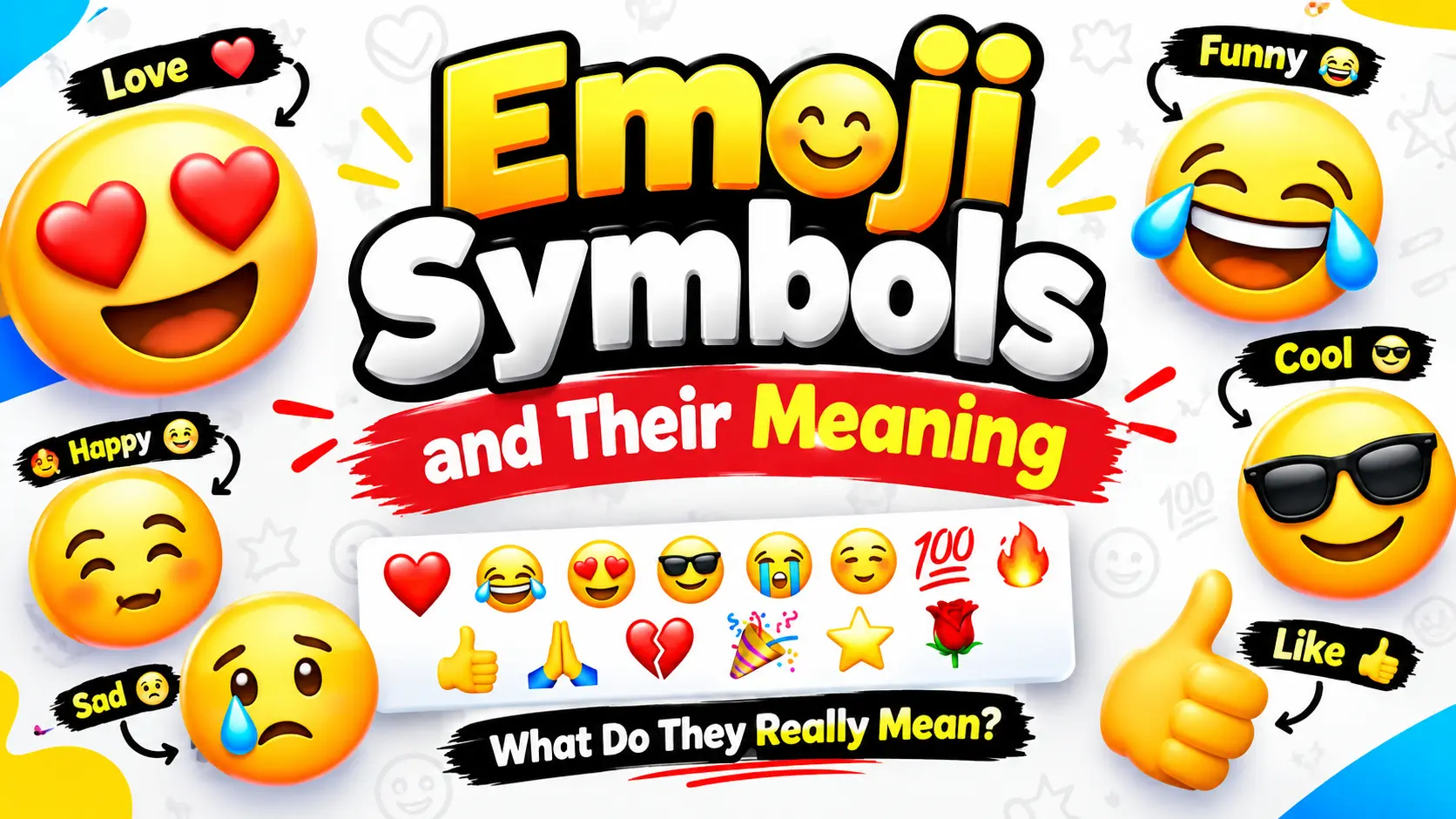
Every emoji symbol adds a little emotion, personality, or meaning to a digital conversation. From ❤️ and 😂 to 😏 and 👽, people use emojis to express feelings that words alone may not fully capture.
The Emoji Symbols and Their Meaning can vary depending on the situation, the relationship between the people chatting, and even the platform where an emoji appears. A simple heart may show love, while another color can suggest friendship, support, or admiration.
Similarly, a smiling face might express happiness in one message but sarcasm in another. That’s why understanding the context behind an emoji is important when you want to know what someone really means.
Meaning & Definition
Emoji symbols are small digital images used to express emotions, ideas, objects, or actions in text. Their primary role in texting and social media is to add tone, emotion, and visual clarity that plain words often lack.
Secondary and alternative meanings include cultural references, slang, inside jokes, and platform-specific interpretations. An emoji that looks simple can carry layered or even opposite meanings depending on context.
Examples in messages:
“Just finished the project 🙌” (celebration)
“Feeling a bit 🦐 today” (small or self-deprecating)
Background & Origin
Emoji symbols began in Japan in the late 1990s. Japanese mobile carriers created the first sets so users could send simple pictures instead of long text. The word “emoji” itself comes from Japanese e (picture) + moji (character).
Unicode started standardizing emojis around 2010 so the same symbols would appear consistently across different phones and platforms. By the mid-2010s, emojis had become a global language. New symbols are still added every year, reflecting culture, food, diversity, and everyday life. What started as a practical Japanese feature evolved into one of the most universal forms of online expression.
Usage in Different Contexts
Texting or Chat Messages
People use emoji symbols to soften tone, show excitement, or replace full sentences.
Example: “On my way 🚗 be there in 10”
Social Media Platforms
Emojis appear in captions, comments, and stories to boost engagement, express reactions, or create aesthetic themes.
Professional or Technical Settings
In work chats emojis are used more carefully , usually for light encouragement or to keep messages friendly without becoming too casual.
Example: “Great work on the report 👍”
Platform-Specific Meanings
| Platform | Common Meaning | Example Use |
| Everyday emotion and quick reactions | “See you later 👋” | |
| Aesthetic, mood, or caption enhancement | “Sunday vibes ☀️🌿” | |
| TikTok | Trend participation and high energy | “This trend is everything 🔥” |
| Snapchat | Fast, playful, or streak-related replies | Quick sticker or emoji reaction |
| Twitter/X | Commentary, agreement, or sarcasm | “Facts 🙌” under a strong post |
Other Fields Using the Abbreviation
Emoji symbols appear far beyond casual chat:
- Marketing and advertising campaigns
- Customer service and brand communication
- Education and language-learning tools
- Accessibility and inclusive design discussions
- Data analysis of online sentiment and trends
They function as a visual shorthand that crosses language barriers in many professional fields.
Common Misconceptions & Mistakes
A frequent mistake is assuming every emoji has only one fixed meaning. Context, culture, and relationship between the people chatting all change the interpretation.
Another common error is mixing up similar-looking symbols (for example, different hand gestures or food items). Reading a playful emoji as serious , or a serious one as joking , often leads to misunderstandings. Platform differences can also change how an emoji looks, adding another layer of confusion.
Similar Terms & Alternatives
- Emoticons – Text-based faces such as 🙂 or 😀
- Kaomoji – Japanese-style text expressions like (^▽^)
- Stickers – Larger, often animated images used on messaging apps
- GIFs – Short moving images that serve a similar emotional role
- Reaction emojis – Quick response icons on platforms like Facebook or Slack
Example: “I can reply with 😂 or just type haha , both work”
How to Respond , Chat Examples
Friend chat
Them: “Finally got tickets 🙌”
You: “Yesss! This is going to be epic 🔥”
Crush / flirty chat
Them: “Thinking about Friday 😊”
You: “Same here… any plans yet? 👀”
Colleague / work chat
Them: “Report is ready for review 👍”
You: “Thanks, I’ll take a look this afternoon.”
Differences from Similar Words
Unlike words such as “secret,” “private,” or “confidential,” emoji symbols are rarely about hiding information. They are outward and expressive. Compared with plain text adjectives like “happy” or “excited,” emojis add speed, emotion, and visual personality that written words alone often cannot match. Their power lies in how quickly they communicate feeling.
Relevance in Online Conversations & Dating Apps
In dating apps and casual social media, emoji symbols help show personality, tone, and interest without long explanations. A well-placed emoji can make a message feel warmer, funnier, or more flirty. For example, ending a message with 😊 or 🙌 often feels friendlier than plain text. They also help reduce misreading of tone, which is especially useful when two people are still getting to know each other.
Popularity & Trends Over Time
Emoji use has grown steadily since the early 2010s and remains extremely high across every major platform. Google Trends and social media data show consistent interest in emoji meanings, especially when new symbols are released or when viral trends give old ones fresh slang. Meme culture regularly invents new interpretations, keeping the visual language alive and changing.
FAQs
What are emoji symbols used for?
They add emotion, tone, and visual meaning to text messages and posts.
Do emoji meanings change over time?
Yes. Context, slang, and cultural trends can give existing emojis new or extra meanings.
Are emoji meanings the same everywhere?
Not always. Culture, age group, and platform can all influence interpretation.
Can I use emojis in professional messages?
Yes, but keep them light and appropriate for the workplace culture.
Why do some emojis look different on different phones?
Each platform (Apple, Google, Samsung, etc.) designs its own version of the same Unicode symbol.
Conclusion
Emoji symbols and their meaning form a living visual language that helps people express emotion faster and more clearly than words alone. From casual texts to social media posts and even professional chats, these small icons shape how we communicate every day.
The key is always context , the same emoji can celebrate, tease, or simply soften a sentence. Understanding that context turns a confusing string of pictures into clear, useful communication. Next time an emoji appears in your chat, you’ll be better equipped to read the real message behind it.

I am James Wilson, a passionate writer dedicated to creating informative, engaging, and valuable content for readers around the world. I am focused on sharing well-researched ideas, practical insights, and helpful information that inspires learning and growth. With a strong interest in writing and exploring different topics, I aim to provide content that is clear, meaningful, and easy to understand.