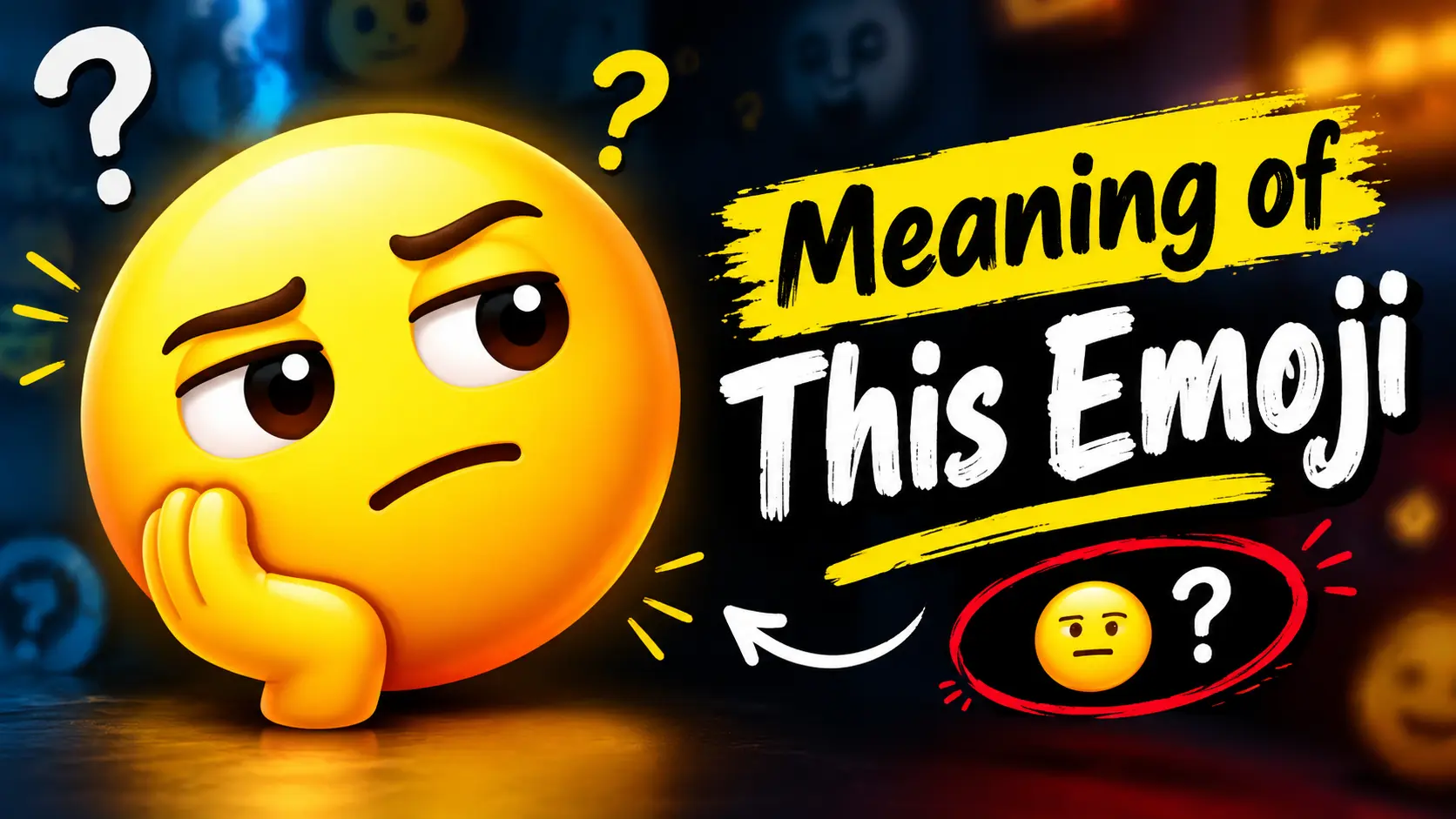
Not every reaction needs a clear smile or frown, and the 🫤 emoji is perfect for those moments when your feelings are somewhere in between. The 🫤 meaning of this emoji usually relates to uncertainty, awkwardness, doubt, hesitation, or mild dissatisfaction.
Someone might use 🫤 when they aren’t impressed by something, feel unsure about what they just heard, or don’t know how to respond. It can also express a subtle “I’m not sure about that” feeling without sounding too harsh.
In texting, the meaning can change based on the words, situation, and relationship between the people chatting. For example, a friend may use 🫤 to react to a questionable idea, while someone in a relationship might send it when they feel confused or slightly disappointed.
Meaning & Definition
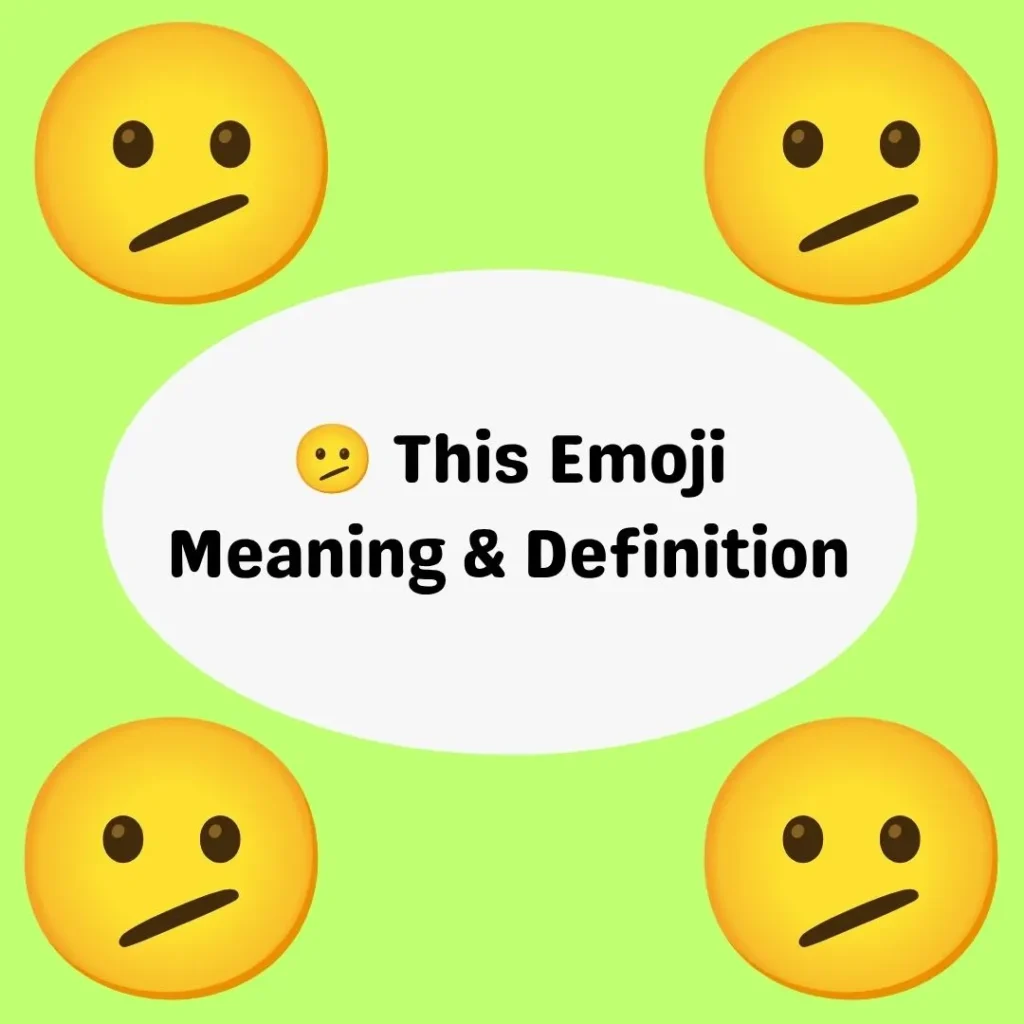
The 🫤 emoji is officially called “Face with Diagonal Mouth.” Its primary meaning across texting and social media is mild disapproval, skepticism, awkwardness, or a so-so reaction , somewhere between a shrug and a grimace.
Unlike a full-on frown or an eye-roll emoji, 🫤 communicates that the sender isn’t thrilled, isn’t devastated, but is definitely unimpressed or unsure how to feel.
Common meanings include:
- Meh, not great , a lukewarm or disappointed reaction
- Awkward or uncomfortable , used after something cringey happens
- Skeptical or unconvinced , doubting what someone just said
- Slightly annoyed , a polite way to show low-key irritation
Example messages:
- “He said he’d call me back… three days ago 🫤”
- “The meeting got pushed again 🫤”
Background & Origin
The 🫤 emoji was approved as part of Unicode 14.0 in September 2021 and rolled out to major platforms (Apple, Google, Samsung) throughout 2022. It belongs to a newer wave of “in-between” face emojis , alongside ones like the melting face and the saluting face , designed to capture emotional nuance that older, more extreme emojis (😀 😢 😡) couldn’t express.
As phones updated their emoji keyboards, Gen Z and millennial users quickly adopted the diagonal-mouth face as shorthand for the “ugh, really?” feeling that didn’t warrant a full negative reaction. Its popularity grew through memes and reaction-image culture, where its oddly expressive, wonky mouth made it a favorite for sarcastic or deadpan commentary.
Usage in Different Contexts
Texting or chat messages: Used to react to disappointing or awkward news without sounding overly dramatic.
“You’re telling me the flight got delayed again? 🫤”
Social media platforms: Often used as a comment reaction to cringe content, controversial opinions, or underwhelming announcements.
“New update just dropped… 🫤 not what I expected”
Professional or technical settings: While less common in formal emails, it appears in casual workplace chat tools (Slack, Teams) to signal polite disagreement or hesitation.
“Can we push the deadline again? 🫤”
Platform-Specific Meanings
| Platform | Common Meaning | Example Use |
| Mild disappointment in personal chats | “Dinner plans canceled again 🫤” | |
| Reaction to awkward or cringey posts/reels | Comment: “This aged badly 🫤” | |
| TikTok | Sarcastic or deadpan commentary on a video | Comment: “Bro really said that 🫤” |
| Snapchat | Quick reaction to a so-so snap or story | “That party looked mid 🫤” |
| Twitter/X | Skepticism toward a claim, take, or headline | “Sure, ‘unprecedented growth’ 🫤” |
Other Fields Using the Abbreviation
While 🫤 is purely an emoji (not a text abbreviation), it’s worth noting how it differs from similarly-shaped acronyms that cause confusion online, such as:
- DL – can mean “Download,” “Driver’s License,” or “Down Low,” depending on context
- TBH – “To Be Honest,” used in feedback or opinions
- SMH – “Shaking My Head,” a text-based cousin of the disapproval feeling 🫤 conveys visually
Common Misconceptions & Mistakes
A common mix-up is treating 🫤 as the same as a straightforward sad or angry face , it’s not. It reads as ambivalent or unimpressed, not devastated or furious.
People also confuse it with the 😐 (neutral face) or 😬 (grimacing face). The key difference: 🫤‘s diagonal mouth adds a layer of “questioning” or “unconvinced” energy that pure neutrality or cringe-grimacing doesn’t carry.
Sending it in a serious or emotionally heavy conversation can come across as dismissive, so context matters.
Similar Terms & Alternatives
| Emoji/Term | Meaning | Example Use |
| 😐 | Neutral, no strong reaction | “It was fine 😐” |
| 😬 | Awkward, cringe | “That was rough 😬” |
| 🙄 | Annoyed, eye-roll | “Sure, whatever 🙄” |
| 😕 | Confused, mildly upset | “Wait, what happened? 😕” |
| SMH | Shaking my head (disapproval) | “SMH, unbelievable” |
How to Respond , Chat Examples
With a friend:
Friend: “Yeah I forgot your birthday, sorry 🫤” You: “It’s fine, just don’t let it happen again 😅”
With a crush:
Crush: “Can’t make it tonight 🫤” You: “No worries, rain check? 😊”
With a colleague:
Colleague: “Client pushed the deadline again 🫤” You: “Ugh, okay , let’s adjust the timeline this afternoon.”
Differences from Similar Words
Unlike words such as Secret, Private, or Confidential, which describe information control, 🫤 is purely an emotional signal. It doesn’t imply hidden meaning , it openly communicates a lukewarm or uncertain feeling in the moment. Think of it less like a label and more like a facial expression dropped into text.
Relevance in Online Conversations & Dating Apps
On dating apps, 🫤 is a low-stakes way to express disappointment without seeming harsh , perfect for canceled dates, mixed signals, or unenthusiastic replies.
“He just said ‘we’ll see’ when I asked about Friday 🫤”
It lets users stay honest about their reaction while keeping the tone light and non-confrontational, which is especially useful in early-stage texting where tone is easily misread.
Popularity & Trends Over Time
Since its 2022 rollout, 🫤 search interest and usage have steadily climbed, particularly among younger users on TikTok and Instagram. It regularly appears in meme templates reacting to awkward news, plot twists, or underwhelming reveals, cementing its place as a staple “so-so” reaction emoji in everyday digital communication.
FAQs
1. What does 🫤 mean in texting? It generally signals mild disappointment, skepticism, or an awkward “meh” reaction.
2. Is 🫤 a positive or negative emoji? It leans slightly negative or neutral , not extreme, but clearly unimpressed.
3. What’s the official name of 🫤? “Face with Diagonal Mouth,” approved in Unicode 14.0.
4. Is 🫤 the same as 😐? No , 😐 is fully neutral, while 🫤 adds a hint of doubt or dissatisfaction.
5. Can I use 🫤 in professional chats? Yes, sparingly , it works well in casual workplace messaging apps but isn’t ideal for formal emails.
Conclusion
The 🫤 emoji has carved out its own niche as the internet’s go-to face for “meh,” “awkward,” or “not convinced” moments.
Whether it shows up in a text from a friend, a TikTok comment, or a Slack message about a shifted deadline, its diagonal mouth captures a feeling that plain words often miss. Next time you see it pop up in your messages, pay attention to the context , that’s where its real meaning lives.

I am William Parker, a passionate writer dedicated to creating informative, engaging, and meaningful content for readers around the world. I enjoy exploring different topics, sharing valuable insights, and presenting ideas in a simple and easy-to-understand way. I am committed to providing well-researched articles that help readers learn, grow, and discover new perspectives.