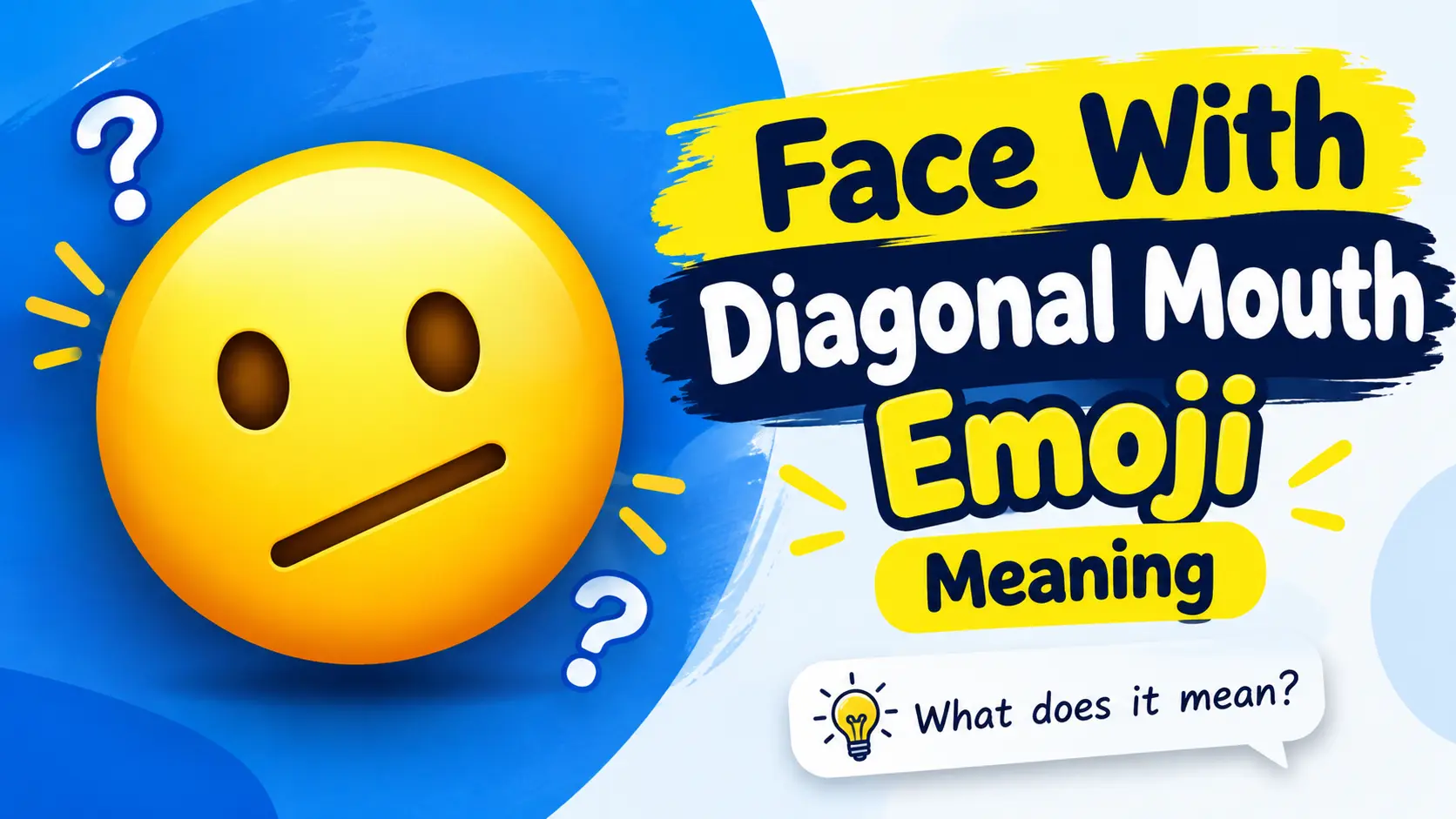
Ever received the 🫤 face with diagonal mouth emoji and paused for a second because you weren’t sure what the person meant? This emoji is often used when someone feels uncertain, unimpressed, uncomfortable, or unsure about a situation.
The face with diagonal mouth emoji meaning can change slightly depending on the conversation, but it commonly expresses mixed or awkward feelings. Someone might send 🫤 when they don’t know how to respond, feel doubtful about something, or want to show that a situation isn’t exactly going as expected.
It can also suggest hesitation, mild disappointment, or a “well, I’m not sure about that” reaction. In casual texting, the emoji may add a subtle emotional tone without making the message sound too serious.
Meaning & Definition
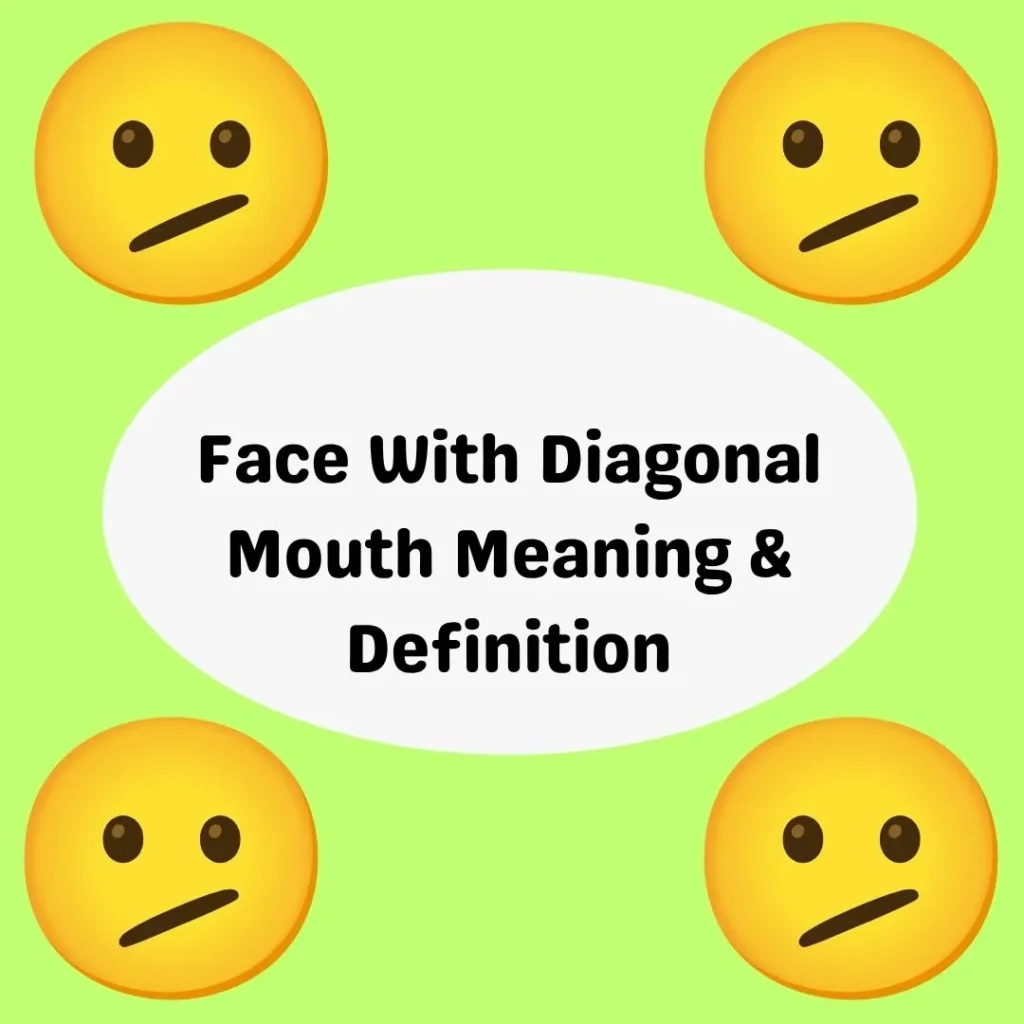
The primary meaning of the face with diagonal mouth emoji 🫤 is skepticism, mild disappointment, or uncertainty. The slanted mouth gives it an ambivalent, “not quite sure about this” look.
Secondary meanings include reluctance, meh energy, soft frustration, or a polite way to show something is underwhelming. It often replaces the old text emoticon :-/ and signals mixed or hesitant feelings.
Examples in messages:
- “I’m not convinced that’s a good idea 🫤”
- “The movie was… okay 🫤”
Background & Origin
The face with diagonal mouth was approved in Unicode 14.0 and released with Emoji 14.0 in 2021. It was designed to capture the classic “skeptical” or “unsure” expression that earlier face sets lacked.
Once available, it quickly filled the gap between neutral faces and stronger negative ones. Users adopted it for everyday moments of doubt, soft disappointment, and “I’m not fully on board” reactions across messaging and social platforms.
Usage in Different Contexts
Texting or chat messages
Friends use it when something feels off or underwhelming: “That plan sounds risky 🫤.”
Social media platforms
It appears in comments and captions for mild criticism or mixed reviews: “Not what I expected 🫤.”
Professional or technical settings
It can work in casual team chats to signal hesitation. Formal emails usually prefer clearer language.
Platform-Specific Meanings
| Platform | Common Meaning | Example Use |
| Mild doubt or soft disappointment | “Not sure about this 🫤” | |
| Underwhelmed or skeptical reaction | Comment: “Hmm 🫤” | |
| TikTok | Mixed feelings or “meh” energy | “The ending though 🫤” |
| Snapchat | Polite uncertainty | Reply: “Interesting 🫤” |
| Twitter/X | Skepticism or soft criticism | “Doubt 🫤” |
Other Fields Using the Abbreviation
Outside personal messaging the diagonal-mouth face appears in:
- Review and feedback culture
- Relatable content about mixed emotions
- Soft criticism and “not impressed” reactions
- Everyday expressions of hesitation
It is not a technical acronym, the emoji itself carries the ambivalent meaning.
Common Misconceptions & Mistakes
Many people read the face with diagonal mouth as strong negativity. In reality it is milder, more “I’m not sure” than “I hate this.”
Another mix-up is treating it as identical to the neutral face 😐. The diagonal mouth adds clear skepticism or mild dissatisfaction that a flat mouth lacks. Misreading the tone can make a soft reaction feel harsher than intended.
Similar Terms & Alternatives
- 😐 Neutral face – flatter, less opinionated
- 😕 Confused face – stronger puzzlement
- 😒 Unamused face – clearer disapproval
- 🤔 Thinking face – more active consideration
Example: “Not sure 🫤” feels more hesitant than “Not sure 😐.”
How to Respond , Chat Examples
Friend:
You: “Should we try that new place?”
Friend: “Eh, I’ve heard mixed things 🫤”
Crush:
You: “I might be free this weekend.”
Crush: “Cool 🫤 let me check my schedule.”
Colleague (casual chat):
You: “The new process might save time.”
Colleague: “Possibly 🫤 still thinking it through.”
Differences from Similar Words
Unlike “secret,” “private,” or “confidential,” the face with diagonal mouth emoji does not hide information, it openly shows mixed or hesitant feelings. It is closer to “I’m not fully convinced” than to any closed-off term. Its power comes from visible ambivalence rather than concealment.
Relevance in Online Conversations & Dating Apps
On dating apps and casual social media the diagonal-mouth face offers a low-pressure way to express mild doubt or mixed feelings. Using 🫤 keeps the tone honest without sounding harsh. It helps conversations stay realistic and grounded.
Example: “Had a nice time 🫤 still getting a feel for things though.”
Popularity & Trends Over Time
Released in 2021, the face with diagonal mouth found a steady audience for everyday skepticism and soft disappointment. It appears regularly in review culture and casual chats. Google Trends and social data show consistent use whenever people need a mild, non-dramatic way to show uncertainty.
FAQs
What does the face with diagonal mouth emoji mean?
It usually means skepticism, mild disappointment, uncertainty, or “meh” energy.
Is 🫤 strongly negative?
No. It is milder than clear disapproval, more hesitant than harsh.
How is it different from 😕?
🫤 leans more skeptical or underwhelmed; 😕 is more openly confused.
Can it end a conversation politely?
Yes. It softens mixed feelings without sounding cold.
How should I reply?
A calm acknowledgment or gentle follow-up question usually works best.
Conclusion
The face with diagonal mouth emoji meaning centers on ambivalence, mild skepticism, and soft disappointment. Whether someone is unsure, underwhelmed, or politely hesitant, the crooked mouth makes the mixed feeling clear.
Context always shapes whether the tone is light or a bit heavier. Next time you see 🫤, you’ll know the sender is not fully sold, and inviting a realistic, low-pressure response.

I am James Wilson, a passionate writer dedicated to creating informative, engaging, and valuable content for readers around the world. I am focused on sharing well-researched ideas, practical insights, and helpful information that inspires learning and growth. With a strong interest in writing and exploring different topics, I aim to provide content that is clear, meaningful, and easy to understand.