Ever noticed a tiny drop of sweat beside a smiling face and wondered what someone was really trying to express? The Sweat Emoji Meaning can represent several emotions, including nervousness, relief, awkwardness, embarrassment, stress, or feeling overheated. The exact message often depends on the words and situation surrounding the emoji.
In texting and social media conversations, the sweat emoji can soften an uncomfortable moment or show that someone feels a little uneasy. It may also appear after a close call, when someone narrowly avoids a problem, or when a situation becomes unexpectedly funny or awkward. For example, 😅 can suggest nervous laughter, relief, or “that was close.”
This guide explores the Sweat Emoji Meaning in detail, including its use in text messages, social media, relationships, and casual chats. You’ll also find simple examples to help you understand what the emoji means in different situations.
What Does the Sweat Emoji 💦 Mean?
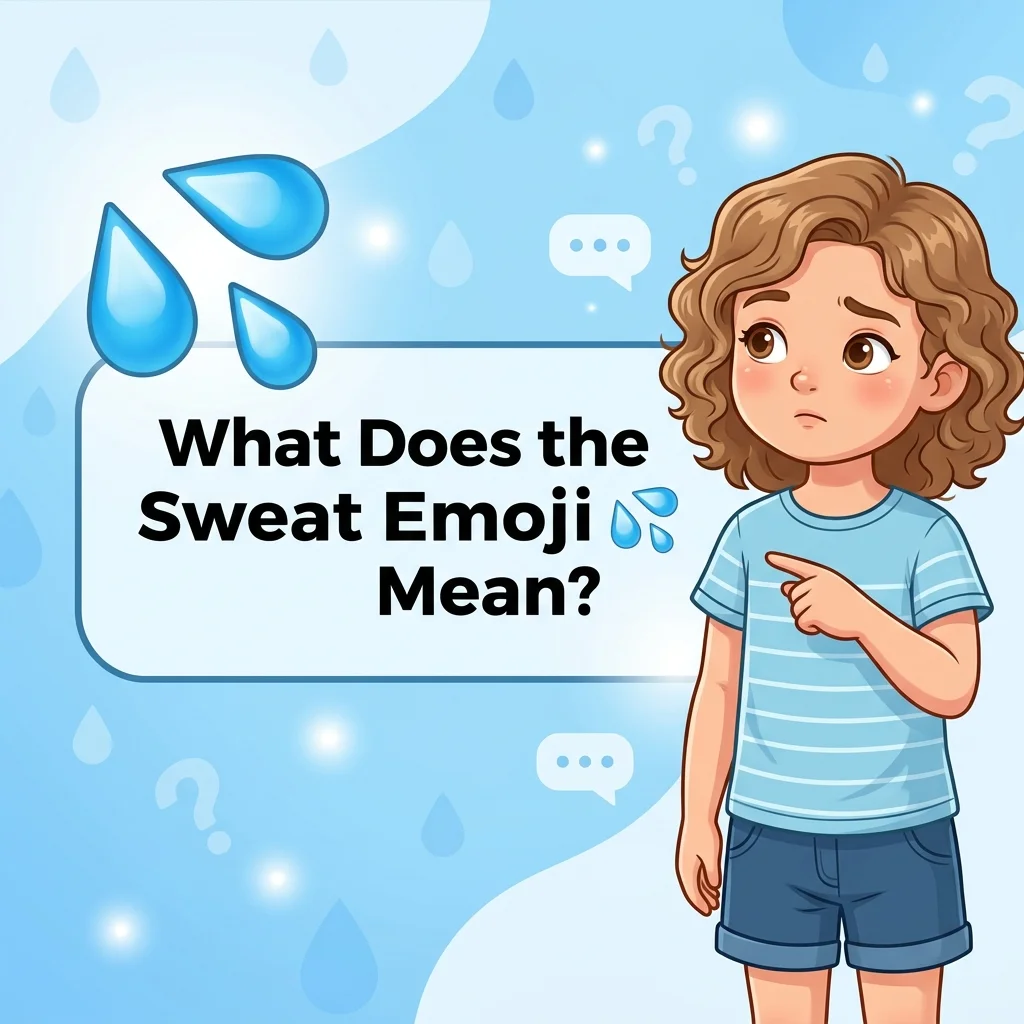
The 💦 emoji is commonly known as the Sweat Droplets emoji. Its basic visual meaning is a few drops of sweat or water flying through the air.
In everyday texting, however, people use it in several different ways. The most common meanings include:
- Sweating because of heat
- Working hard or exercising
- Feeling nervous or stressed
- Showing relief after a tense moment
- Expressing embarrassment
- Making a playful or exaggerated comment
- Adding a humorous “phew!” feeling
- Describing water or splashing
- Occasionally adding a suggestive or flirtatious tone
For example:
“That exam was so difficult 💦”
Here, 💦 can suggest stress or the feeling of barely getting through the exam.
But:
“It’s 40°C today 💦”
probably refers to actual heat and sweating.
So, the emoji itself does not have one fixed emotional meaning.
Sweat Emoji Meaning in Text Messages
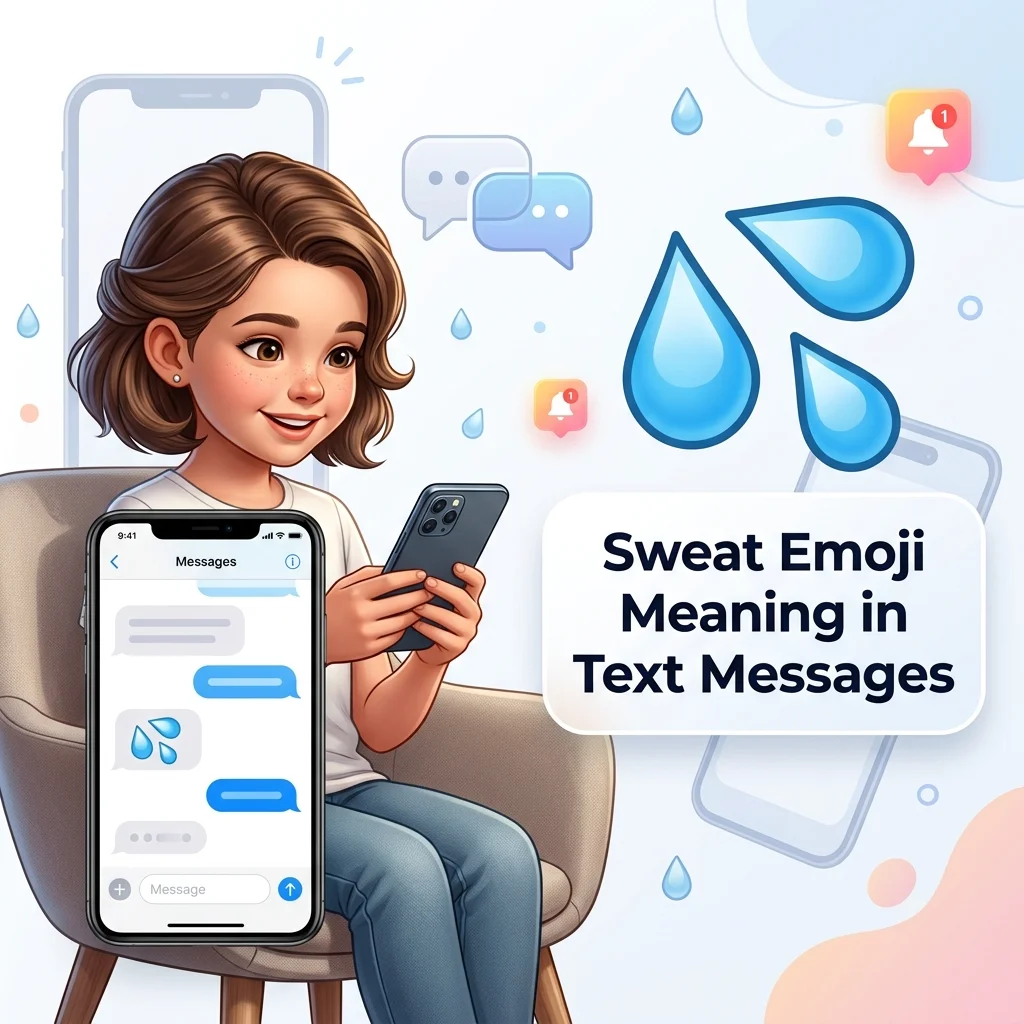
In text messages, 💦 often acts like an emotional reaction rather than a literal description.
Someone may add it after a sentence to make the message feel more expressive. It can communicate a feeling that would otherwise require extra words.
Physical Sweating
The most straightforward use is to show that someone is sweating.
Example:
“I just ran 5 miles 💦”
The sender is probably saying they are physically sweaty after exercising.
Another example:
“This weather isinexplicable 💦”
Here, the emoji reinforces the idea that the person is hot and sweating.
Nervousness or Anxiety
People also use 💦 when they feel nervous about something.
Example:
“She actually called me 💦”
This can mean the person feels nervous, surprised, or overwhelmed by the situation.
It is similar to saying, “Wow, this is making me nervous.”
Relief
Sometimes the emoji has a “phew” meaning.
Example:
“I thought I lost my phone 💦”
The sender may be expressing relief after a stressful moment.
In this situation, 💦 does not necessarily mean actual sweat. It represents the emotional pressure of the moment.
Hard Work
The emoji can also suggest effort.
Example:
“Finally finished my assignment 💦”
The sender may be jokingly showing that the assignment took a lot of work.
Sweat Emoji Meaning on Social Media
On social media, 💦 can be more exaggerated because users often use emojis to make captions and comments more expressive.
For example:
“That workout destroyed me 💦”
The emoji emphasizes physical effort.
Someone might also comment:
“That was too close 💦”
Here, it can mean the person felt nervous while watching something happen.
On platforms such as Instagram, TikTok, Snapchat, and messaging apps, the surrounding content matters greatly. A fitness post, funny video, stressful story, or romantic conversation can all give 💦 a different meaning.
In Fitness Posts
Fitness users may use 💦 to represent sweat after exercise.
Example:
“Leg day complete 💦”
The meaning is straightforward: the workout was difficult and physically demanding.
In Funny Posts
A person might use 💦 after a funny or embarrassing situation.
Example:
“Me pretending I understood the teacher 💦”
The emoji adds a humorous feeling of nervousness or awkwardness.
In Comments
In comments, 💦 can sometimes be used as an exaggerated reaction.
For example:
“That final move 💦”
The sender may be saying that the moment was intense or impressive.
The exact interpretation depends heavily on the content being discussed.
Sweat Emoji Meaning From a Girl
If a girl sends you 💦, the emoji alone does not prove that she is flirting.
She could simply be talking about heat, exercise, stress, embarrassment, or relief.
For example:
You: “Did you finish the presentation?”
Her: “Barely 💦”
In this context, she is likely expressing stress or relief.
Another example:
You: “It’s so hot outside.”
Her: “I know 💦”
That is most likely a literal reference to heat.
However, if the emoji appears in an already playful or romantic conversation, it can take on a more teasing meaning. You should look at the entire conversation rather than interpreting one emoji in isolation.
Sweat Emoji Meaning From a Guy
A guy may use 💦 in much the same way.
For example:
“Bro, I almost missed the bus 💦”
This could express panic followed by relief.
Or:
“Just finished the gym 💦”
This likely refers to sweating after exercise.
If a guy sends 💦 during a playful conversation, it might simply be exaggeration or humor.
The important point is that gender does not determine the meaning of an emoji. The person’s communication style and the situation matter more.
Sweat Emoji Meaning From a Crush
When your crush sends 💦, you may naturally wonder whether there is a romantic message behind it.
Sometimes there can be a playful or flirty undertone. However, 💦 by itself is not enough evidence to conclude that your crush is flirting.
Consider these examples.
Example 1:
Crush: “I just finished a 10K 💦”
This probably means physical effort and sweating.
Example 2:
Crush: “You really said that to me? 💦😂”
This may express embarrassment or playful disbelief.
Example 3:
Crush: “You look really good tonight 💦”
In a clearly flirtatious conversation, the emoji may add intensity to the message. Even then, the meaning comes from the whole message and conversation, not from the emoji alone.
Sweat Emoji Meaning in Romantic Relationships
Partners may use 💦 casually, humorously, or flirtatiously.
For example:
“I’m exhausted after cleaning the whole house 💦”
This simply communicates effort.
But in a playful romantic conversation, the same emoji can help create a teasing tone.
Because 💦 can sometimes have a suggestive interpretation online, the surrounding words are especially important in romantic conversations.
If the message is vague, avoid assuming what your partner means. A simple response can clarify the tone naturally.
Friendly Meaning of 💦
Among friends, 💦 commonly means effort, stress, nervousness, heat, or relief.
For example:
“That football match was intense 💦”
Your friend may be saying the match made them nervous.
Or:
“I finally passed the test 💦”
The emoji can represent the pressure they felt before getting the result.
Friends also use emojis to exaggerate ordinary situations for comedy.
“I walked up three flights of stairs 💦”
The person might not actually be extremely sweaty. They could simply be joking about how difficult the walk felt.
Is the Sweat Emoji Flirty?
It can be, but it is not automatically flirty.
This is one of the biggest reasons people search for the sweat emoji meaning. The emoji has a literal meaning connected to sweat and water, but online communication sometimes gives it additional meanings.
A flirty interpretation becomes more plausible when:
- The conversation is already romantic.
- The sender uses teasing language.
- The emoji appears with other suggestive emojis.
- The message clearly has a double meaning.
- The sender has already established a flirtatious tone.
On the other hand, if someone sends 💦 while discussing sports, weather, exams, or exercise, there may be nothing romantic about it.
Sweat Emoji Meaning in Different Situations
| Situation | Possible meaning of 💦 |
| Hot weather | Sweating or feeling overheated |
| Exercise | Physical effort or sweat |
| Difficult exam | Stress, pressure, or relief |
| Close call | Nervousness or “phew” |
| Embarrassing moment | Awkwardness or discomfort |
| Hard work | Effort and exhaustion |
| Funny conversation | Exaggerated reaction |
| Romantic chat | Possible teasing or flirtation |
| Water-related post | Drops, splashing, or water |
| Intense moment | Excitement, tension, or exaggeration |
These are common interpretations, not strict rules.
Sweat Emoji Meaning When Someone Is Nervous
One of the most common non-literal uses of 💦 is nervousness.
Imagine your friend has to speak in front of 500 people.
“I have to go on stage in five minutes 💦”
The emoji can mean, “I’m nervous!”
It adds emotional intensity without requiring a long explanation.
You might also see:
“She asked me a question and I had no idea what to say 💦”
Here, 💦 can represent awkwardness and nervous pressure.
Sweat Emoji Meaning for Relief
Another useful interpretation is relief after stress.
Imagine someone nearly misses an important deadline.
“Submitted it with two minutes left 💦”
The emoji can communicate the feeling of finally escaping a stressful situation.
This is close to the emotional meaning of “Phew!”
The sender might be tired, relieved, or joking about how stressful the situation became.
Sweat Emoji Meaning for Embarrassment
People sometimes use 💦 when they feel embarrassed.
For example:
“I waved back at someone who wasn’t waving at me 💦”
The emoji makes the awkwardness more obvious.
It can suggest:
- “That was embarrassing.”
- “I don’t know what to do.”
- “I’m dying of embarrassment.”
- “That was awkward.”
The surrounding sentence usually makes this interpretation clear.
Sweat Emoji Meaning for Hard Work
💦 can represent effort when someone has worked physically or mentally.
For example:
“Three hours of studying done 💦”
The person may be joking that they worked so hard that they are sweating.
Another example:
“Cleaned the entire garage today 💦”
Here, the emoji reinforces physical effort.
This usage is especially common in casual conversations because it adds a playful exaggeration.
Can 💦 Have a Sexual or Suggestive Meaning?
Yes. In some online conversations, 💦 can have a sexual or suggestive interpretation.
However, this is only one possible meaning, and you should not automatically assume it.
The emoji may appear in ordinary conversations about sweating, water, exercise, heat, stress, or effort. Context determines whether a suggestive interpretation makes sense.
If the conversation contains clearly romantic or sexual wording, the emoji may carry an additional meaning. In a normal conversation about school or sports, that interpretation would usually be less likely.
Positive Meanings of the Sweat Emoji
💦 can have several positive or neutral meanings.
It may show:
- Relief after completing something difficult
- Pride in hard work
- Excitement
- Playful energy
- Humor
- Physical activity
- Satisfaction after reaching a goal
For example:
“Finished my first marathon 💦”
The emoji can make the achievement feel energetic and physical.
Another example:
“We won the match! 💦”
Depending on the context, it can express excitement after an intense event.
Negative or Uncomfortable Meanings
The emoji can also communicate less comfortable emotions.
It may suggest:
- Nervousness
- Stress
- Embarrassment
- Pressure
- Exhaustion
- Feeling overwhelmed
For example:
“My boss wants to talk to me 💦”
The sender may be worried about what the conversation will involve.
Again, the emoji does not automatically mean something negative. The sentence around it provides the clue.
Sweat Emoji vs Water Drop Emoji
People sometimes confuse 💦 with 💧.
The 💧 Droplet emoji generally represents one drop of water or liquid. It can refer to water, rain, tears, or other liquids depending on context.
The 💦 Sweat Droplets emoji usually looks more energetic and can suggest movement, sweating, splashing, effort, or an emotional reaction.
For example:
“I need some water 💧”
This is a simple water-related use.
But:
“That workout was brutal 💦”
The second emoji better communicates effort and sweat.
Sweat Emoji vs Hot Face Emoji 🥵
The 🥵 emoji directly represents feeling hot or overheated.
💦 can also be used for heat, but it focuses more on sweat or droplets.
Compare:
“It’s unbelievably hot today 🥵”
This emphasizes the person’s feeling of heat.
“I walked outside for five minutes 💦”
This emphasizes sweating.
They can also appear together:
“This weather is unbearable 🥵💦”
Together, they strongly reinforce the idea of heat and sweating.
Sweat Emoji vs Face With Sweat 😅
The 😅 emoji is often called Grinning Face With Sweat.
It usually combines a smile with a sweat drop and can express awkwardness, nervous laughter, relief, or an uncomfortable situation.
For example:
“I almost forgot the deadline 😅”
This often means, “That was close, but I’m okay.”
By comparison:
“I almost missed the flight 💦”
The 💦 emoji can make the stressful or physically intense aspect more prominent.
Quick Comparison
| Emoji | Common feeling |
| 💦 | Sweat, effort, nervousness, relief, water, playful intensity |
| 💧 | Water, drop, rain, liquid |
| 🥵 | Feeling very hot |
| 😅 | Nervous laughter, awkwardness, relief |
| 😰 | Anxiety or worry with sweat |
How to Respond When Someone Sends 💦
Your response should match the situation.
You do not need to mention the emoji itself unless its meaning is unclear.
If a Friend Sends It
If your friend says:
“That hike was brutal 💦”
You could reply:
“I can imagine 😂”
Or:
“You survived, though!”
If a Crush Sends It
If your crush says:
“I barely survived that workout 💦”
A playful response could be:
“Sounds like you need a break 😂”
If the conversation is already flirty, you can match the tone without assuming too much.
If Your Partner Sends It
“I just cleaned the whole kitchen 💦”
You might say:
“Okay, superstar 😂”
Or:
“You earned a break!”
If You Are Unsure What They Mean
You can simply respond to the words around the emoji.
If the message is:
“I nearly missed the train 💦”
You could say:
“That was close!”
This works without forcing a specific interpretation.
Common Texting Examples With 💦
Here are realistic examples showing how the meaning changes.
Example 1: Weather
Person A: “How’s the weather there?”
Person B: “So hot today 💦”
Meaning: The person is sweating because of the heat.
Example 2: Exercise
Person A: “Did you finish your workout?”
Person B: “Yep. I’m exhausted 💦”
Meaning: Physical effort and sweat.
Example 3: Exam
Person A: “How did your test go?”
Person B: “I barely finished 💦”
Meaning: Stress, pressure, or relief.
Example 4: Embarrassment
Person A: “I called my teacher ‘Mom’ today 💦”
Meaning: The person is embarrassed and joking about it.
Example 5: Close Call
Person A: “Did you make the flight?”
Person B: “Just barely 💦”
Meaning: Relief after a stressful moment.
Example 6: Playful
Person A: “I carried all the groceries upstairs 💦”
Meaning: The person is jokingly exaggerating how hard the task was.
Example 7: Romantic
Person A: “You really know how to tease me 💦”
Meaning: In this context, the emoji may add a flirtatious or suggestive tone.
Common Misunderstandings About 💦
“It Always Means Something Sexual”
Not necessarily.
Although 💦 can have a suggestive meaning in some conversations, it has many ordinary uses. Weather, exercise, stress, water, effort, and humor are all common contexts.
“It Always Means Someone Is Actually Sweating”
Not always.
People often use emojis figuratively. Someone may type 💦 to show nervousness or relief even when they are not physically sweating.
“It Means the Same Thing Every Time”
Emoji meanings are flexible.
A person discussing a workout may use 💦 differently from someone reacting to an embarrassing moment.
“A Girl Sending It Means She Is Flirting”
There is no universal rule like this.
The conversation, wording, relationship, and communication style provide much more useful information than gender.
“A Guy Sending It Has a Special Meaning”
The same applies here. A guy can use 💦 literally, humorously, emotionally, or flirtatiously.
Why Context Matters So Much
Emojis work like facial expressions in face-to-face conversations.
If someone smiles while saying something, you use their facial expression to understand their tone. In texting, emojis can fill part of that role.
That is why the same 💦 can mean different things.
Consider:
“I ran five miles 💦”
This is probably about exercise.
Now consider:
“I can’t believe I said that 💦”
This is more likely embarrassment.
And:
“You are making this difficult 💦”
Depending on the conversation, this could be playful or flirtatious.
The words surrounding the emoji matter.
Cultural and Personal Differences
Emoji use also varies between people and online communities.
One person may use 💦 constantly as a joke. Another person may reserve it for physical sweat. Someone else may use it mostly in playful conversations.
Age, platform, culture, friend groups, and personal habits can all influence emoji interpretation.
That is why dictionary-style emoji definitions should be treated as starting points rather than absolute rules.
When Should You Avoid Overthinking 💦?
If the conversation is straightforward, there may be no hidden message.
For example:
“Just finished my workout 💦”
There is usually no reason to search for a deeper meaning.
Likewise:
“It’s 38 degrees outside 💦”
The context already explains the emoji.
People often overanalyze emojis because they are trying to understand someone’s feelings. That is understandable, especially when the message comes from a crush. However, one emoji rarely gives enough information to determine someone’s intentions.
Look at the person’s complete message and their usual communication style.
Frequently Asked Questions About Sweat Emoji Meaning
What is the sweat emoji meaning?
The 💦 emoji commonly represents sweat, physical effort, heat, nervousness, relief, embarrassment, or playful exaggeration. Its exact meaning depends on the conversation.
What does 💦 mean in texting?
In texting, 💦 can mean someone is sweating, working hard, feeling nervous, embarrassed, relieved, or reacting dramatically to a situation. It can also have a playful or suggestive meaning in some conversations.
Is the sweat emoji 💦 flirty?
It can be flirty in the right context, but 💦 is not automatically a flirting emoji. The surrounding words and relationship between the people are more important than the emoji alone.
What does 💦 mean from a girl?
A girl may use 💦 to show sweat, heat, nervousness, effort, embarrassment, relief, humor, or flirtation. You need to consider the full conversation before deciding what she means.
What does 💦 mean from a guy?
A guy can use 💦 to express physical sweating, stress, relief, effort, humor, or a playful tone. Its meaning is not determined by the sender’s gender.
What does 💦 mean from a crush?
When a crush sends 💦, it may simply describe sweat, stress, or effort. In a clearly romantic or teasing conversation, it can sometimes add a flirtatious tone, but the emoji alone does not confirm romantic interest.
What is the difference between 💦 and 💧?
💦 usually represents multiple sweat or water droplets and often suggests movement, effort, sweating, or intensity. 💧 is a single droplet and more commonly represents water or another type of liquid.
How should I respond to 💦?
Respond based on the message rather than the emoji alone. If someone mentions exercise, weather, or stress, respond to that topic. If the conversation is playful or romantic, you can naturally match the tone.
Conclusion
The sweat emoji meaning 💦 can range from something completely literal to something playful or emotional. It may represent sweating, heat, exercise, hard work, nervousness, embarrassment, relief, excitement, or exaggeration.
In some romantic conversations, it can also have a flirtatious or suggestive meaning. However, you should never assume that interpretation simply because someone used 💦.

I am James Wilson, a passionate writer dedicated to creating informative, engaging, and valuable content for readers around the world. I am focused on sharing well-researched ideas, practical insights, and helpful information that inspires learning and growth. With a strong interest in writing and exploring different topics, I aim to provide content that is clear, meaningful, and easy to understand.