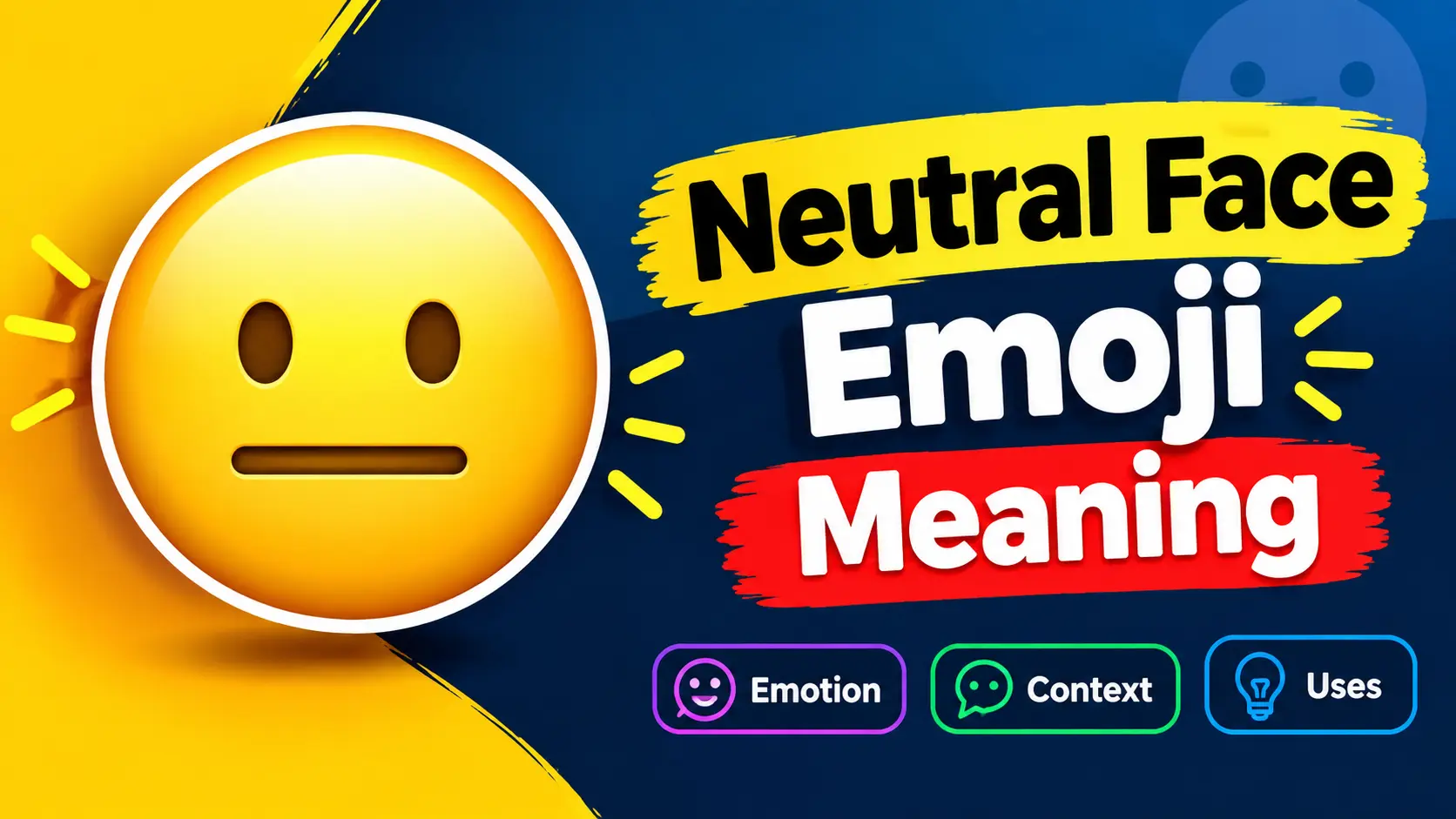
Sometimes, you don’t need a long reply to show that you have mixed or little reaction to something. The 😐 emoji can do that with just one expression.
The neutral face emoji is commonly used to show indifference, awkwardness, uncertainty, disappointment, or a lack of excitement. Its meaning can shift depending on the message and the mood of the conversation.
The neutral face emoji meaning may suggest that someone does not know how to respond, feels unimpressed, or simply wants to keep their reaction neutral.
What Does the Neutral Face Emoji 😐 Mean?
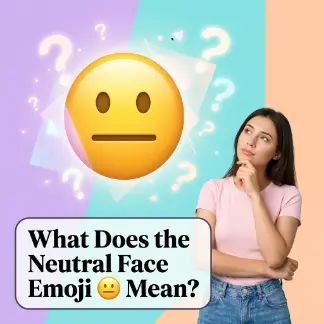
The neutral face emoji 😐 represents a face with a straight mouth and a calm, expressionless appearance. Its basic idea is neutrality or a lack of visible emotion.
Someone may use 😐 when they feel:
- Unimpressed
- Unsure
- Awkward
- Uncomfortable
- Bored
- Indifferent
- Mildly annoyed
- Disappointed
- Speechless
- Emotionally neutral
The important point is that 😐 does not automatically mean anger. It often communicates a reaction somewhere between positive and negative.
For instance:
“He said he forgot my birthday again 😐”
Here, 😐 could express disappointment or frustration without directly saying, “I’m upset.”
Now compare that with:
“The movie was okay 😐”
In this case, the emoji may simply mean the person was not impressed.
So, the neutral face emoji meaning depends heavily on the words, situation, and relationship between the people communicating.
Neutral Face Emoji Meaning in Texting
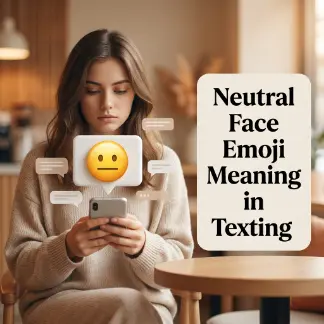
In texting, 😐 often works as a quick emotional reaction. Instead of writing a full sentence about how they feel, someone can send this emoji to show that something left them unimpressed, confused, awkward, or emotionally flat.
Consider this conversation:
Friend: “I told everyone your secret.”
You: “Why would you do that? 😐”
Here, 😐 adds a serious or disappointed tone.
Another example:
Friend: “I accidentally sent your screenshot to the person we were talking about.”
You: “😐”
A single 😐 can communicate, “Seriously?” or “I have no idea what to say.”
However, texting style matters. Some people use 😐 literally to show neutrality, while others use it sarcastically.
Common Texting Meanings of 😐
| Situation | Possible meaning |
| Someone tells a bad joke | Unimpressed |
| Someone says something strange | Confusion or awkwardness |
| You receive disappointing news | Disappointment |
| You do not know how to respond | Speechlessness |
| Someone annoys you | Mild irritation |
| A conversation becomes awkward | Awkwardness |
| You feel neither happy nor sad | Neutral feelings |
| Someone makes an obvious statement | Dry or sarcastic reaction |
The emoji itself does not tell you exactly which meaning applies. The surrounding conversation provides the missing information.
😐 Meaning on Social Media
On social media, the neutral face emoji can appear in comments, captions, direct messages, replies, and reactions.
People often use 😐 when they see something strange, disappointing, awkward, or underwhelming.
For example:
“They cancelled the concert at the last minute 😐”
The emoji can reinforce disappointment.
Someone might also comment:
“You really posted this? 😐”
That may sound judgmental or unimpressed, depending on the relationship.
On platforms where people frequently use emojis as reactions, 😐 can also mean, “I have no strong reaction to this.”
For example:
“New update is coming tomorrow 😐”
This might mean the person does not care much about the announcement.
Because social media conversations are often short, emojis can carry more emotional weight than they would in a longer conversation.
😐 Meaning in a Friendship
Among friends, 😐 can have several meanings.
A friend might use it when you say something ridiculous, make an awkward joke, or tell them about a frustrating situation.
For example:
You: “I spent $80 on a shirt because I thought it was $8.”
Friend: “😐”
Here, the friend may be jokingly judging your decision.
Another example:
You: “I forgot we had an exam today.”
Friend: “😐 Bro…”
The emoji could express disbelief.
Between close friends, 😐 can even become playful. The sender may not actually be angry. They may simply be pretending to be unimpressed.
Is 😐 a Bad Sign Between Friends?
Not necessarily.
A single 😐 does not prove that your friend is angry or upset with you. Look at the entire conversation.
If they continue chatting normally, joke with you, or use other friendly emojis, 😐 may simply be playful.
If their replies suddenly become short and serious, the emoji may reflect genuine annoyance or disappointment.
😐 Meaning in a Romantic Relationship
In romantic conversations, 😐 can be more noticeable because people often pay close attention to small changes in tone.
A boyfriend, girlfriend, spouse, or dating partner might use 😐 when something you said disappointed them or when they do not know how to react.
For example:
You: “I might cancel our plans again.”
Partner: “😐”
This could signal disappointment or irritation.
Another example:
You: “Your new haircut looks different.”
Partner: “Different how? 😐”
Here, the emoji may show uncertainty or concern about what you mean.
Still, it would be a mistake to assume that 😐 always signals relationship problems.
Sometimes a partner uses it playfully:
You: “I can definitely beat you at this game.”
Partner: “😐 Sure.”
In that situation, 😐 can create a dry, teasing tone.
😐 Meaning From a Girl
When a girl sends 😐, the meaning depends on what happened immediately before the emoji.
She might use it to show:
- Disappointment
- Awkwardness
- Confusion
- Mild annoyance
- Indifference
- Lack of enthusiasm
- A dry reaction
- “Seriously?”
For example:
You: “I forgot what you told me yesterday.”
Her: “😐”
She may be disappointed that you forgot.
But consider another situation:
You: “I think pineapple belongs on every pizza.”
Her: “😐”
This could simply be a humorous or unimpressed reaction.
If you are trying to understand 😐 meaning from a girl, do not focus only on the emoji. Look at her words, response length, previous messages, and usual texting style.
😐 Meaning From a Guy
A guy may use 😐 to express many of the same emotions.
He might send it after:
- Hearing an unbelievable story
- Receiving an annoying message
- Seeing something awkward
- Being disappointed
- Making a sarcastic reaction
- Feeling unsure what to say
For example:
You: “I sold your gaming chair without asking.”
Him: “😐”
That probably signals annoyance or disbelief.
But:
You: “I just watched the entire movie and still don’t understand it.”
Him: “😐 Same.”
Here, the emoji simply adds a dry or humorous tone.
Therefore, 😐 meaning from a guy cannot be determined by gender alone.
😐 Meaning From a Crush
If your crush sends 😐, it is understandable to wonder whether the emoji has a hidden romantic meaning.
Usually, 😐 by itself is not a clear flirting emoji. It tends to communicate neutrality, awkwardness, uncertainty, or mild disapproval rather than obvious attraction.
For example:
You: “I think I saw you looking at me today 😏”
Crush: “😐”
That response might suggest embarrassment, discomfort, denial, or simply a dry reaction.
On the other hand:
You: “I’m definitely going to beat you on our next date.”
Crush: “😐 You wish.”
Here, the emoji may be part of playful banter.
If you want to understand whether your crush is interested, consider the broader communication pattern instead of interpreting one emoji as proof of attraction.
😐 Meaning From a Partner
When a partner sends 😐, context becomes especially important.
The emoji can communicate:
Disappointment:
“You forgot our plans again 😐”
Confusion:
“Wait, what do you mean? 😐”
Mild annoyance:
“You did that without telling me? 😐”
Playfulness:
“You think you’re faster than me? 😐”
Indifference:
“I don’t really care which restaurant we choose 😐”
A partner who normally sends lots of expressive emojis may use 😐 deliberately to make their response feel more serious.
However, if they frequently use 😐, it may simply be part of their normal texting style.
Friendly Meaning of 😐
The neutral face can have a completely friendly meaning.
Friends may use it as a humorous reaction when somebody says something silly.
For example:
Friend: “I put my phone in the fridge because I couldn’t find it.”
You: “😐”
You are probably not angry.
It can almost function like a written reaction:
“What am I supposed to say to that?”
This is especially common among people who enjoy dry humor.
Romantic Meaning of 😐
The neutral face does not have a fixed romantic meaning.
Unlike emojis such as ❤️, 😘, or 🥰, it does not normally communicate affection directly.
In a romantic conversation, however, it can carry emotional subtext.
For example:
“So you’re going on a date with someone else? 😐”
The emoji could show jealousy, disappointment, or discomfort.
Another example:
“You look really good today 😐”
Depending on the conversation, this could be awkward flirting or playful understatement.
The surrounding words matter much more than the emoji alone.
Emotional Meaning of 😐
Emotionally, 😐 often sits in the middle.
Think of it as a reaction that does not strongly lean toward happiness or sadness.
Someone might use it when they are:
- Emotionally tired
- Unsure how they feel
- Unimpressed
- Trying not to overreact
- Holding back a stronger response
- Processing unexpected information
For example:
“I finally got the job, but the salary is much lower than expected 😐”
The person may feel both happy and disappointed. The neutral face captures that mixed or restrained reaction.
Playful Meaning of 😐
Sometimes 😐 is deliberately dramatic.
Someone might send it after a silly statement to pretend that they are completely unimpressed.
You: “I ate three burgers.”
Friend: “😐”
You: “What?”
Friend: “Nothing.”
The humor comes from the contrast between the ordinary-looking face and the ridiculous situation.
Close friends often use this kind of dry emoji humor because both people understand that the sender is not genuinely angry.
Sarcastic or Humorous Meaning of 😐
The neutral face works particularly well with sarcasm.
For example:
“Wow, another meeting at 7 a.m. 😐”
The sender probably does not feel neutral. They may be annoyed.
Another example:
“You only texted me after three days 😐”
This can communicate sarcasm and mild frustration without directly saying, “I’m annoyed with you.”
In these cases, 😐 can make a sentence feel colder or drier than words alone.
Positive and Negative Interpretations of 😐
The emoji itself is neither inherently positive nor negative.
Its interpretation depends on context.
| Interpretation | Example |
| Neutral | “Either option works for me 😐” |
| Unimpressed | “That was the whole surprise? 😐” |
| Confused | “What does that mean? 😐” |
| Disappointed | “You forgot again 😐” |
| Annoyed | “You changed the plan without asking 😐” |
| Awkward | “He asked me out in front of everyone 😐” |
| Sarcastic | “Great, another Monday meeting 😐” |
| Playful | “You think you can beat me? 😐” |
This range explains why looking up an emoji’s dictionary definition does not always solve the meaning of a real message.
When Do People Commonly Use 😐?
There are many everyday situations where 😐 fits naturally.
When Something Is Unimpressive
“The restaurant was expensive but the food was average 😐”
Here, the sender feels underwhelmed.
When Someone Says Something Obvious
“Water is wet 😐”
The emoji can add dry humor.
When Someone Is Confused
“Wait, you said what? 😐”
The face shows uncertainty.
When Someone Is Disappointed
“You promised you’d come 😐”
The emoji may soften or emphasize disappointment depending on the relationship.
When a Conversation Feels Awkward
“He called me by his ex’s name 😐”
The emoji highlights the uncomfortable situation.
When Someone Wants to Stay Emotionally Neutral
“Whatever you decide is fine with me 😐”
Here, the sender may genuinely be trying to avoid taking a side.
😐 vs 😑: What Is the Difference?
The neutral face 😐 and expressionless face 😑 can look similar, but people often use them differently.
😐 usually feels more neutral or uncertain.
😑 often feels more tired, annoyed, frustrated, or fed up.
Compare:
“I don’t know what to say 😐”
This sounds uncertain.
“You forgot your keys again? 😑”
This sounds more irritated.
The distinction is not absolute because emoji meanings depend on personal style.
😐 vs 🙄: What Is the Difference?
🙄 is commonly associated with eye-rolling.
It can express:
- Annoyance
- Disbelief
- Sarcasm
- Frustration
- “Here we go again”
😐 is usually more restrained.
For example:
“Okay 😐”
This could mean the person is unsure or unimpressed.
“Okay 🙄”
This more strongly suggests irritation or sarcasm.
😐 vs 😶: What Is the Difference?
😶 is the face without mouth emoji.
It can suggest that someone is speechless, unable to respond, or deliberately staying quiet.
😐 has a visible straight mouth and generally communicates a reaction rather than complete silence.
Compare:
“I seriously don’t know what to say 😶”
This suggests speechlessness.
“I don’t know about that 😐”
This suggests uncertainty or a neutral reaction.
😐 vs 🙂: What Is the Difference?
🙂 normally shows a slight smile.
Depending on context, it can express friendliness, politeness, mild happiness, or even passive-aggressive restraint.
😐 has no smile, so it generally feels less warm.
Compare:
“Sure 🙂”
This may sound friendly.
“Sure 😐”
This may sound uncertain, unimpressed, or emotionally flat.
Again, tone depends on the sender.
Common Misunderstandings About the Neutral Face Emoji
People sometimes assume that 😐 has one universal meaning. It does not.
Misunderstanding 1: 😐 Always Means Anger
Not necessarily.
Someone can use 😐 simply because they feel neutral or do not know what to say.
Misunderstanding 2: 😐 Means Someone Hates You
A single emoji cannot establish that.
You need to consider the broader conversation and relationship.
Misunderstanding 3: 😐 Is Always Negative
It can be negative, but it can also be neutral or playful.
Misunderstanding 4: 😐 From a Crush Means Rejection
Not automatically.
The person may be joking, confused, embarrassed, or unsure how to respond.
Misunderstanding 5: The Emoji Has the Same Meaning Everywhere
Emoji interpretation varies between individuals, cultures, age groups, and online communities.
Your friend’s use of 😐 may not match another person’s use of it.
How to Respond When Someone Sends 😐
Your best response depends on what happened before the emoji.
If the person seems annoyed, acknowledge the situation instead of joking immediately.
If a Friend Sends 😐
You can say:
“What? 😂”
or:
“Okay, I know that face. What did I do?”
These responses invite your friend to explain.
If Your Crush Sends 😐
Keep your response relaxed.
“Haha, okay, that reaction tells me everything 😂”
Or, if your message may have caused confusion:
“Wait, did that come across the wrong way?”
This gives them an opportunity to clarify.
If Your Partner Sends 😐
If the conversation seems serious, ask directly:
“Are you upset with me?”
Or:
“Did I say something wrong?”
A simple question can prevent you from guessing what the emoji means.
If Someone Sends 😐 in a Casual Conversation
You can respond naturally:
“Why so serious? 😂”
or:
“You look unimpressed.”
The best response depends on how well you know the person.
Examples of 😐 in Real Conversations
Example 1: Disappointment
A: “I forgot to bring the tickets.”
B: “😐”
Meaning: B may be disappointed or frustrated.
Example 2: Confusion
A: “I’m leaving tomorrow, but I’ll be back yesterday.”
B: “😐”
Meaning: B is reacting to something that does not make sense.
Example 3: Dry Humor
A: “I studied for five hours and still failed.”
B: “😐”
Meaning: The emoji can create a dry, humorous reaction.
Example 4: Mild Annoyance
A: “I told everyone about our private conversation.”
B: “😐”
Meaning: B may be unhappy about the situation.
Example 5: Indifference
A: “Do you want pizza or burgers?”
B: “😐 Either.”
Meaning: B does not have a strong preference.
Example 6: Awkward Situation
A: “My teacher accidentally called me by my sister’s name.”
B: “😐”
Meaning: The emoji reflects awkwardness or disbelief.
Example 7: Playful Reaction
A: “I can beat you at chess.”
B: “😐 You sure?”
Meaning: The emoji may show playful skepticism.
What Does 😐 Mean When Sent Alone?
A standalone 😐 can be harder to interpret because there are no words to provide context.
It might mean:
“Okay.”
“Seriously?”
“I don’t know.”
“I’m not impressed.”
“That’s awkward.”
“What am I supposed to say?”
“I’m not feeling anything about this.”
The previous message becomes especially important.
For example:
You: “I accidentally deleted our entire chat.”
Them: “😐”
This likely carries a different tone from:
You: “Do you want tea or coffee?”
Them: “😐”
In the first conversation, the emoji could signal frustration or disbelief. In the second, it might mean uncertainty or indifference.
Is 😐 Rude?
It can come across as rude in some conversations, but it is not inherently rude.
A person may interpret 😐 as cold or dismissive when they expected a warmer response.
For example:
You: “I got accepted into university!”
Them: “😐”
That response might feel unusually cold because the situation normally calls for enthusiasm.
On the other hand:
You: “I forgot my homework again.”
Teacher: “😐”
The same emoji could communicate understandable disappointment or disbelief.
Tone comes from context.
Does 😐 Mean “I Don’t Care”?
Sometimes, but not always.
If someone says:
“Choose whatever restaurant you want 😐”
they might mean they have no preference.
However, they could also be annoyed and using the emoji to show emotional distance.
To determine which meaning applies, look at what happened before the message and how the person normally communicates.
Does 😐 Mean Someone Is Mad?
It can indicate mild anger or irritation, but it does not automatically mean someone is mad.
A stronger negative reaction may involve several signals, such as:
- Short replies
- Abrupt wording
- Ignoring questions
- Repeated 😐 or 😑 emojis
- A sudden change in communication style
Even then, it is better to ask rather than assume.
Cultural and Personal Differences in Emoji Meaning
Emoji interpretation is not a fixed science.
People develop personal habits. One person might use 😐 only when annoyed, while another person might use it casually every day.
Age, online communities, cultural background, and communication style can also influence how people interpret emojis.
That means the safest approach is to treat the emoji as a clue rather than a complete message.
When the situation matters, ask:
“What did you mean by that?”
A short clarification can be more reliable than trying to decode an emoji on its own.
Quick Guide to the Neutral Face Emoji 😐
| Question | Likely interpretation |
| What does 😐 mean? | Neutral, unimpressed, awkward, uncertain, or mildly annoyed |
| Is 😐 negative? | Sometimes, but not always |
| Is 😐 flirty? | Not usually by itself |
| Does 😐 mean anger? | It can, but it is not automatically anger |
| Does 😐 mean “I don’t care”? | Sometimes |
| Is 😐 rude? | It can appear rude in certain contexts |
| Can 😐 be funny? | Yes, especially with dry humor |
| Does 😐 mean rejection? | Not necessarily |
| Can friends use 😐 playfully? | Yes |
| Should you worry about one 😐? | Usually not without additional context |
Frequently Asked Questions
What is the neutral face emoji meaning 😐?
The neutral face emoji 😐 usually communicates a flat, uncertain, unimpressed, awkward, or emotionally restrained reaction. Its exact meaning depends on the conversation.
What does 😐 mean in texting?
In texting, 😐 can mean “I don’t know what to say,” “I’m not impressed,” “Seriously?”, “That’s awkward,” or simply “I feel neutral.” The surrounding message determines the intended tone.
What does 😐 mean from a girl?
😐 from a girl may show disappointment, confusion, awkwardness, mild annoyance, indifference, or humor. It does not have one special meaning simply because a girl sent it.
What does 😐 mean from a guy?
A guy may use 😐 to show that he is unimpressed, confused, annoyed, uncertain, speechless, or jokingly skeptical. His normal texting style and the conversation provide more useful clues.
Is 😐 a flirty emoji?
Usually, 😐 is not considered a clearly flirty emoji. However, someone can use it during playful flirting or teasing, so the surrounding conversation matters.
Does 😐 mean someone is mad?
It can suggest irritation or disappointment, but 😐 does not automatically mean someone is angry. You should consider their words and behavior before deciding what they feel.
What is the difference between 😐 and 😑?
😐 generally looks more neutral or uncertain, while 😑 often carries a stronger sense of frustration, boredom, or being fed up. People can still use them differently depending on personal style.
How should I respond to 😐?
First, consider the context. If the person seems confused, explain yourself. If they seem annoyed, ask whether something is wrong.
Conclusion
The neutral face emoji meaning 😐 is broader than simply “neutral.” People use it to communicate a flat reaction, uncertainty, awkwardness, disappointment, mild annoyance, boredom, indifference, or dry humor. Its meaning can shift dramatically depending on the situation.
A friend might use 😐 to tease you, while a partner might use it to show disappointment. A crush might send it because they feel awkward, confused, or simply unimpressed. That is why you should never treat one emoji as a complete emotional statement. Pay attention to the words around it, the situation, your relationship with the sender, and their usual texting habits.

I am William Parker, a passionate writer dedicated to creating informative, engaging, and meaningful content for readers around the world. I enjoy exploring different topics, sharing valuable insights, and presenting ideas in a simple and easy-to-understand way. I am committed to providing well-researched articles that help readers learn, grow, and discover new perspectives.