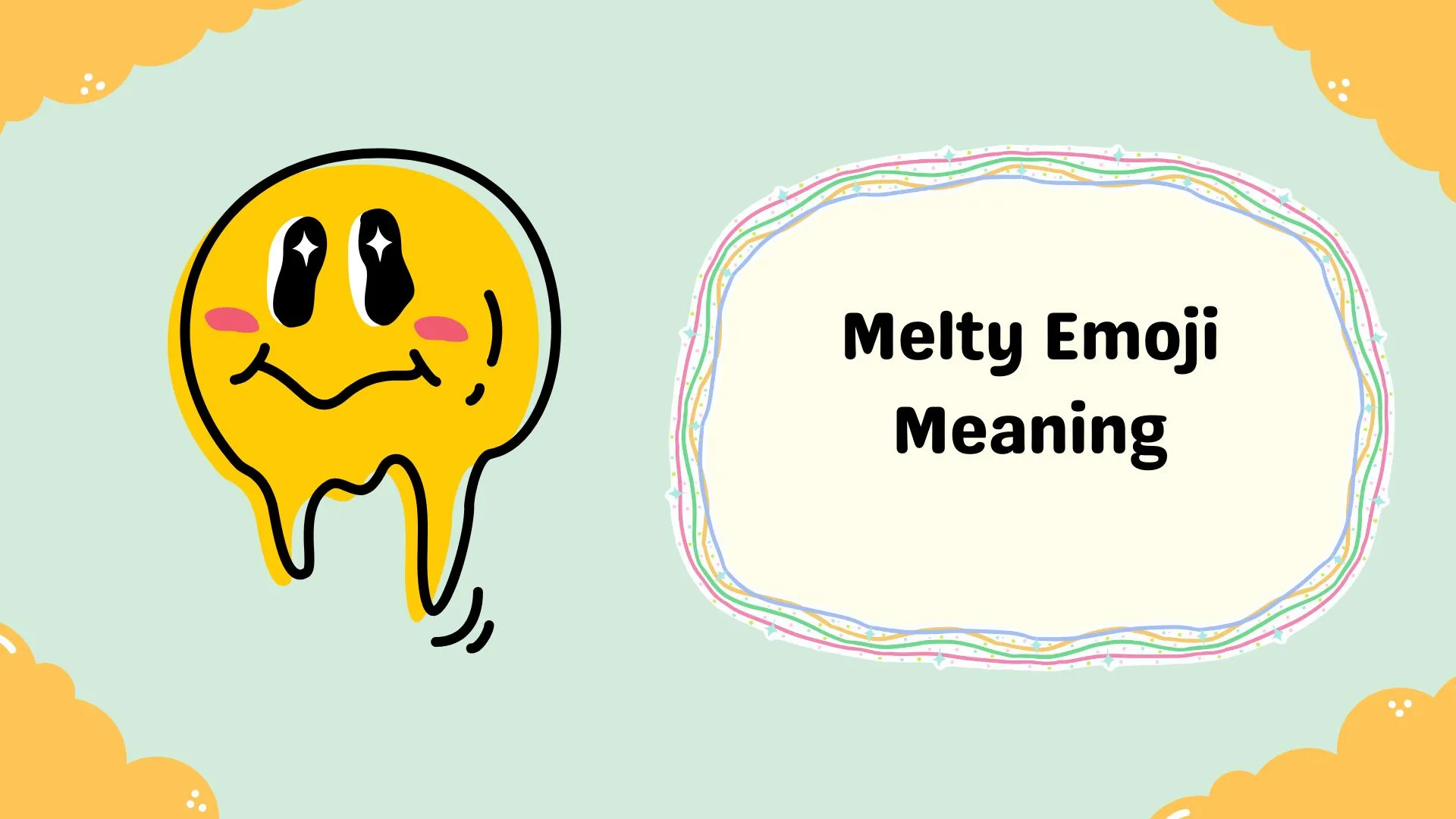
The Melty Emoji 🫠 has quickly become a popular way to express feelings that are difficult to put into words. But what does the Melty Emoji actually mean? This unique emoji usually represents feeling overwhelmed, embarrassed, exhausted, awkward, uncomfortable, or emotionally drained.
Its melting face can also suggest that someone is trying to stay calm while everything around them feels like too much.
Depending on the conversation, 🫠 can be funny, relatable, sarcastic, or even slightly dramatic. For example, someone might use it after making an embarrassing mistake, receiving an unexpected compliment, dealing with a stressful situation, or simply surviving a long day.
Quick Answer
The melty emoji 🫠 most often signals embarrassment, overwhelm, or a “this is fine” attitude while things feel shaky. It can also mean extreme heat, mild sarcasm, or melting from cuteness or flattery. Meaning depends heavily on the surrounding message and relationship between sender and receiver.
Table of Contents
- What Does Melty Emoji Mean?
- Spiritual Meaning
- Biblical Meaning
- Psychological Meaning
- Emotional Meaning
- Positive Meanings
- Negative Meanings
- Common Usage Scenarios
- Melty Emoji Meaning by Context and Tone
- Cultural Interpretations
- Is This Emoji Good or Bad?
- What Should You Do After Seeing or Sending This Emoji?
- Comparison Table
- FAQs
- Final Thoughts
What Does Melty Emoji Mean?
The melty emoji represents a face that is literally melting. Official descriptions from sources like Emojipedia note that the eyes and mouth slip while a smile persists. This visual creates room for both literal and figurative readings.
Literally, it points to extreme heat: a sweltering day, a broken air conditioner, or feeling overheated. Metaphorically, it stands for wanting to dissolve into the floor from embarrassment, carrying a heavy load of stress while still smiling, or experiencing a slow sense of dread. Many people also use it for sarcasm or self-deprecating humor. In lighter moments it can show being so charmed or flattered that you “melt.”
The emoji arrived in Unicode 14.0 in 2021. Designers Neil Cohn and Jennifer Daniel drew inspiration from Japanese manga tropes where embarrassed characters seem to dissolve or turn into paper. Its timing during the pandemic years helped it become a widely recognized symbol of quiet perseverance mixed with discomfort.
In short, the melty emoji is flexible. It rarely means pure joy or pure despair. Instead it sits in the messy middle, acknowledging difficulty while keeping a surface-level smile.
Spiritual Meaning
Spiritual traditions do not contain ancient symbols that match the modern melting face emoji. Still, some people interpret melting imagery more broadly. Melting can suggest the dissolving of rigid ego or old patterns so something new can form. In certain meditative or mindfulness practices, the idea of “softening” or releasing tight control appears as a positive step toward presence and acceptance.
Others link the visual of melting to feelings of vulnerability and surrender. When life feels intense, the emoji can serve as a quiet acknowledgment that resistance is fading. These readings remain personal and contemporary rather than rooted in established spiritual texts. Dream interpretation and spiritual symbolism vary depending on personal experiences, and the same is true for emoji use in reflective contexts.
Biblical Meaning
There is no direct biblical reference to a melting face emoji or equivalent modern symbol. Scripture does contain imagery of melting in contexts of judgment, fear, or divine presence, such as mountains melting or hearts melting with dread, but these passages address entirely different themes.
Modern users sometimes borrow the emoji for feelings of human frailty or humility. That application is informal and not grounded in biblical teaching. It is more accurate to say the emoji carries no strong or traditional biblical association. Forcing a connection would invent meaning rather than reflect existing symbolism.
Psychological Meaning
From a psychological viewpoint, the melty emoji often maps onto recognizable emotional states. Embarrassment and shame produce physical sensations many describe as wanting to disappear or “melt away.” The persistent smile on the emoji mirrors social masking, the tendency to appear composed while internal distress rises.
Overwhelm and anxiety also fit. The slow dissolving quality can represent cognitive or emotional load that exceeds current coping capacity. People under chronic stress or decision fatigue sometimes reach for this emoji because it captures the sense of barely holding shape. The “this is fine” meme energy frequently pairs with it, signaling resigned endurance rather than active crisis.
In positive psychology terms, occasional use can function as light self-compassion or humor that softens difficult moments. Sharing the emoji with trusted contacts may reduce isolation by naming an internal state that feels hard to put into words. Interpretation still depends on the individual’s broader emotional patterns, relationships, and current life stressors.
Emotional Meaning
Emotionally, the melty emoji commonly reflects:
- Mild-to-moderate embarrassment or secondhand cringe
- Quiet overwhelm or mental fatigue
- Anticipatory dread before an awkward conversation or task
- Heat-related discomfort mixed with resignation
- Soft vulnerability when receiving unexpected kindness or attention
- Self-aware sarcasm that keeps the tone light
It rarely signals explosive anger or pure delight. Instead it occupies the space of complicated, mixed feelings that many people experience daily yet struggle to label cleanly.
Positive Meanings
When used with warmth or playfulness, the melty emoji can carry uplifting notes:
- Being genuinely charmed or “melted” by someone’s cuteness, thoughtfulness, or humor
- Light-hearted admission of flattery (“Stop, you’re making me melt”)
- Shared recognition of a silly human moment that builds connection
- Gentle self-deprecation that invites empathy rather than judgment
- Acknowledgment of heat or stress with a touch of humor that keeps morale from sinking further
In these cases the emoji softens the message and signals emotional availability.
Negative Meanings
On the heavier side, the same emoji can point to:
- Desire to disappear from an embarrassing situation
- Feeling emotionally drained or stretched thin
- Slow-building anxiety or dread
- Sarcasm that masks frustration
- Resignation in the face of ongoing pressure
- Social discomfort that feels hard to escape
None of these readings are absolute. Tone, relationship history, and surrounding text determine whether the emoji feels supportive, distant, or concerning.
Common Usage Scenarios
Here are seven frequent real-world situations in which people send or receive the melty emoji. Each interpretation remains suggestive rather than fixed.
Sending Melty Emoji After an Awkward Social Moment
You trip over your words during a meeting, wave at a stranger by mistake, or reply-all to an email that was meant to be private. The emoji says “I am smiling through the cringe and wish the floor would open.” Generally neutral-to-negative; it invites gentle acknowledgment rather than problem-solving.
Using Melty Emoji for Extreme Heat
Air conditioning fails, a heatwave hits, or you step outside into oppressive humidity. The emoji works literally. Neutral and practical, often paired with 🥵 for extra clarity.
Melty Emoji as a Response to Overwhelm at Work or School
Multiple deadlines, back-to-back calls, or an overflowing inbox. The melting face signals “I am still functioning but capacity is low.” Mildly negative; it can open the door for support or realistic expectations.
Melting From a Compliment or Flirting
Someone praises your work, looks, or a thoughtful gesture. The emoji conveys bashful pleasure, “I’m melting a little.” Positive and warm when mutual.
Melty Emoji for Anticipatory Dread
A difficult conversation approaches, a performance looms, or results are pending. The emoji captures the slow sink of nerves. Neutral-to-negative depending on intensity.
Sarcastic Melty Emoji
“Sure, another last-minute change sounds perfect 🫠.” The smile plus melting delivers dry irony. Tone ranges from playful to pointed according to the relationship.
Melty Emoji After Exhaustion or All-Nighter
You finish a long stretch of effort and feel depleted. The emoji marks the end of the push. Neutral; it often seeks quiet understanding more than advice.
Melty Emoji Meaning by Context and Tone
Because the emoji lacks fixed color or location associations in the traditional sense, context and tone matter more than visual variations. Platforms render the melting slightly differently, yet the core image stays consistent. Pairing it with other emojis (🥵 for heat, 😅 for awkwardness, 🥰 for soft affection) further clarifies intent. Private messages between close friends often lean playful; professional or new contacts usually treat it as a mild stress signal.
Cultural Interpretations
In Western digital culture the melty emoji quickly became linked to pandemic-era resilience and everyday irony. English-language media frequently described it as a symbol of quiet perseverance while smiling through difficulty.
Across many online communities it functions as a shared shorthand for “I am not okay but I am coping.” In heat-prone regions the literal temperature reading remains strong. Younger users especially favor its meta-ironic flexibility. Interpretations stay relatively consistent globally because emoji travel faster than language-specific slang, though local humor styles influence frequency and pairing choices.
Is This Dream Good or Bad? (Adapted: Is This Emoji Good or Bad?)
The melty emoji is neither inherently good nor bad. It is a tool for expressing nuanced internal states. In supportive relationships it can foster connection and honesty. Overused in isolation it may signal unaddressed stress worth examining. As with most digital communication, the surrounding words and the existing trust level determine whether the message lands as light, heavy, or somewhere in between.
What Should You Do After Having This Dream? (Adapted: What Should You Do After Seeing or Sending This Emoji?)
Pause and notice the feeling that prompted the emoji. If you sent it, ask whether a fuller sentence or a short conversation would help the other person understand. If you received it, respond with simple curiosity or validation rather than immediate solutions, “Sounds like a lot, want to talk?” or a matching light emoji can keep the door open.
For repeated patterns of overwhelm or embarrassment, consider practical supports: clearer boundaries, rest, or speaking with a trusted friend or professional. Emojis are useful signals; they work best when paired with honest follow-up when needed.
Comparison Table
| Positive Symbolism | Negative Symbolism |
| Soft affection / charm | Embarrassment or shame |
| Shared humor | Overwhelm and mental fatigue |
| Light self-awareness | Anticipatory dread |
| Connection through vulnerability | Sarcasm masking frustration |
| Acknowledgment of heat with humor | Desire to disappear |
FAQs
What does the melty emoji mean from a girl?
Often mild embarrassment, being flattered, or gentle overwhelm. Context and her usual texting style clarify whether it leans playful, stressed, or affectionate. Many women use it for “I’m melting from the compliment” moments.
What does the melty emoji mean from a guy?
Frequently signals awkwardness, work stress, heat, or dry humor. Some men also use it for soft attraction. Look at the rest of the message rather than the emoji alone.
Is the melting face emoji flirty?
It can be when paired with compliments or light teasing. Alone it is more often about awkwardness or overwhelm. Flirty intent usually appears through surrounding words and established rapport.
When was the melty emoji released?
It was approved in Unicode 14.0 and added to major platforms in 2021. Its popularity grew quickly during and after the pandemic years.
Can the melty emoji mean I’m hot?
Yes, both literally (temperature) and sometimes figuratively (attractiveness or intensity). The heat reading is one of the most straightforward uses.
Should I reply to a melty emoji?
A short, matching-tone response works well. Matching energy or offering a brief check-in shows you noticed without overreacting.
Final Thoughts
The melty emoji 🫠 thrives because modern life often feels like holding a smile while the ground softens underneath. It gives people a compact way to name embarrassment, heat, fatigue, dread, sarcasm, and even quiet delight. Meanings shift with context, relationship, and personal style.
The most useful approach is to treat the emoji as an invitation to notice what is happening inside and, when appropriate, to communicate a little more clearly. Your own feelings and experiences remain the best guide to both sending and interpreting it

I am James Wilson, a passionate writer dedicated to creating informative, engaging, and valuable content for readers around the world. I am focused on sharing well-researched ideas, practical insights, and helpful information that inspires learning and growth. With a strong interest in writing and exploring different topics, I aim to provide content that is clear, meaningful, and easy to understand.