Ever noticed an emoji where the nose appears to sit strangely on the side of the head and wondered what it is trying to express? This unusual facial design can catch your attention because it looks different from the typical smiling or expressive emojis we use every day. People may use such emojis to show a particular emotion, reaction, or playful mood in digital conversations.
The Emoji With Nose on Side of Head Meaning depends on the specific emoji and the context in which it appears. Its appearance may also look slightly different across devices, apps, and platforms, which can make the facial features seem unusual or confusing. Understanding the design can help you figure out what someone intended when they used it.
If you’re trying to understand what the emoji with the nose on the side of the head means, looking at its expression and surrounding message is important. In this guide, we’ll explain its possible meaning, common uses in texting, emotional interpretations, and examples to make this unusual emoji easier to understand.
What Does the Emoji With Nose on Side of Head Mean?
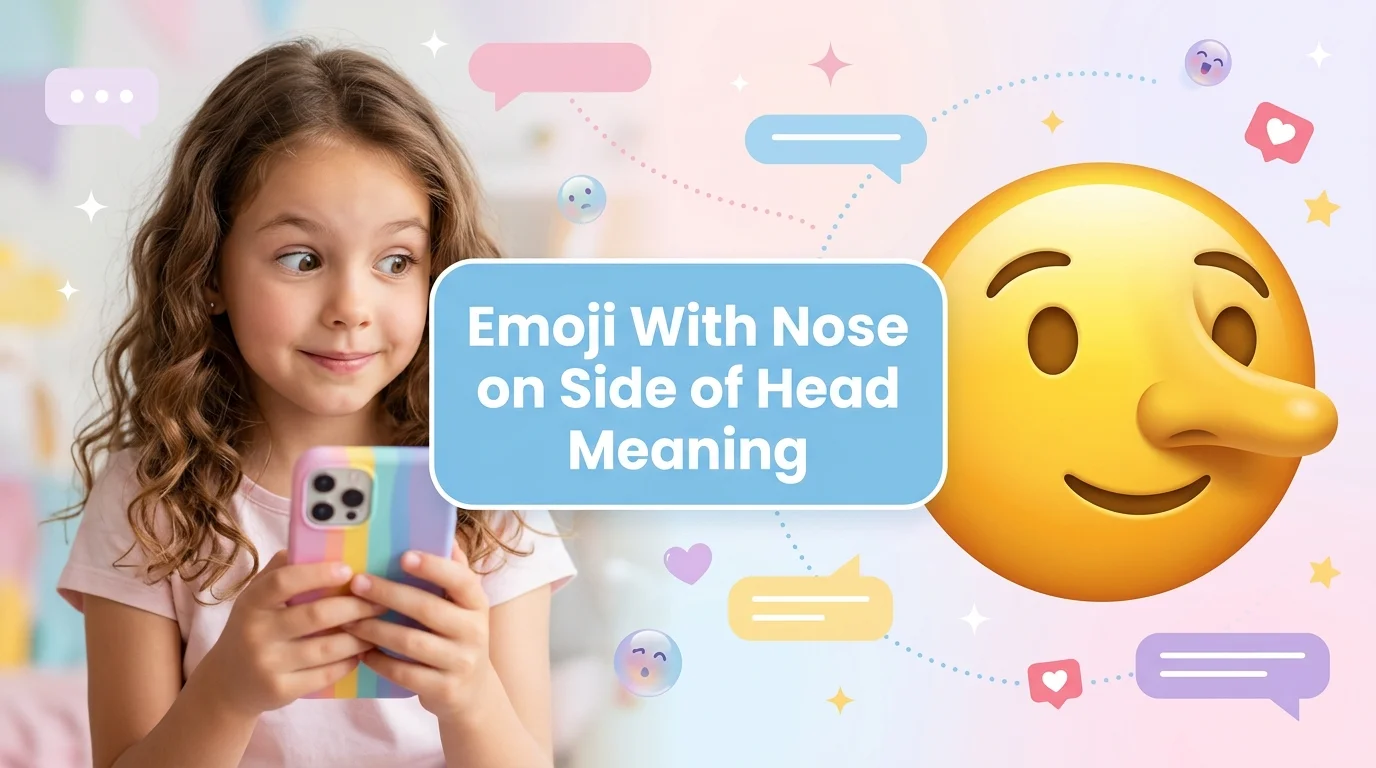
The emoji with nose on side of head can be difficult to identify because “nose on the side” is a visual description rather than an official emoji name.
If someone uses this phrase while searching for an emoji, they may be describing a face that has an exaggerated, unusual, crooked, or side-positioned nose. It may also refer to a custom emoji, sticker, Bitmoji, or platform-specific design rather than a standard Unicode emoji.
Depending on the exact face, the message could communicate:
- Confusion
- Disbelief
- Humor
- Weirdness
- Surprise
- Disapproval
- Playfulness
- Sarcasm
- A reaction to something strange
- A funny facial expression
So, the visual appearance alone isn’t enough to determine the intended message.
For example:
“What did I just read? 😳”
Here, the face expresses surprise.
But:
“Bro really said that 😂”
The same general idea of an unusual facial reaction could be humorous rather than serious.
Context matters more than the nose itself.
Why Is the Nose Positioned Differently?
One reason people search for the emoji with nose on side of head meaning is that emoji artwork can look noticeably different across platforms.
Emoji characters are standardized as Unicode characters, but companies can design their own visual versions. Apple, Google, Microsoft, Samsung, and social-media platforms may display the same character differently.
This means an emoji can have:
- A different nose shape
- Different facial proportions
- Different eyes
- Different mouth expressions
- Different skin tones
- Different shading
- A different overall style
In some cases, what looks like a nose on the side of the head may simply be the platform’s artistic interpretation.
That’s why it’s useful to identify the actual emoji character rather than relying only on its appearance.
Emoji With Nose on Side of Head Meaning in Texting
In texting, unusual facial emojis usually work as reaction emojis. They add emotion to a message without requiring a long explanation.
A person may send a strange-looking face after reading something unexpected, funny, awkward, or confusing.
For example:
Person A: “I accidentally sent my private message to the group chat.”
Person B: “NO WAY 😭”
The emoji adds emotional intensity.
Another example:
Person A: “I told my teacher I forgot the homework again.”
Person B: “You did WHAT? 💀”
Here, the reaction communicates disbelief and humor.
If the emoji you’re calling the emoji with nose on side of head has a funny or distorted appearance, it may simply be used to make the reaction more dramatic.
Common texting meanings
| Situation | Possible meaning |
| Something surprising happened | “Seriously?” |
| Someone said something strange | “What was that?” |
| A joke was made | “That’s funny.” |
| An awkward moment occurred | “This is awkward.” |
| Someone made a questionable comment | “I don’t know about that.” |
| Friends are teasing each other | Playful reaction |
| Something seems unbelievable | Disbelief |
| Someone wants to exaggerate a reaction | Humor or drama |
These are possible interpretations, not fixed definitions.
Meaning on Snapchat, Instagram, TikTok, and Social Media
Social media changes how people use emojis because reactions are often shorter and more expressive than ordinary conversation.
On Instagram or TikTok, an unusual facial emoji may appear in:
- Comments
- Captions
- Direct messages
- Replies
- Meme conversations
- Reaction posts
- Story responses
Someone might use a strange-looking face to react to a video that feels ridiculous or unexpected.
For example:
“The ending had me like 😭”
Or:
“Why would he even do that 💀”
In these situations, the emoji doesn’t necessarily have a literal meaning. It’s functioning like a visual reaction.
Social media users also frequently combine emojis with slang. The surrounding words often tell you more than the emoji itself.
Is It a Real Emoji or a Sticker?
This is an important distinction.
Not every image that looks like an emoji is actually a standard Unicode emoji. Messaging apps and social platforms also provide:
- Stickers
- GIFs
- Custom reactions
- Avatars
- Bitmoji
- Animated faces
- Meme images
A custom sticker might show a face with a dramatically oversized or oddly positioned nose. Searching for its “official meaning” may therefore lead nowhere.
If you see the image only in one particular app, it could be an app-specific graphic rather than a universal emoji.
Standard emoji vs. custom graphic
| Type | Meaning |
| Unicode emoji | Generally standardized character with a commonly recognized name |
| Sticker | Custom image with flexible meaning |
| GIF | Animated reaction |
| Bitmoji/avatar | Personalized character |
| Meme face | Usually humorous and context-based |
This distinction can solve many emoji-identification problems.
Emoji With Nose on Side of Head Meaning From a Girl
If a girl sends you an unusual facial emoji, don’t automatically assume that she’s flirting or sending a hidden romantic message.
Her meaning depends on the conversation.
For example:
You: “I ate an entire pizza by myself.”
Her: “What 😭”
She may simply be reacting with surprise.
Another example:
You: “I think your cat likes me more than you.”
Her: “🙄”
That could be playful annoyance.
If she sends a strange face after you make a joke, it may simply mean:
“You’re being ridiculous.”
The relationship matters too. A close friend may use unusual emojis much more freely than someone you barely know.
Emoji With Nose on Side of Head Meaning From a Guy
The same principle applies when a guy sends the emoji.
A guy may use an unusual face to show:
- Amusement
- Confusion
- Disbelief
- Teasing
- Awkwardness
- Surprise
- Sarcasm
For example:
You: “I’m going to wake up at 5 AM every day now.”
Him: “Sure bro 😂”
The reaction may suggest that he doesn’t believe you.
Or:
You: “I just fell off my chair.”
Him: “💀”
The reaction is humorous rather than romantic.
Don’t interpret an emoji from a guy differently simply because of his gender. Look at the actual conversation.
What Does It Mean From a Crush?
When a crush sends an unusual facial emoji, people often wonder whether it means flirting.
Sometimes it can be playful flirting, but the emoji alone cannot prove romantic interest.
Consider this conversation:
You: “You looked really good today.”
Your crush: “Stoppp 😳”
The face and wording together may show embarrassment or playful shyness.
Now compare:
You: “Did you finish the assignment?”
Your crush: “No 😭”
That is probably just a reaction to the assignment.
The same emoji can communicate completely different things depending on the words around it.
Look for the overall pattern
Instead of analyzing one emoji by itself, consider:
- What did they say before sending it?
- Do they normally use emojis?
- Are they joking with you?
- Are they complimenting you?
- Do they continue the conversation?
- Is the conversation personal or casual?
- Are they using other affectionate emojis?
This gives you much better context.
Meaning in Romantic Relationships
Partners often use emojis in exaggerated and playful ways.
An unusual facial emoji may communicate a joking reaction such as:
“You are so weird 😂”
or:
“I can’t believe you did that.”
It can also soften a teasing statement.
For example:
“You really think you’re getting the last slice? 😏”
Here, the emoji adds a playful tone.
However, an unusual facial emoji does not automatically mean romance. Couples also use reaction emojis for ordinary conversations, jokes, complaints, and everyday situations.
Friendly Meaning
Among friends, strange emojis are often used simply because they’re funny.
Friendship conversations tend to have lots of inside jokes and exaggerated reactions.
For example:
Friend: “I told everyone I could cook.”
You: “And?”
Friend: “I burned the water.”
You: “😭💀”
The facial reaction communicates amusement and disbelief.
Friends may also deliberately use unusual emojis because they look ridiculous. In that case, the visual appearance itself becomes part of the joke.
Playful Meaning
A funny-looking face can make an ordinary sentence feel playful.
Compare:
“You’re inexplicable.”
with:
“You’re inexplicable 😂”
The second version feels less harsh.
An unusual face can create an even more exaggerated reaction:
“You actually did it 😭”
This is why people sometimes use strange emoji designs even when a more obvious emoji would technically communicate the same emotion.
Sarcastic or Humorous Meaning
Emoji are frequently used to signal sarcasm.
Suppose someone says:
“Yeah, because that was definitely a good idea.”
Adding a funny facial reaction can make it clear that the speaker doesn’t mean the statement literally.
However, sarcasm can be difficult to interpret in text. If the words sound serious, don’t assume the emoji completely changes the meaning.
Look at the entire message.
Example
“You forgot your keys again. Amazing 😭”
The word “Amazing” may be sarcastic, while the emoji reinforces the humorous frustration.
Emotional Meaning
An unusual facial emoji may represent a strong emotional reaction rather than one specific feeling.
It can show:
Surprise:
“Wait, what happened?”
Confusion:
“I don’t understand this.”
Disbelief:
“You seriously did that?”
Embarrassment:
“Why did I say that?”
Amusement:
“That is hilarious.”
Awkwardness:
“This situation is weird.”
Annoyance:
“Are you kidding me?”
The exact emotion comes from the conversation.
Positive and Negative Interpretations
The emoji can have either a positive or negative tone.
Positive interpretations
A funny face can mean:
- “That’s hilarious.”
- “You’re funny.”
- “I’m joking.”
- “That was unexpected.”
- “I’m teasing you.”
- “This is entertaining.”
Negative interpretations
Depending on the situation, it may also suggest:
- “That’s weird.”
- “I don’t like that.”
- “Are you serious?”
- “That was awkward.”
- “I’m annoyed.”
- “I don’t believe you.”
Don’t judge the tone from the emoji’s appearance alone.
A smile, laughing emoji, or playful wording usually pushes the meaning toward humor. A complaint or argument may make the same reaction feel negative.
Meaning in Different Relationships
Here’s a quick comparison:
| Relationship | Possible interpretation |
| Best friend | Joke, teasing, disbelief |
| Classmate | Surprise or confusion |
| Coworker | Reaction to something unexpected |
| Crush | Playfulness, embarrassment, or flirting depending on context |
| Partner | Teasing, affection, surprise, or humor |
| Stranger | General reaction or humor |
| Family member | Surprise, joking, or confusion |
The emoji itself doesn’t determine the relationship meaning.
Your existing communication style does.
How to Respond When Someone Sends This Emoji
Your response should match the conversation rather than focusing too heavily on the emoji.
If a friend sends it after a joke, you can joke back.
“😂 What? I’m serious!”
If someone seems confused:
“Wait, what part confused you?”
If your crush sends it after you tease them:
“You know I’m just messing with you 😄”
If your partner sends it after you say something surprising:
“I knew you’d react like that 😂”
If you’re unsure what they mean, the simplest response is often:
“Wait, what does that face mean? 😂”
There’s nothing wrong with asking.
How to Know What the Emoji Really Means
When you can’t identify an emoji, use a simple three-step approach.
Check the words
Read the message without the emoji.
Ask yourself:
What is the person actually saying?
The text usually provides the foundation for the meaning.
Check the conversation
Look at the previous few messages.
Was the conversation:
- Funny?
- Serious?
- Romantic?
- Argumentative?
- Awkward?
- Friendly?
- Confusing?
The emoji should be interpreted within that setting.
Check the relationship
Think about who sent it.
A best friend, romantic partner, coworker, and stranger may use the same emoji differently.
This approach is much more reliable than searching for a single dictionary-style definition.
Common Misunderstandings About the Emoji
“The nose position must have a secret meaning.”
Not necessarily.
Emoji artwork can look unusual because of platform design or visual style. A strange-looking nose doesn’t automatically indicate a hidden message.
“If someone sends it, they’re flirting.”
Not necessarily.
Flirting depends on the overall conversation. One emoji isn’t enough evidence.
“Every emoji has one official texting meaning.”
That’s also incorrect.
Unicode can standardize characters and names, but everyday users develop flexible meanings through context and culture.
“The same emoji looks identical everywhere.”
It doesn’t.
Different platforms can render the same emoji differently.
“A strange emoji always means something negative.”
No.
People frequently use weird-looking faces to make conversations funnier.
Similar Facial Emojis and How They Differ
If you’re trying to identify an emoji with nose on side of head, comparing it with familiar reaction emojis can help.
😳 Flushed Face
This usually suggests embarrassment, surprise, shyness, or feeling exposed.
For example:
“You actually noticed? 😳”
🤔 Thinking Face
This generally communicates thinking, questioning, or doubt.
“Are you sure about that? 🤔”
🤨 Face With Raised Eyebrow
This often communicates skepticism or suspicion.
“You expect me to believe that? 🤨”
🙄 Face With Rolling Eyes
This can express annoyance, disbelief, sarcasm, or playful frustration.
“Oh, here we go again 🙄”
😭 Loudly Crying Face
Although it literally shows crying, many people also use it for extreme laughter, emotional overload, or dramatic reactions.
“That was so funny 😭”
💀 Skull
The skull often means “I’m dead” in a figurative internet-slang sense, especially after something extremely funny or embarrassing.
“Bro actually said that 💀”
These familiar emojis show why context matters. Visual appearance and conversational meaning aren’t always identical.
Why People Use Unusual Emojis
People don’t always choose emojis because they’re searching for a precise definition.
Sometimes they simply choose an emoji because:
- It looks funny.
- It matches their mood.
- It makes the message more expressive.
- It fits an inside joke.
- It exaggerates their reaction.
- It makes teasing feel lighter.
- They use it frequently out of habit.
That’s particularly common among friends and younger social-media users.
An emoji can become part of someone’s personal communication style.
Emoji Meaning Can Change by Culture
Emoji interpretation isn’t universal.
A gesture, face, or symbol can carry different associations across communities and cultures. Internet slang can also change quickly.
Someone who regularly communicates online may interpret an emoji differently from someone who rarely uses emojis.
Age and platform can matter too.
For example, one person may use a crying face literally, while another uses it to mean:
“That was unbelievably funny.”
Neither interpretation is automatically wrong. The conversation provides the clue.
When the Emoji Is Hard to Identify
If someone sends you an emoji that looks like it has a nose on the side of its head, try these steps:
- Copy the emoji and search its exact character.
- Check which app or device displayed it.
- Compare it with emoji lists from the platform.
- Look at the surrounding message.
- Ask the sender if the meaning remains unclear.
This is especially useful if the image is actually a sticker or custom avatar.
If you’re writing an article about the emoji, it’s also better to identify the actual Unicode character before assigning it a specific name or definition.
Examples of Realistic Conversations
Example: Surprise
Friend: “I got tickets for tomorrow.”
You: “Wait, seriously? 😳”
Meaning: Surprise and excitement.
Example: Confusion
Friend: “I’m going to explain quantum physics in five minutes.”
You: “What are you talking about? 🤨”
Meaning: Doubt or confusion.
Example: Teasing
Friend: “I’m definitely the smartest person here.”
You: “Sure you are 😂”
Meaning: Playful sarcasm.
Example: Awkward moment
Person A: “I accidentally called my boss ‘Mom.’”
Person B: “Oh no 😭”
Meaning: Embarrassment and amusement.
Example: Romantic teasing
Partner: “You can’t have the last cookie.”
You: “Watch me 😏”
Meaning: Playful confidence.
Example: Confusion in a group chat
Friend: “Let’s meet at 3.”
Another friend: “3 AM, right?”
You: “Bro what 💀”
Meaning: Disbelief and humor.
These examples show why the surrounding words are essential.
Can the Emoji Be Rude?
It can, depending on context.
A reaction that seems funny among close friends could feel dismissive when sent during a serious conversation.
For example:
“I’m really upset about what happened.”
Responding with a strange laughing or mocking-looking face could appear insensitive.
On the other hand:
“I forgot my password again.”
A funny reaction might be completely harmless between close friends.
Relationship + context + timing determine the tone.
Can It Mean “You’re Weird”?
Yes, an unusual face can sometimes be used to call attention to something strange.
For example:
“You eat cereal with orange juice?”
“😐”
The reaction might communicate:
“That’s weird.”
But even this interpretation isn’t universal. Close friends may use such reactions affectionately rather than critically.
Does It Have a Romantic Meaning?
Not by itself.
An emoji with an unusual facial expression can appear in romantic conversations, but its presence doesn’t automatically mean love, attraction, or flirting.
If you’re trying to understand whether someone is interested in you, consider the broader communication pattern rather than one emoji.
Look at:
- Their wording
- Their effort in conversations
- Whether they initiate chats
- Their use of affectionate language
- The subject of the conversation
- Their behavior outside the emoji itself
An emoji is a small part of communication.
Is There an Official Name for the Emoji With Nose on Side of Head?
The phrase “emoji with nose on side of head” isn’t itself a standard Unicode emoji name.
That’s important because people often describe emojis visually when they don’t know their official names.
For example, someone might search:
“emoji with nose on side of head meaning”
because they remember how it looks but not what it is called.
If the image is a standard emoji, its official Unicode name may be completely different from the description used in search queries.
If it’s a sticker, custom emoji, or avatar, it may not have a universal official name at all.
Quick Guide to Interpreting the Emoji
When someone sends an unfamiliar facial emoji, use this quick guide:
| If the conversation is… | The emoji may express… |
| Funny | Amusement |
| Romantic | Playfulness or affection |
| Serious | Emotional reaction |
| Confusing | Uncertainty |
| Argumentative | Frustration or disbelief |
| Friendly | Teasing |
| Unexpected | Surprise |
| Awkward | Embarrassment |
| Sarcastic | Irony or disbelief |
Again, these are possible meanings rather than fixed rules.
What Should You Do If You’re Still Confused?
Don’t overthink it.
If the emoji appears after a clear joke, its meaning is probably connected to that joke. If it appears during a serious discussion, pay more attention to the person’s words and tone.
When the meaning genuinely isn’t clear, ask.
A simple:
“What does that face mean? 😂”
can prevent a lot of unnecessary confusion.
Text conversations don’t include facial expressions, voice tone, or body language, so misunderstandings happen easily. Asking for clarification is often better than assuming the worst.
Frequently Asked Questions
What does the emoji with nose on side of head mean?
The phrase usually describes an unusual-looking facial emoji rather than an official emoji name. Its meaning depends on the exact emoji and the context in which someone uses it.
Is the emoji with nose on side of head a real emoji?
It may refer to a standard emoji, a platform-specific design, sticker, avatar, or custom graphic. The visual description alone isn’t enough to identify it.
Does the emoji with nose on side of head mean flirting?
Not necessarily. It could express humor, surprise, confusion, teasing, or embarrassment. A romantic interpretation requires context from the conversation.
What does it mean when a girl sends this emoji?
It depends on what she says before and after it. She may be joking, surprised, confused, teasing you, or expressing another reaction. The emoji alone doesn’t establish romantic interest.
What does it mean when a guy sends this emoji?
A guy may use it to express humor, disbelief, confusion, teasing, awkwardness, or surprise. His wording and your relationship provide more useful clues than the emoji’s appearance.
Can the emoji have different meanings on different apps?
Yes. Emoji designs can vary across platforms, and some apps also use custom stickers or avatars. These differences can make the same visual appear quite different.
How should I respond to this emoji?
Respond according to the conversation. You can joke back, clarify what the person means, or simply continue the conversation. If you’re unsure, asking what they meant is perfectly fine.
Why does the emoji look different on my phone?
Different platforms use different artwork for emoji characters. Changes in facial proportions, noses, eyes, colors, and other details can make one emoji look noticeably different from another platform’s version.
Conclusion
The emoji with nose on side of head meaning can be difficult to define because the phrase describes an appearance rather than one universally recognized emoji name. The unusual nose may belong to a standard emoji design, a platform-specific version, a sticker, or a custom graphic.
In everyday texting, a strange facial emoji can express surprise, confusion, humor, disbelief, awkwardness, teasing, sarcasm, or playfulness. Its meaning can also change depending on whether you’re talking to a friend, crush, partner, family member, coworker, or stranger.

I am William Parker, a passionate writer dedicated to creating informative, engaging, and meaningful content for readers around the world. I enjoy exploring different topics, sharing valuable insights, and presenting ideas in a simple and easy-to-understand way. I am committed to providing well-researched articles that help readers learn, grow, and discover new perspectives.