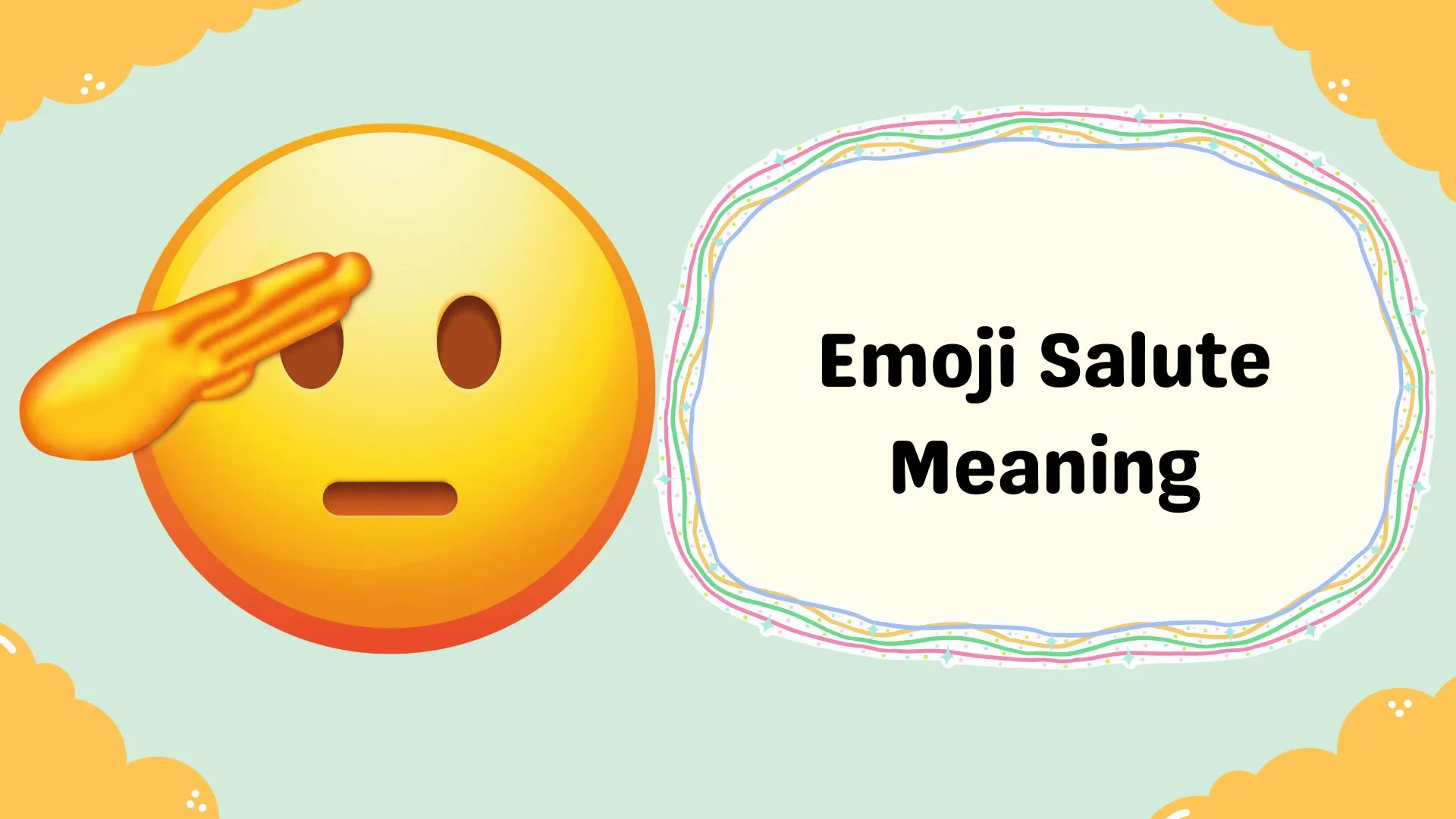
The Emoji Salute Meaning can be both respectful and playful, depending on the emoji and the context in which it is used. The emoji, commonly known as the Saluting Face emoji, is often used to show respect, appreciation, loyalty, agreement, or a sense of duty.
Someone might send to mean “Yes, understood,” “I respect that,” “Got it,” or “I’m on it.” In casual texting, it can also be used humorously when someone accepts a task, follows instructions, or wants to show support in a dramatic way.
The meaning can change depending on who sends it and what was said before it. For example, a friend may use 🫡 as a funny way to agree with you, while someone in a serious conversation may use it to express genuine respect.
Quick Answer
The emoji (officially called the saluting face) most often shows respect, acknowledgment, or agreement. Many people use it to mean “yes, sir,” “copy that,” or “I respect that.” It can also signal solidarity during tough times or carry a light sarcastic tone. Context and the relationship between people usually decide the exact message.
Table of Contents
- Emoji Salute Meaning
- Spiritual Meaning
- Biblical Meaning
- Psychological Meaning
- Emotional Meaning
- Positive Meanings
- Negative Meanings
- Common Dream Scenarios Involving Salutes or the Emoji
- Dream Meaning by Color
- Cultural Interpretations
- Is This Symbol Good or Bad?
- What Should You Do After Seeing or Using This Emoji?
- Comparison Table
- FAQs
- Final Thoughts
What Does the Emoji Salute Meaning?
The 🫡 saluting face emoji shows a yellow face with a hand raised to the forehead in a classic salute. It joined the emoji set in 2021 as part of Unicode 14.0 after years of popular requests. Designers intended it to represent a military-style salute while also serving as a general sign of respect or even a face shielding the eyes from bright light.
In practice, people use it in several overlapping ways. The most common is sincere respect or admiration. Someone shares good news or handles a hard situation well, and the reply is simply 🫡. It can also mean compliance or acknowledgment: “I’ll take care of it” or “message received.” In group chats during stressful periods, it has appeared as a quiet show of solidarity.
At the same time, the emoji often carries a playful or ironic edge. A boss assigns extra work late on a Friday and the reply is 🫡. The gesture looks obedient, yet the tone can feel resigned or mildly sarcastic. Dream interpretation varies depending on personal experiences, and the same is true for this emoji, its meaning shifts with the conversation and the people involved.
Emotionally, the salute can reflect pride in duty, a desire for recognition, or acceptance of a situation that cannot be changed. Practically, it functions as a short, efficient reaction that needs almost no extra words.
Spiritual Meaning
Some people view the salute as a modern echo of older gestures of honor and deference. In spiritual conversations, raising a hand to the brow can symbolize recognition of something greater than oneself, whether that is a higher power, a shared purpose, or the dignity of another person.
Many believe the gesture points toward humility and readiness. It suggests a willingness to serve or stand for a principle. In online spaces, the emoji sometimes appears when people mark a moment of collective support or quiet commitment. Traditional dream symbolism often links formal gestures like salutes to themes of loyalty and inner order. The emoji can carry a similar feeling of aligning oneself with a cause or value.
Of course, spiritual readings remain personal. What feels like a sacred acknowledgment to one person may simply feel polite to another.
Biblical Meaning
There is no direct biblical reference to the modern salute emoji or the exact hand-to-forehead gesture used in most Western military traditions. The Bible does contain many scenes of honor, bowing, or standing in respect before authority or before God. Gestures of reverence appear throughout scripture, yet the specific form of today’s military salute developed much later.
Some readers may connect the idea of respectful acknowledgment with biblical calls to honor others or to serve faithfully. Others prefer not to force a connection. If the emoji appears in a dream with religious themes, personal faith and the surrounding dream details usually matter more than any fixed interpretation.
Psychological Meaning
From a psychological angle, the salute emoji often reflects how we handle hierarchy, recognition, and social roles. Modern psychology looks at symbols as expressions of subconscious attitudes toward authority, belonging, and self-image.
Sending or receiving 🫡 can signal a need for structure or a desire to feel useful. In workplaces, it frequently appears when people accept tasks or show they are reliable. During periods of uncertainty, such as company changes or personal challenges, it can serve as a coping signal: “I am still here and still showing up.”
Dream experts sometimes suggest that saluting in dreams points to questions about personal power, respect, or the urge to control emotions. The emoji version may carry related feelings. Someone who frequently uses or notices the salute might be navigating issues of compliance versus independence, or seeking acknowledgment for quiet effort. Anxiety, stress, goals, and relationship dynamics all influence how the symbol lands.
Emotional Meaning
The emoji commonly reflects a mix of steady emotions rather than intense ones. Respect and quiet pride sit at the center. It can also express mild resignation, readiness, or supportive solidarity.
People often reach for 🫡 when words feel too heavy or too casual. It offers a middle path, formal enough to show seriousness, light enough to keep the tone friendly. In group settings it can create a sense of “we’re in this together.” When used sarcastically, it may mask frustration or fatigue while still maintaining politeness.
Positive Meanings
Many positive associations surround the salute emoji:
- Genuine respect for someone’s effort or character
- Clear acknowledgment that a message was received
- A sense of duty and reliability
- Solidarity during difficult shared experiences
- Polite agreement without lengthy explanation
- Recognition of service or achievement
- A light way to say “you’ve got this” or “well handled”
These readings tend to feel supportive and connecting.
Negative Meanings
The same symbol can carry heavier or more complicated tones:
- Reluctant obedience or resignation
- Sarcastic agreement that hides annoyance
- Feeling trapped in a hierarchy or obligation
- Emotional distance masked as formality
- A warning that someone feels unheard or undervalued
- Over-formality that creates distance instead of closeness
Context usually reveals whether the negative side is present. A string of 🫡 replies after repeated demands may signal growing frustration.
Common Dream Scenarios Involving Salutes or the Emoji
Dreams rarely feature the exact yellow emoji face, yet people do dream of saluting, being saluted, or seeing formal gestures of respect. Here are seven related scenarios and possible readings. Dream interpretation varies depending on personal experiences.
Dream of Giving a Salute
You raise your hand in a crisp salute to someone or something. Many believe this reflects a desire to show respect or to claim a place within a structure. It can feel positive when the emotion is pride, or neutral when it simply mirrors daily routines of following rules.
Dream of Being Saluted by Others
People line up and salute you. Some dream experts suggest this points to a wish for recognition or a growing sense of leadership. The feeling in the dream matters: pride leans positive; discomfort may hint at pressure or imposter feelings.
Dream of a Military Salute Ceremony
A formal parade or flag salute unfolds. Traditional dream symbolism often links this to themes of loyalty, national or group identity, and personal discipline. It can feel neutral or positive when it brings calm order, or heavier if the dream carries anxiety about conformity.
Dream of Saluting Someone You Dislike
You perform the gesture toward a person you resent. This scenario frequently surfaces internal conflict between outer politeness and inner resistance. Many interpret it as a sign to examine where you feel forced to show respect you do not fully feel. Often neutral to mildly negative.
Dream of Seeing the Salute Emoji Repeatedly
The yellow 🫡 face appears on screens or floats in the air. In a digital age this can mirror real-life message overload or the pressure to respond promptly. It may encourage reflection on communication habits. Usually neutral.
Dream of Refusing to Salute
Someone expects a salute and you withhold it. This can symbolize a growing need for autonomy or a quiet rebellion against authority. Some see it as positive self-assertion; others read caution if the dream ends in conflict.
Dream of Teaching Someone How to Salute
You instruct another person in the proper form. This often relates to mentoring, passing on values, or clarifying your own standards of respect. Generally positive when the teaching feels patient and clear.
Dream Meaning by Color
The standard emoji is yellow, a color often linked to energy, caution, and friendliness. In dream work:
- Yellow or gold salutes may emphasize clarity, intellect, or a call to attention.
- A black or shadowed salute can lean toward seriousness, formality, or hidden tension.
- White or bright versions sometimes suggest pure respect or new beginnings.
- Red accents might heighten urgency or strong emotion around the gesture.
Colors remain secondary to the overall feeling of the dream.
Cultural Interpretations
The military salute itself varies across cultures, and the emoji inherits some of that range.
In many Western contexts the gesture is straightforwardly respectful or hierarchical. In online global spaces it has become more flexible, sometimes sincere, sometimes ironic. During tech industry layoffs in 2022, employees used 🫡 as a quiet sign of solidarity and dignified exit. That usage spread beyond any single culture.
In gaming communities a text version (o7) long served a similar purpose before the emoji arrived. Some cultures place heavier weight on formal gestures of respect, so the emoji may land more seriously. Others treat it as light digital shorthand. Islamic, Hindu, Chinese, and Indigenous traditions have their own rich systems of greeting and honor that do not map directly onto this emoji, so forced parallels are best avoided.
Is This Dream Good or Bad?
Neither the emoji nor a dream of saluting is inherently good or bad. The surrounding context and your emotional response decide the flavor. A warm, proud feeling usually leans positive. A sense of pressure, sarcasm, or emotional flatness may invite closer attention to real-life dynamics around authority and recognition.
Balanced reflection works better than rigid labels.
What Should You Do After Having This Dream?
Or after noticing the emoji appears often in your messages:
- Note the feeling that accompanied it. Pride, duty, resignation, or humor each point in different directions.
- Consider recent situations involving hierarchy, requests, or group belonging.
- If the emoji feels heavy in conversation, a short clarifying reply can help: “Happy to help” or “On it, and here’s my timeline.”
- Journal any recurring salute dreams and look for patterns with waking life.
- Use the symbol intentionally. Choose it when you truly want to convey respect or clear acknowledgment.
Small awareness often turns a casual symbol into useful self-insight.
Comparison Table
| Positive Symbolism | Negative Symbolism |
| Respect and admiration | Reluctant obedience |
| Clear acknowledgment | Hidden frustration |
| Solidarity and support | Emotional distance |
| Sense of duty and reliability | Pressure to conform |
| Quiet pride | Sarcastic resignation |
| Efficient, polite response | Feeling unheard or undervalued |
FAQs
What does 🫡 mean from a guy?
It often works the same as from anyone else: respect, agreement, or “got it.” In some friend groups it carries a light “yes chief” energy. Context and the existing relationship matter more than gender.
Is the salute emoji sarcastic?
It can be. When the surrounding words are positive the emoji usually feels sincere. When the situation is annoying or forced, the same symbol can carry irony. Tone and timing reveal the difference.
When should I use the salute emoji at work?
It works well for acknowledging tasks, showing appreciation for a colleague’s effort, or closing a discussion with polite finality. Avoid it if the culture is very casual or if it might seem overly formal.
Does the emoji have a military meaning only?
No. While the visual comes from a military salute, everyday use has expanded to general respect, solidarity, and digital acknowledgment far beyond military contexts.
Can the salute emoji mean goodbye?
Sometimes people use it as a respectful or theatrical sign-off, similar to “peace out” with a formal twist. It is less common than other farewell emojis but does appear.
Why did the salute emoji become popular in 2022?
It gained attention during large tech company layoffs when employees used it on internal chat as a dignified, collective response. The moment highlighted its ability to express solidarity without many words.
Final Thoughts
The 🫡 emoji is a small digital gesture that carries a surprising amount of social information. It can honor real effort, confirm understanding, or quietly mark shared difficulty. Like most symbols, its power comes from the people who use it and the situations that surround it.
If the emoji or dreams of saluting keep appearing in your life, treat them as gentle invitations to notice how you handle respect, duty, and recognition. Your own feelings and experiences remain the best guide. Dream meanings and emoji interpretations are never one-size-fits-all. Pay attention to what feels true for you, and the symbol becomes more useful than mysterious.

I am William Parker, a passionate writer dedicated to creating informative, engaging, and meaningful content for readers around the world. I enjoy exploring different topics, sharing valuable insights, and presenting ideas in a simple and easy-to-understand way. I am committed to providing well-researched articles that help readers learn, grow, and discover new perspectives.