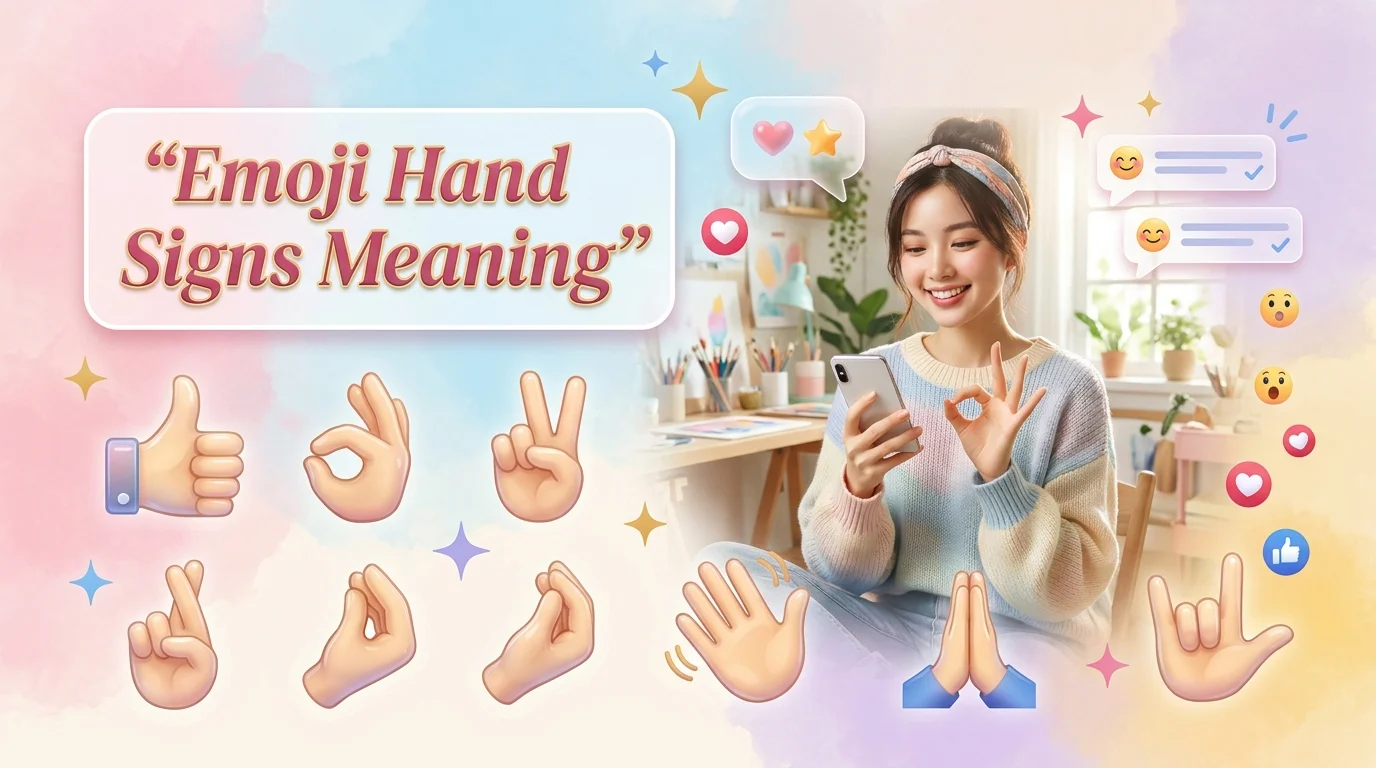
From a simple thumbs-up to a playful wave, hand emojis can express emotions, reactions, and ideas without using many words. The Emoji Hand Signs Meaning can vary widely depending on the gesture, conversation, and culture behind it.
People use hand sign emojis in texting, social media, comments, and chats to show agreement, appreciation, excitement, frustration, encouragement, or even humor. Some gestures have a clear meaning, while others can carry different interpretations based on context.
For example, a raised hand may suggest greeting or stopping, while crossed fingers can represent hope or good luck. Understanding these popular gestures can help you avoid confusion and choose the right emoji for your message.
Quick Answer: What Is the Emoji Hand Signs Meaning?
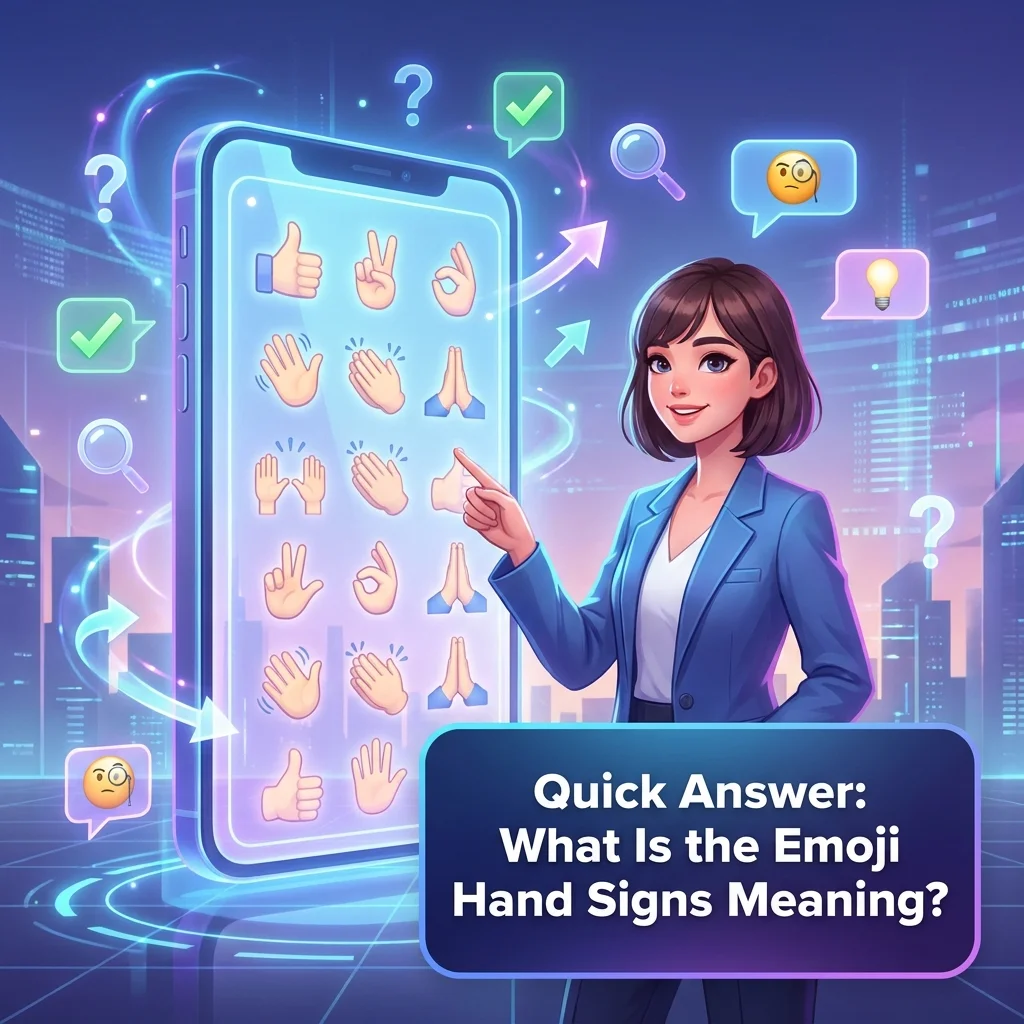
The emoji hand signs meaning usually represents a physical hand gesture through a small digital symbol. People use these emojis to communicate emotions, reactions, agreement, encouragement, greetings, affection, humor, or everyday actions.
Some common examples include:
| Emoji | Common meaning |
| 👍 | Okay, approval, agreement |
| 👎 | Disapproval, disagreement |
| 👌 | Okay, all good, perfect |
| ✌️ | Peace, victory, casual greeting |
| 🤞 | Hope, luck, fingers crossed |
| 🤟 | Love, affection, positive vibes |
| 🤘 | Rock, excitement, rebellious energy |
| 🤙 | Call me, relaxed attitude |
| 👋 | Hello, goodbye, waving |
| 🙏 | Thanks, prayer, please, respect |
| 👏 | Applause, congratulations |
| 🙌 | Celebration, praise, excitement |
| 🤝 | Agreement, partnership, friendship |
| 🫶 | Love, support, affection |
| 🖕 | Insult or strong anger |
The same hand sign can have different meanings depending on who sends it and why.
What Do Hand Gesture Emojis Mean?
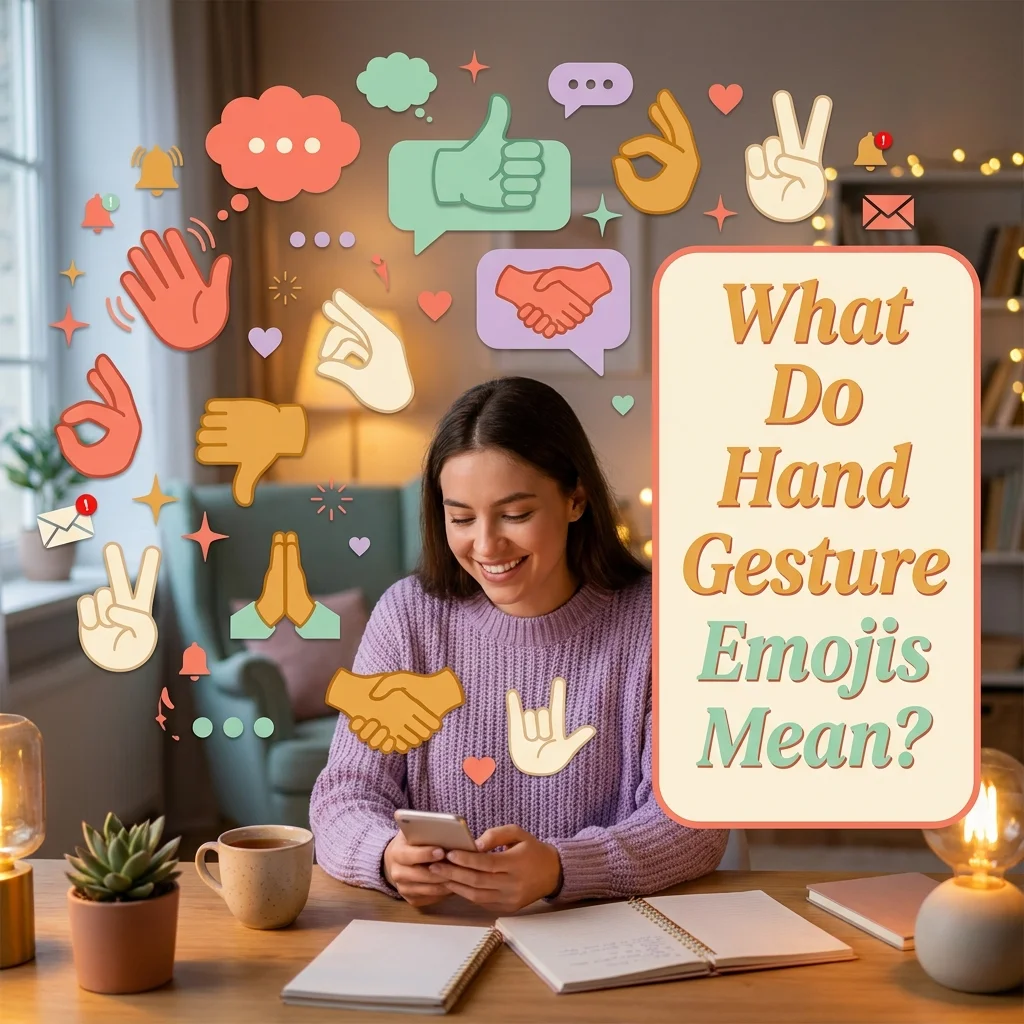
Hand gesture emojis are digital versions of gestures people commonly make with their hands. They make text conversations feel more expressive because they add a visual reaction that words alone may not communicate.
For example, someone might reply:
“Sure 👍”
Here, the thumbs-up probably means agreement or confirmation.
But consider:
“Wow, great job! 👏”
The clapping hands show praise or congratulations rather than simple agreement.
Another example is:
“Good luck tomorrow 🤞”
The crossed fingers communicate hope and encouragement.
So, when someone asks about the meaning of hand sign emojis, there isn’t always one fixed answer. The surrounding words provide important clues.
Common Emoji Hand Signs and Their Meanings
There are many hand emojis, but some appear far more often in everyday messaging. Understanding their usual meanings can help you interpret conversations more naturally.
👍 Thumbs Up Emoji Meaning
The 👍 emoji commonly represents approval, agreement, acceptance, encouragement, or acknowledgment.
Someone might send it after you make a suggestion:
“Let’s meet at 7.”
“👍”
In this situation, it likely means “Sounds good.”
A friend could also send:
“You did amazing today 👍”
Here, the emoji adds encouragement and approval.
However, a short “👍” reply can sometimes feel cold or brief, especially when someone expected a longer response. That doesn’t automatically mean the sender is annoyed. Their normal texting style matters.
👎 Thumbs Down Emoji Meaning
The 👎 emoji usually indicates disapproval, disagreement, rejection, or dislike.
For example:
“Should we cancel the trip?”
“👎”
The sender probably disagrees with the idea.
It can also be playful:
“I tried pineapple on pizza 👎😂”
Here, the emoji expresses dislike in a humorous way.
👌 OK Hand Emoji Meaning
The 👌 emoji usually means okay, fine, correct, perfect, or all good.
For example:
“Did you get home safely?”
“Yep 👌”
It can also emphasize satisfaction:
“That burger was 👌”
In casual online conversations, it can mean that something is excellent or perfectly done.
✌️ Victory Hand Emoji Meaning
The ✌️ emoji commonly represents peace, victory, positivity, or a relaxed attitude.
Someone might write:
“See you tomorrow ✌️”
Here, it works as a casual goodbye.
A person might also post a selfie with ✌️ to create a friendly or playful mood.
The meaning can therefore shift from “peace” to a general sign of positivity.
🤞 Crossed Fingers Emoji Meaning
The 🤞 emoji usually means hope, luck, or wishing for a positive result.
For example:
“I hope I pass my exam 🤞”
The emoji visually represents the familiar gesture of crossing your fingers.
People also use it when waiting for something:
“Hopefully they accept my application 🤞”
It can communicate optimism without making a long statement.
🤟 Love-You Hand Sign Emoji Meaning
The 🤟 emoji represents the “I love you” hand sign associated with American Sign Language. In casual online use, people may also use it more broadly to express love, affection, friendship, or positive feelings.
For example:
“Thanks for always being there 🤟”
Depending on the relationship, this could express deep friendship or affection.
It doesn’t automatically mean romantic love.
🤘 Sign of the Horns Emoji Meaning
The 🤘 emoji is often associated with rock music, excitement, energy, confidence, or rebellious style.
For example:
“Concert tonight! 🤘”
Here, the meaning is clearly connected to music and excitement.
Friends may also use it simply because it looks energetic or fun.
🤙 Call Me Hand Emoji Meaning
The 🤙 emoji commonly means “call me,” “contact me,” or “let’s talk.”
For example:
“Give me a call later 🤙”
It can also communicate a relaxed, friendly attitude:
“No worries, bro 🤙”
The surrounding message usually tells you which interpretation makes more sense.
👋 Waving Hand Emoji Meaning
The 👋 emoji commonly represents hello, goodbye, greeting, or farewell.
Examples include:
“Hey! 👋”
or:
“See you tomorrow 👋”
It can also soften a short goodbye and make it feel friendlier.
🙏 Folded Hands Emoji Meaning
The 🙏 emoji has several common uses. Depending on context, it can mean prayer, gratitude, respect, pleading, hope, or saying thank you.
For example:
“Thank you so much 🙏”
Here, it expresses gratitude.
Another example:
“Please let everything work out 🙏”
In this context, it suggests hope or prayer.
👏 Clapping Hands Emoji Meaning
The 👏 emoji usually represents applause, congratulations, praise, or approval.
For example:
“I finally finished my project!”
“👏👏👏”
The repeated emojis make the celebration stronger.
However, 👏 can sometimes be used sarcastically:
“You ignored every warning 👏”
Here, the clapping doesn’t show genuine praise. The words change the tone.
🙌 Raising Hands Emoji Meaning
The 🙌 emoji commonly expresses celebration, excitement, praise, relief, or happiness.
For example:
“We won! 🙌”
It can also mean:
“Finally finished my exams 🙌”
The second example expresses relief and celebration.
🤝 Handshake Emoji Meaning
The 🤝 emoji commonly represents agreement, cooperation, partnership, friendship, or mutual understanding.
For example:
“Deal? 🤝”
The emoji reinforces the idea of reaching an agreement.
Businesses and professional accounts also use it when discussing partnerships or collaborations.
🫶 Heart Hands Emoji Meaning
The 🫶 emoji is commonly used to express love, care, support, appreciation, and affection.
For example:
“Thank you for supporting me 🫶”
It can be romantic, but it doesn’t have to be. Friends, family members, creators, and communities often use it to show warmth.
🖕 Middle Finger Emoji Meaning
The 🖕 emoji generally represents a strong insult, anger, hostility, or rejection.
Because it can be offensive, people should use it carefully.
Among close friends, it may occasionally appear as a joke:
“You beat me again 🖕😂”
Even then, the meaning depends heavily on the relationship and established humor between the people involved.
Emoji Hand Signs Meaning in Texting
Hand gesture emojis are extremely common in text messages because they can replace short phrases or add emotional tone.
For example:
“Okay 👍”
Usually means “Okay,” “sure,” or “I agree.”
“Good luck 🤞”
Usually expresses hope and encouragement.
“Thank you 🙏”
Usually shows gratitude or appreciation.
“Let’s go! 🙌”
Shows excitement or celebration.
“See you 👋”
Works as a casual goodbye.
One important detail is that the same emoji can feel different depending on the words around it.
Compare:
“Thanks 👍”
with:
“Thank you so much 🫶”
Both communicate appreciation, but the second feels warmer and more affectionate.
Emoji Hand Signs Meaning on Social Media
On Instagram, TikTok, Snapchat, Facebook, and other social platforms, hand emojis often work as quick emotional reactions.
People may use them in captions, comments, stories, replies, and direct messages.
For example, a person might comment:
“Amazing work 👏”
This usually means praise.
Another person might comment:
“Let’s gooo 🙌🔥”
That combination communicates excitement.
A selfie caption with ✌️ may simply create a casual, cheerful mood. A concert post with 🤘 may connect the image to music and energetic vibes.
Social media also encourages repeated emojis. Someone might use 👏👏👏 to make praise stronger or 🙌🙌 to show extra excitement.
Emoji Hand Signs Meaning in Friendship
Friends often use hand gesture emojis in a relaxed way. The meaning may be less serious than it appears when taken literally.
For example:
“Bro, we finally did it 🤝”
The handshake can represent friendship and shared achievement.
Another example:
“Thanks for helping me 🫶”
Here, the heart-hands emoji expresses appreciation.
Friends may also use 🤙, ✌️, 👊, or 🙌 to create a casual and energetic tone.
In close friendships, even an emoji that normally looks rude can become playful. However, you should consider the person’s usual communication style before assuming that a potentially offensive emoji is a joke.
Emoji Hand Signs Meaning in Romantic Relationships
Hand gesture emojis can also carry romantic or affectionate meanings.
A partner might send:
“Miss you 🫶”
The heart-hands emoji adds warmth and affection.
Someone might write:
“Goodnight 🤟❤️”
Here, 🤟 can express love or strong affection, while the heart reinforces that feeling.
However, not every hand emoji from a romantic partner has a romantic meaning. For example:
“See you after work 👋”
is simply a goodbye.
The surrounding words matter more than the emoji alone.
What Does a Hand Sign Emoji Mean From a Girl?
There isn’t one universal meaning when a girl sends a hand gesture emoji. Her message, relationship with you, and usual texting style all matter.
For example:
“Good luck on your interview 🤞”
This most naturally communicates encouragement.
If she sends:
“Aww thank you 🫶”
the emoji may show warmth and appreciation.
If she says:
“Okay 👍”
it may simply mean agreement.
It’s better not to assume that a particular emoji automatically indicates flirting or romantic interest.
What Does a Hand Sign Emoji Mean From a Guy?
The same principle applies when a guy sends a hand gesture emoji.
A guy sending 🤙 could mean “call me,” while sending 👍 might simply mean “okay.”
For example:
“Nice job bro 👏”
The clapping hands clearly communicate praise.
Meanwhile:
“Love you too 🤟”
may carry a more affectionate meaning because of the words surrounding it.
The emoji itself provides a clue, but the full message provides the context.
What Does It Mean When Your Crush Sends a Hand Emoji?
When a crush sends a hand gesture emoji, it can be tempting to look for a hidden romantic message. However, a single emoji usually isn’t enough to establish romantic intent.
Consider these examples:
“Good luck today 🤞”
This most likely shows encouragement.
“You looked great today 🫶”
This is warmer and may feel more affectionate, but the exact intention still depends on the wider conversation.
“Hey 👋”
This is generally just a greeting.
Instead of focusing on one emoji, look at the complete conversation and how the person communicates with you generally.
Friendly vs Romantic Hand Sign Emojis
Some hand emojis can be both friendly and romantic.
| Emoji | Friendly use | Possible romantic use |
| 🫶 | Support and appreciation | Affection and love |
| 🤟 | Friendship and positive vibes | Love and affection |
| 🙏 | Thanks and respect | Appreciation |
| 🤝 | Friendship or agreement | Partnership or mutual support |
| 👋 | Hello or goodbye | Warm greeting or farewell |
| 🙌 | Celebration | Shared excitement |
| 🤙 | Casual friendship | Relaxed invitation to talk |
| ✌️ | Peace or casual goodbye | Playful affection |
This is why emoji interpretation requires context.
Emotional Meanings of Hand Sign Emojis
Hand emojis can express emotions that might otherwise require several words.
For example:
- 👍 can show confidence or approval.
- 🤞 can show hope.
- 🙏 can show gratitude or desperation.
- 🙌 can show excitement.
- 👏 can show admiration.
- 🫶 can show affection.
- 👎 can show disappointment.
- 🖕 can show anger or hostility.
People often choose these symbols because they make a message feel more emotionally complete.
Compare:
“You did it.”
with:
“You did it! 🙌”
The second message feels more excited because the emoji reinforces the emotion.
Playful and Funny Meanings
Hand signs aren’t always serious. People frequently use them for jokes, teasing, memes, and playful conversations.
For example:
“You really thought I would forget? 👀🤞😂”
Or:
“Okay boss 🤝😂”
The handshake in the second message can be playful rather than formal.
Even 👍 can become funny when used in an exaggerated situation:
“I accidentally deleted the whole file 👍”
Here, the thumbs-up creates irony because the situation is obviously not positive.
Sarcastic Uses of Hand Emojis
Context can completely reverse an emoji’s apparent meaning.
For example:
“Great, another Monday 👏”
The clapping hands may be sarcastic.
Another example:
“You forgot my birthday again 👍”
The thumbs-up doesn’t necessarily mean genuine approval. The words suggest irritation or sarcasm.
This is one of the most important points about emoji hand signs meaning: emojis don’t exist separately from language. The text around them can change their tone.
Positive and Negative Interpretations
Most hand emojis have common positive meanings, but several can also appear in negative or sarcastic situations.
| Emoji | Positive interpretation | Negative or sarcastic interpretation |
| 👍 | Agreement, approval | Dismissive or cold reply |
| 👌 | Fine, perfect | Sarcastic “sure” |
| 👏 | Praise | Mocking applause |
| 🙏 | Thanks, hope | Pleading |
| 👎 | Honest dislike | Rejection |
| ✌️ | Peace, positivity | Casual dismissal in some contexts |
| 🖕 | Rarely playful | Insult or anger |
These secondary meanings aren’t universal. A person’s tone and communication habits still matter.
How to Respond to Hand Gesture Emojis
Your response should match the message and your relationship with the sender.
If a Friend Sends 👍
You can simply continue the conversation:
“Perfect!”
or:
“Cool, see you then.”
You don’t need to send another emoji unless it feels natural.
If Someone Sends 🤞
You might respond:
“Thanks! I hope so too 🤞”
This mirrors their supportive tone.
If Someone Sends 🫶
A warm response could be:
“Aww, thank you 🫶”
Or, with a close friend:
“Always! ❤️”
If Your Crush Sends a Friendly Emoji
Don’t automatically assume the emoji is romantic. Respond naturally to the actual conversation.
For example:
“Thanks! 😊”
or:
“Haha, appreciate it!”
You can allow the conversation to develop rather than trying to decode one symbol.
If Someone Sends 👎
If you’re unsure whether they’re serious, you can ask:
“You don’t like the idea? 😂”
That gives them an easy opportunity to clarify.
How Context Changes Emoji Meaning
Context is probably the most important factor in understanding hand gesture emojis.
Consider the 👍 emoji.
Situation 1: Agreement
“Meet at 8?”
“👍”
Meaning: Yes, that works.
Situation 2: Encouragement
“I finally finished my assignment.”
“👍”
Meaning: Good job.
Situation 3: Short acknowledgment
“I sent the document.”
“👍”
Meaning: Message received.
Situation 4: Sarcasm
“I lost my wallet again 👍”
Meaning: The sender may be joking about the unfortunate situation.
One emoji can therefore perform several different communication jobs.
Cultural Differences in Hand Gesture Emojis
Hand gestures can also vary across cultures.
A gesture that feels harmless in one country may have a different association somewhere else. Digital emojis simplify real-world gestures, but they don’t completely remove cultural differences.
For international conversations, it’s useful to avoid assuming that everyone interprets a hand sign exactly the same way.
This becomes especially important with gestures that have strong cultural, religious, political, or insulting associations.
When the meaning seems unclear, the surrounding text and the person’s communication habits provide better clues than the emoji alone.
Common Misunderstandings About Hand Sign Emojis
Every Hand Emoji Has One Fixed Meaning
Not necessarily.
An emoji has common uses, but people can adapt it for humor, sarcasm, affection, or personal expression.
🫶 Always Means Romantic Love
No. Friends, family members, creators, and online communities can use 🫶 to show support and appreciation.
👍 Always Means Genuine Approval
Not always.
A thumbs-up can simply acknowledge a message. In some conversations, it may even sound dismissive or sarcastic.
🤟 Always Means Romantic Love
Not necessarily.
It can represent affection, friendship, positivity, or the “I love you” hand sign.
An Emoji From a Crush Automatically Means Flirting
A single emoji doesn’t provide enough evidence to determine someone’s romantic intentions.
Look at the entire conversation, the words used, and the established relationship.
Hand Signs vs Face Emojis
Hand gesture emojis and face emojis often serve different purposes.
Face emojis usually communicate a more specific facial emotion, such as happiness, sadness, embarrassment, surprise, or laughter.
Hand emojis often communicate actions, reactions, social signals, or gestures.
For example:
“Good job! 👏”
The hand emoji represents applause.
Compare that with:
“I’m so happy! 😄”
The face emoji represents an emotional expression.
People often combine them:
“You actually did it! 🙌😂”
Here, 🙌 communicates celebration while 😂 adds humor.
Hand Signs vs Heart Emojis
Heart emojis generally focus on affection, love, appreciation, or emotional connection.
Hand signs can be broader.
For example:
🫶 = affection, support, love
❤️ = love, care, strong affection
👍 = agreement or approval
🙏 = thanks, hope, prayer, or respect
🤝 = agreement or cooperation
The distinction isn’t absolute, but it can help you understand the general emotional direction of a message.
Why People Use Hand Gesture Emojis
People use hand signs because digital conversations lack body language.
In face-to-face communication, you can nod, wave, clap, shake hands, or give someone a thumbs-up. Text messages don’t provide those physical signals.
Emojis fill part of that gap.
For example, instead of writing:
“Yes, I agree with you and everything is fine.”
someone can simply send:
“👍”
That tiny symbol can save time while still communicating a clear reaction.
Hand emojis also make messages feel less formal. A plain “Okay” can sound neutral, while “Okay 👍” often feels more visually expressive.
Popular Hand Gesture Emoji Combinations
People frequently combine hand signs with other emojis to create stronger meanings.
👍❤️
Usually communicates approval combined with affection or appreciation.
🙌🔥
Often expresses excitement, celebration, or enthusiasm.
👏❤️
Can show strong praise or appreciation.
🤞❤️
May communicate hope combined with affection.
🫶🥰
Often creates a warm, affectionate tone.
🤝😊
Can communicate friendly agreement or cooperation.
👋😊
Usually creates a warm hello or goodbye.
Remember that emoji combinations are flexible. The words beside them remain important.
How to Understand an Emoji Hand Sign Correctly
When someone sends a hand emoji and you’re unsure what they mean, consider these questions:
- What did they say before the emoji?
- What is the topic of the conversation?
- How close are you to the person?
- Do they normally use emojis?
- Are they joking or being serious?
- Did they combine the hand sign with another emoji?
- Could the message be sarcastic?
- Does the gesture have a different cultural meaning in your context?
These clues usually provide more information than the emoji by itself.
Frequently Asked Questions
What does emoji hand signs meaning refer to?
It refers to the meanings and uses of hand gesture emojis such as 👍, 👌, ✌️, 🤞, 👋, 🙏, 👏, 🙌, 🤝, and 🫶. Their interpretation depends on context, tone, and relationship.
What is the most common hand sign emoji?
The 👍 thumbs-up is one of the most commonly understood hand gesture emojis. It often means approval, agreement, acknowledgment, or that something is okay.
What does 🤟 mean in texting?
🤟 can represent the “I love you” hand sign and may communicate love, affection, friendship, or positive feelings. The exact meaning depends on the conversation.
What does 🫶 mean from a girl?
🫶 commonly expresses love, appreciation, support, or affection. It can be friendly or romantic, so the surrounding message and relationship are important.
What does 👍 mean from a guy?
A 👍 from a guy usually means okay, agreement, approval, or acknowledgment. It doesn’t automatically have a romantic meaning.
What does 🤞 mean in a text?
🤞 usually means hope, luck, or wishing for a positive outcome. Someone might use it before an exam, interview, important event, or uncertain situation.
Can hand gesture emojis have sarcastic meanings?
Yes. Emojis such as 👍 and 👏 can sometimes become sarcastic when the surrounding words describe something negative or frustrating.
Do hand emojis always have the same meaning?
No. Emoji meanings can change according to context, culture, relationship, tone, personal communication style, and the words surrounding the emoji.
Conclusion
The emoji hand signs meaning covers a wide range of everyday reactions. A thumbs-up can show agreement, crossed fingers can express hope, clapping hands can show praise, and heart hands can communicate affection. Other signs can represent greetings, friendship, celebration, cooperation, or even anger.
The most important thing to remember is that no hand emoji should always be interpreted in isolation. The same symbol can feel friendly in one conversation and sarcastic in another. A message from a close friend may also carry a different tone from the same message sent by a coworker, partner, or stranger.

I am James Wilson, a passionate writer dedicated to creating informative, engaging, and valuable content for readers around the world. I am focused on sharing well-researched ideas, practical insights, and helpful information that inspires learning and growth. With a strong interest in writing and exploring different topics, I aim to provide content that is clear, meaningful, and easy to understand.