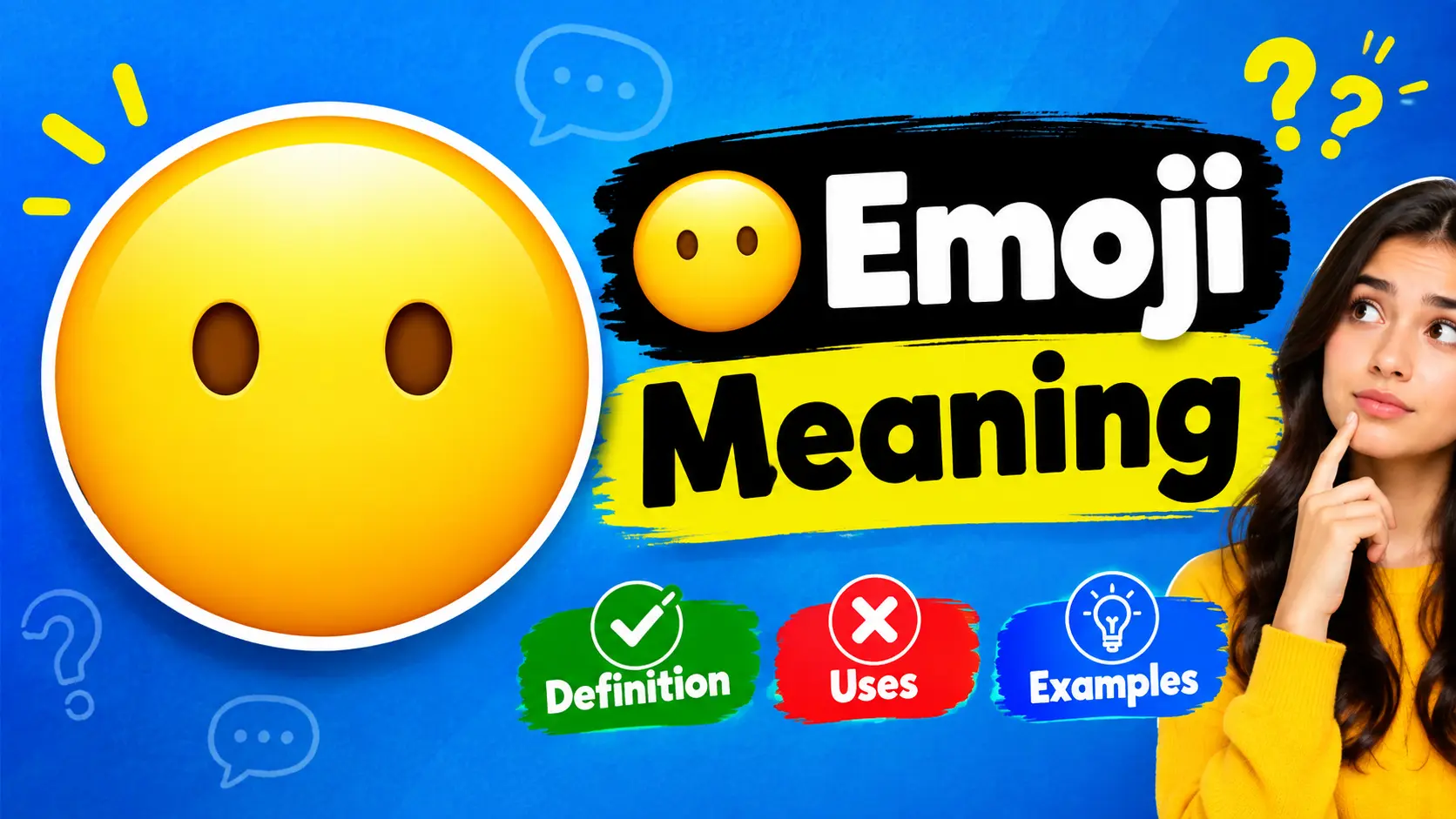
Not every reaction needs a long explanation, and the 😶 emoji is often used when words simply don’t feel necessary. The 😶 Emoji Meaning commonly relates to silence, awkwardness, speechlessness, secrecy, or having nothing to say.
Someone may send it when they’re surprised, uncomfortable, unsure how to respond, or deliberately choosing to stay quiet. You’ll frequently see 😶 in text messages, WhatsApp chats, Instagram comments, Snapchat, and other social media conversations.
For instance, a person might use it after hearing unexpected news or when a conversation suddenly becomes awkward. Sometimes, it can also suggest that someone is keeping a secret or doesn’t want to reveal their thoughts.
What Does 😶 Mean?
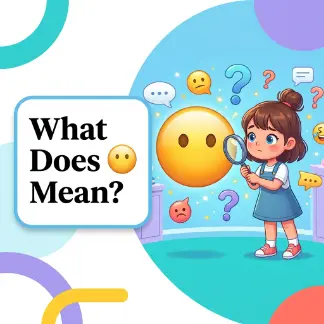
The 😶 emoji is officially known as Face Without Mouth. Its blank expression can represent a moment when someone chooses not to speak or simply cannot find the right words.
The most common meanings include:
- Silence
- Speechlessness
- Awkwardness
- “I don’t know what to say”
- Being lost for words
- Keeping a secret
- Not wanting to comment
- Quiet disappointment
- Feeling uncomfortable
- A deliberately blank reaction
The exact meaning comes from context. For example, if someone tells you surprising news and you answer “😶,” you may be saying, “Wow, I don’t even know what to say.”
If a friend makes an embarrassing joke and you respond with “😶,” the same emoji could mean, “I’m not even going to respond to that.”
So, 😶 is often more about the absence of words than a specific emotion.
😶 Emoji Meaning in Text Messages
In texting, 😶 often works as a visual version of silence.
Imagine your friend sends:
“I accidentally sent my private message to the family group 😶”
Here, the emoji can express embarrassment and speechlessness at the same time.
Another example:
“You really paid $500 for that? 😶”
This could communicate surprise or disbelief without directly saying, “I don’t know what to tell you.”
People also use 😶 when they intentionally want to avoid giving an answer.
Example:
“Did you tell Sarah what I said?”
“😶”
In this situation, the emoji might jokingly suggest, “I’m not answering that.”
Common Texting Meanings of 😶
| Situation | Possible meaning |
| Unexpected news | “I’m speechless.” |
| Awkward conversation | “This is uncomfortable.” |
| Embarrassing situation | “I don’t know what to say.” |
| Difficult question | “I’m not answering.” |
| Secret information | “I’m keeping quiet.” |
| Strange statement | “What did I just read?” |
| Disappointment | “I’m quietly unhappy.” |
| Joke | “No words.” |
The emoji can therefore replace an entire sentence while keeping the response short.
😶 Meaning on Social Media
On social media, 😶 often appears as a reaction to something surprising, awkward, controversial, or difficult to respond to.
For example, someone might post:
“I studied all night and still failed the easiest test 😶”
The emoji adds a feeling of disbelief and frustration.
A commenter might also write:
“He really posted that publicly 😶”
Here, the commenter probably means something like, “I have no words.”
On platforms where people use short comments, 😶 can communicate a reaction without starting a long conversation.
It can also create humour. A person may deliberately use the blank face after making a ridiculous statement to create a deadpan effect.
😶 Meaning in Friendship
Among friends, 😶 can have several meanings because close friends often understand each other’s humour and communication style.
A friend might send it after hearing something unbelievable:
“Bro, I forgot my own birthday was today 😶”
The emoji emphasizes the ridiculousness of the situation.
It can also mean:
“I’m not getting involved.”
For example:
“Tom and Jake are arguing again.”
“😶 I’m staying out of this.”
Here, the emoji suggests quiet observation rather than anger.
Friends may also use 😶 after an awkward confession, embarrassing story, or questionable decision.
Friendly Meaning of 😶
The friendly 😶 meaning is often:
“I don’t know what to say, but I’m here.”
It doesn’t necessarily indicate a negative feeling. Sometimes it simply gives the conversation a quiet, humorous pause.
😶 Meaning From a Girl
When a girl sends 😶, the meaning depends on what you were discussing and how she normally texts.
She may use it to show that she is:
- Speechless
- Surprised
- Embarrassed
- Unsure how to respond
- Avoiding an answer
- Quietly judging a situation
- Feeling awkward
For example:
You: “I just told my boss I quit without having another job.”
Her: “😶”
That probably means she is surprised or doesn’t know how to respond.
Another example:
You: “I think you’re really cute.”
Her: “😶”
This could indicate surprise, shyness, awkwardness, or uncertainty. It does not automatically mean she is rejecting you or flirting with you.
Context matters more than the emoji itself.
😶 Meaning From a Guy
A guy may use 😶 in much the same way.
He might send it after hearing something surprising:
“You actually ate the whole pizza yourself? 😶”
The message could express disbelief.
He might also use it when he doesn’t want to participate in gossip:
“Did you hear what happened between them?”
“😶”
That can mean, “I’m staying out of it.”
In a joking conversation, 😶 can also act like a deadpan reaction.
For example:
“I told my teacher I couldn’t do my homework because my Wi-Fi was tired 😶”
The emoji makes the statement sound intentionally ridiculous.
😶 Meaning From a Crush
If your crush sends 😶, it can feel confusing because you may naturally look for hidden meaning.
The emoji alone does not prove attraction, embarrassment, rejection, or nervousness.
Suppose you text:
“I think I might have a crush on you 😶”
If your crush responds:
“😶”
They could be surprised, unsure how to respond, shy, or genuinely speechless.
The best way to understand it is to consider the messages around it.
Look at whether they continue the conversation, ask questions, joke with you, or give a clear verbal response. The emoji itself is not enough to establish romantic interest.
😶 Meaning From a Partner
Partners can use 😶 in playful, serious, or emotional conversations.
For example:
“I ordered another pair of shoes.”
“😶”
Here, the partner might be jokingly saying, “I have no words.”
Another example:
“We need to talk about what happened yesterday 😶”
In this context, the emoji could make the message feel more serious or uncomfortable.
Partners may also use it after a surprising confession:
“I secretly planned your birthday party 😶”
The emoji could communicate a playful attempt to keep something hidden.
Therefore, the 😶 meaning from a partner depends strongly on the couple’s usual communication style.
Is 😶 a Flirty Emoji?
Usually, 😶 is not primarily a flirty emoji.
It can appear in flirting, but the emoji itself does not specifically mean attraction or romantic interest.
For example:
“You looked really good today 😶”
Here, 😶 might make the compliment feel shy or awkward.
But if someone sends only:
“😶”
there isn’t enough information to call it flirting.
Other emojis such as 😉, 😏, 🥰, or 😘 can more directly communicate flirtatious or affectionate tones, although even those depend on context.
Is 😶 a Sad Emoji?
The 😶 emoji is not specifically a sad face.
Still, it can communicate quiet sadness or disappointment in some conversations.
For example:
“I thought you were coming to my party.”
“😶”
Depending on the relationship and previous conversation, this could sound disappointed or hurt.
However, if someone wants to clearly express sadness, they may use 😔, 😞, or 😢 instead.
So, 😶 can carry a sad tone, but sadness is not its basic meaning.
Is 😶 a Negative Emoji?
Not necessarily.
The emoji has a neutral visual expression, so its emotional direction depends on context.
It can be:
Neutral:
“I don’t know what to say 😶”
Funny:
“I just called my teacher ‘Mom’ 😶”
Awkward:
“So… we’re all sitting here waiting 😶”
Disappointed:
“You forgot again 😶”
Secretive:
“Did you tell him?”
“😶”
Because of this flexibility, calling 😶 a “negative emoji” would be too broad.
😶 Emotional Meaning
Emotionally, 😶 can represent a pause between feeling something and expressing it.
Someone might feel surprised, embarrassed, uncomfortable, disappointed, or overwhelmed but choose not to spell out that emotion.
That’s what makes this emoji interesting.
Instead of saying:
“I honestly have no idea how to respond to that.”
they can simply send:
“😶”
The reader then uses the surrounding conversation to understand the emotion.
😶 Meaning in an Awkward Conversation
One of the most common uses of 😶 is to signal awkwardness.
For example:
“So… are you two dating?”
“😶”
The emoji creates a quiet pause. It can suggest that the person feels uncomfortable answering.
Another example:
“Everyone went silent after he said that 😶”
Here, the emoji visually reinforces the silence.
It can almost represent the moment when a conversation suddenly stops.
😶 Meaning When Someone Is Speechless
Sometimes the simplest interpretation is the correct one: “I have no words.”
For example:
“I won the competition!”
“😶”
Depending on context, this could mean the person is amazed.
Likewise:
“I just accidentally deleted the entire project.”
“😶”
Here, it may mean, “I don’t even know what to say.”
The same emoji can therefore accompany both good and bad news.
😶 Meaning as a Sarcastic or Humorous Reaction
The blank expression makes 😶 useful for sarcasm and deadpan humour.
Imagine someone says:
“I only spent $1,000 because I was trying to save money 😶”
The emoji creates an intentionally emotionless reaction.
Another example:
“Of course I started studying the night before the exam 😶”
The speaker knows the situation is ridiculous. The emoji adds a dry, humorous tone.
This is especially common in casual online communication.
😶 Meaning When Someone Doesn’t Want to Answer
Sometimes 😶 effectively means:
“I’m not saying anything.”
For example:
“Was it you who ate the last slice?”
“😶”
The sender might be jokingly refusing to confess.
It can also be used when a person knows the answer but doesn’t want to reveal it.
In this case, the emoji can have a playful secretive meaning.
😶 Meaning in Group Chats
Group chats create many opportunities for 😶.
Imagine three friends are arguing:
“It’s definitely his fault.”
“No, it’s yours.”
“Both of you are wrong.”
“😶”
The final emoji can mean, “I’m just watching this.”
It can also express disbelief when several people start arguing over something silly.
Because group conversations move quickly, a single emoji can be an easy way to react without taking sides.
😶 Meaning in a Relationship Argument
During an argument, 😶 can have a more serious tone.
For example:
“You promised you wouldn’t do that again 😶”
Here, the emoji might communicate disappointment or restrained emotion.
However, you should avoid assuming exactly what the sender feels based only on the emoji. Their words and behaviour provide much stronger clues.
If the conversation is serious, a clear question can prevent misunderstandings.
For example:
“I feel like that 😶 means you’re upset. Do you want to talk about it?”
That is usually more useful than guessing.
😶 vs 😐
These emojis look similar, but they often communicate different ideas.
😐 Neutral Face generally shows a flat, neutral, unimpressed, or mildly uncomfortable reaction.
😶 Face Without Mouth emphasizes the absence of words.
Compare:
“That movie was okay 😐”
This sounds neutral or unimpressed.
“He actually said that to his boss 😶”
This sounds more like, “I have no words.”
The difference isn’t absolute, but 😶 often focuses more on silence or speechlessness.
😶 vs 🤐
The 🤐 zipper-mouth face usually suggests deliberately keeping quiet, not revealing information, or keeping a secret.
The 😶 face without mouth is more open to interpretation.
For example:
“What happened at the party?”
“🤐”
This can clearly suggest, “I’m not telling you.”
But:
“What happened at the party?”
“😶”
could mean, “I don’t know what to say,” “It was awkward,” or “I don’t want to talk about it.”
So 🤐 tends to communicate intentional secrecy, while 😶 often communicates silence or speechlessness.
😶 vs 😑
The 😑 emoji, known as Expressionless Face, can convey irritation, boredom, annoyance, or a tired reaction.
😶 usually focuses on silence.
For example:
“He cancelled our plans again 😑”
This may express annoyance.
“He cancelled our plans again 😶”
This can sound more like, “I don’t even know what to say.”
The difference can be subtle, especially in casual texting.
😶 vs 🫥
The 🫥 dotted-line face can suggest wanting to disappear, feeling invisible, embarrassment, or social discomfort.
😶 is simpler. It usually communicates silence, speechlessness, or a blank reaction.
For example:
“I accidentally called the wrong person 😶”
means you may have no words.
“I want to disappear after that mistake 🫥”
more strongly communicates embarrassment and wanting to hide.
Common Situations Where People Use 😶
You may see 😶 in many everyday situations.
After shocking news
“She quit her job today 😶”
The emoji can show surprise.
After an embarrassing mistake
“I waved back at someone who wasn’t waving at me 😶”
It highlights embarrassment.
When someone makes a strange comment
“He said pineapple belongs on every meal 😶”
The emoji can mean, “I have no response to this.”
When refusing to answer
“Did you eat my chocolate?”
“😶”
It can be playful denial or silence.
During gossip
“I know what happened, but I’m not saying anything 😶”
The emoji reinforces secrecy.
During awkward silence
“Nobody knew what to say after that 😶”
It represents the quiet moment.
How to Respond When Someone Sends 😶
Your response should depend on why they sent it.
If you’re unsure, don’t overthink the emoji. Look at the message before it and respond to the actual conversation.
If a friend sends 😶
You can keep things playful:
“Why are you silent? 😂”
or:
“Okay, that reaction says everything.”
If your crush sends 😶
If the conversation is romantic, you can gently ask:
“Did I leave you speechless? 😅”
This keeps the mood light without assuming what they feel.
If your partner sends 😶
If the conversation seems serious, try:
“Something wrong?”
or:
“Do you want to talk about it?”
A direct question works better than trying to decode the emoji alone.
In a casual conversation
You can simply continue naturally:
“Haha, I know. I had no words either.”
This acknowledges the reaction without making the situation unnecessarily serious.
Common Misunderstandings About 😶
It doesn’t always mean anger
Some people interpret the blank face as anger or annoyance. That can happen, but it isn’t the only interpretation.
It doesn’t automatically mean rejection
If someone sends 😶 after a romantic message, don’t immediately assume they rejected you. They could be surprised, shy, confused, or unsure what to say.
It isn’t automatically rude
A one-emoji response can sometimes feel cold. However, the sender may simply be joking or genuinely speechless.
It doesn’t always mean secrecy
Although 😶 can mean “I’m not saying,” it can also represent awkwardness or surprise.
Emoji meanings aren’t universal
People develop their own texting habits. Two people may use the same emoji differently, especially across different age groups, cultures, friendships, and online communities.
Does 😶 Mean “I’m Speechless”?
Yes, “I’m speechless” is one of the clearest interpretations of 😶.
For example:
“You actually remembered my birthday 😶”
The sender may be pleasantly surprised.
Or:
“I can’t believe you said that 😶”
Here, the emoji adds a speechless reaction.
Still, context determines whether the speechlessness feels positive, negative, awkward, or humorous.
Does 😶 Mean “No Comment”?
It can.
When someone asks a question and the response is only 😶, the sender may be communicating:
“I’m not commenting.”
For example:
“Did you tell everyone my secret?”
“😶”
The response could jokingly mean, “I’m saying nothing.”
This interpretation becomes stronger when the question involves something the sender might want to avoid discussing.
Does 😶 Mean “Awkward”?
It can definitely represent awkwardness.
For example:
“I ran into my ex while I was with my new partner 😶”
The emoji captures the uncomfortable silence that follows.
However, if the sender wants to clearly communicate embarrassment, they might choose a different emoji. That’s why the surrounding message matters.
Does 😶 Mean Someone Is Mad?
Not necessarily.
A person who is angry may use 😶 to show that they are staying quiet instead of arguing. But the emoji itself doesn’t establish anger.
Compare these:
“Fine 😶”
This could sound cold or upset.
“I don’t even know what to say 😶”
This sounds more speechless than angry.
The words provide the emotional context.
How Context Changes the 😶 Emoji Meaning
The 😶 emoji meaning can change significantly depending on several factors.
The words around it
“Wow, that’s amazing 😶” may suggest surprise, while “Fine 😶” may feel colder.
Your relationship
A close friend may use 😶 as an inside joke. A stranger may use it as a neutral reaction.
The conversation topic
A funny story and a serious argument can produce completely different interpretations.
The sender’s communication style
Some people use emojis frequently. Others rarely use them. That difference can change how their messages feel.
Culture and online communities
Emoji habits vary between groups and platforms. A meaning that feels obvious to one person may not feel obvious to another.
A Quick Guide to 😶 Meanings
| Possible meaning | How it may sound |
| Speechless | “I don’t know what to say.” |
| Awkward | “This is uncomfortable.” |
| Surprised | “Wow, really?” |
| Silent | “I’m not saying anything.” |
| Secretive | “I’m keeping quiet.” |
| Disappointed | “I’m quietly upset.” |
| Humorous | “No words 😂” |
| Neutral | “I’m just reacting.” |
| Shocked | “I can’t believe that.” |
These meanings are possibilities rather than strict rules.
Final Thoughts
The 😶 emoji meaning usually centres on silence, speechlessness, awkwardness, or having no words. People use the Face Without Mouth emoji when they want to react without expressing a full verbal response.
It can appear in serious conversations, jokes, friendships, romantic chats, group messages, and social media comments. Depending on the situation, it may communicate surprise, embarrassment, disappointment, secrecy, humour, or simple uncertainty.
Frequently Asked Questions
What does 😶 mean in texting?
In texting, 😶 commonly means “I’m speechless,” “I don’t know what to say,” or “I’m staying quiet.” It can also express awkwardness, surprise, or a humorous lack of response.
What does 😶 mean from a girl?
From a girl, 😶 may mean she is surprised, speechless, awkward, unsure how to respond, or simply joking. The emoji alone cannot tell you whether she is flirting, upset, or rejecting you.
What does 😶 mean from a guy?
A guy may use 😶 to show surprise, silence, awkwardness, disbelief, or that he doesn’t want to answer a question. His surrounding message provides the best clue.
Is 😶 a flirty emoji?
😶 is not specifically a flirty emoji. Someone can use it during flirting to show shyness or speechlessness, but the emoji alone does not prove romantic interest.
Does 😶 mean “no comment”?
Sometimes. When someone responds to a question with only 😶, they may be jokingly saying “I’m not saying anything” or “no comment.”
Is 😶 a sad emoji?
Not specifically. 😶 can express quiet disappointment or sadness in certain contexts, but its main ideas are silence, speechlessness, and a blank reaction.
What is the difference between 😶 and 🤐?
😶 generally represents silence or being speechless, while 🤐 more strongly suggests deliberately keeping a secret or refusing to speak. Context can blur the difference.
How should I respond to 😶?
Look at the conversation first. With a friend, you can joke about their silence. With a crush, you can respond playfully. With a partner or during a serious conversation, asking directly what they mean is usually clearer.

I am Grace Wilson, a passionate writer dedicated to creating helpful, engaging, and informative content for readers around the world. I am committed to sharing well-researched ideas, practical knowledge, and meaningful stories that inspire and educate. With a focus on clarity and authenticity, I am always exploring new topics and bringing valuable insights to my audience.