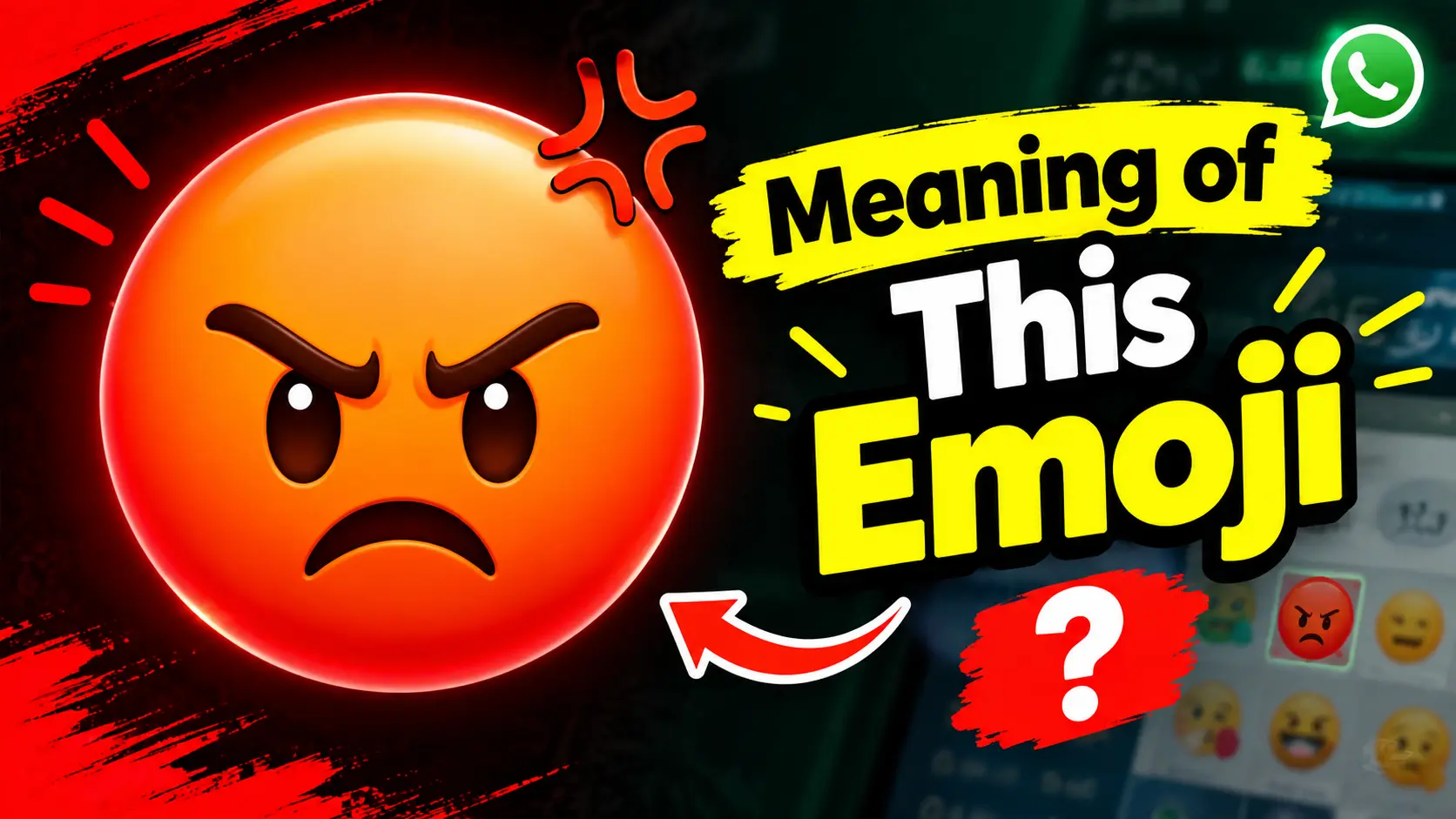
Seeing 😡 in a message can make you wonder just how upset the other person really is. The 😡 meaning of this emoji is most commonly connected with anger, frustration, annoyance, or strong displeasure.
Its red face and frowning expression make it useful when someone wants to show that they are genuinely angry about something. However, the exact emotion can depend on the conversation and the person using it.
For example, someone might send 😡 after an argument, when complaining about a frustrating situation, or when reacting strongly to something they dislike. Friends may also use it jokingly or dramatically without actually being angry.
😡 What Does This Emoji Mean?
The 😡 emoji generally represents anger or intense annoyance. It has an angry facial expression with a red face, furrowed eyebrows, and a displeased appearance.
People often use it to communicate an emotion without writing a long explanation. Instead of saying, “I’m really annoyed about what happened,” someone may simply send 😡.
Common meanings include:
- Anger
- Frustration
- Irritation
- Disappointment
- Annoyance
- Protest
- Strong disagreement
- Feeling offended
- Being upset
- Pretending to be angry
The strength of the emotion depends on context. A message such as “You forgot my birthday 😡” may show genuine frustration. On the other hand, “You ate my fries again 😡😂” could be playful.
So, the basic 😡 meaning of this emoji is anger, but its exact message depends on how someone uses it.
😡 Meaning in Text Messages
In text messages, 😡 usually tells the other person that the sender is angry, irritated, or unhappy about something.
Because text messages do not contain facial expressions or voice tone, emojis often help communicate emotion. Adding 😡 can make a sentence sound much stronger.
For example:
“Why did you cancel at the last minute? 😡”
Here, the emoji emphasizes genuine frustration.
Another example:
“You took the last slice of pizza 😡”
This could be serious, but it may also be playful between friends.
The surrounding words provide important clues. If the message contains serious complaints or criticism, 😡 is more likely to express real anger. If it appears alongside laughing emojis or a silly situation, the sender may be joking.
😡 Meaning on Social Media
On social media, 😡 can express anger toward a post, situation, person, event, or opinion.
Someone might use it in a comment such as:
“This is completely unfair 😡”
The emoji strengthens the person’s emotional reaction.
You may also see 😡 used in posts about frustrating experiences, customer service problems, arguments, sports results, or controversial topics.
For example:
“My flight got delayed again 😡”
Here, 😡 communicates frustration rather than hatred.
On social media, however, users sometimes exaggerate emotions for entertainment. A person may write:
“My favorite character lost 😡”
They might be genuinely disappointed, but the emoji can also make the reaction more dramatic or humorous.
😡 Meaning in Friendship
Between friends, 😡 can have several meanings.
Sometimes it means your friend is genuinely upset with you. For example:
Friend: “You told everyone my secret 😡”
In this case, the emoji likely communicates serious anger.
But close friends often use angry emojis jokingly.
Friend: “You went to the restaurant without me 😡😂”
The person may not actually be angry. They could simply be teasing you.
The relationship matters. Friends who regularly joke with each other may use 😡 as playful exaggeration. If the conversation has already become tense, the same emoji should be taken more seriously.
😡 Meaning in Romantic Relationships
In a romantic relationship, 😡 can communicate frustration, jealousy, disappointment, or anger.
For example:
“You promised you would call me 😡”
This may indicate that the sender feels ignored or disappointed.
Another example is:
“Why are you ignoring my messages? 😡”
Here, the emoji adds emotional intensity.
However, couples sometimes use 😡 playfully too.
“You stole my blanket again 😡❤️”
The sender is probably teasing their partner rather than expressing serious anger.
When 😡 appears with affectionate emojis such as ❤️, 🥰, or 😂, it may soften the meaning. Still, you should look at the complete conversation instead of assuming that the emoji automatically means playful anger.
😡 Meaning From a Girl
If a girl sends 😡, it generally means that she is showing anger, annoyance, frustration, or strong displeasure.
But the emoji alone cannot tell you exactly why she feels that way.
For example:
“You seriously forgot? 😡”
This probably indicates genuine frustration.
Meanwhile:
“You ate my chocolate 😡😂”
could be playful.
If you’re wondering about the 😡 meaning from a girl, focus on her words and the situation. Don’t assume that the emoji has a secret romantic meaning simply because she sent it to you.
In some conversations, she may use 😡 to tease you. In others, she may be telling you that something genuinely bothered her.
😡 Meaning From a Guy
When a guy sends 😡, it can similarly indicate anger, irritation, frustration, or disappointment.
For example:
“Bro, you said you’d be here at 7 😡”
This probably means he is annoyed about being kept waiting.
But a guy might also use the emoji humorously:
“You finished the whole pizza without me 😡😂”
Here, the emoji likely exaggerates his reaction.
The 😡 meaning from a guy therefore depends on his normal texting style. Some people use emojis frequently and dramatically, while others use them only when they genuinely feel a strong emotion.
😡 Meaning From a Crush
Receiving 😡 from a crush can be confusing because you may wonder whether the emoji has a hidden romantic meaning.
Usually, 😡 simply communicates anger, teasing, frustration, or playful annoyance. The emoji itself does not prove romantic interest.
For example:
“You left without saying goodbye 😡”
Your crush may genuinely be annoyed.
But:
“You always make me laugh when I’m trying to be serious 😡😂”
could be playful teasing.
If your crush combines 😡 with flirting, compliments, hearts, or playful conversation, the overall message may feel affectionate. Still, you should interpret the complete conversation rather than treating 😡 as a romantic signal by itself.
😡 Meaning From a Partner
A partner may use 😡 when they feel annoyed, disappointed, ignored, or frustrated.
For example:
“I asked you to remind me 😡”
The emoji emphasizes their frustration.
Another possibility is playful anger:
“You watched the next episode without me 😡❤️”
In this situation, the relationship context makes the emoji less threatening and more playful.
If your partner sends 😡 during a serious disagreement, don’t automatically assume they’re joking. Their words and behavior are more important than the emoji alone.
😡 Friendly Meaning
The friendly meaning of 😡 can be mock anger.
People often pretend to be angry when teasing friends.
Examples include:
“You didn’t invite me 😡😂”
“Give me some fries 😡”
“You beat me again 😡”
In these situations, the sender may be communicating something like:
“I’m pretending to be angry because you did something funny or annoying.”
The addition of 😂, 🤣, ❤️, or other playful emojis can make this interpretation more likely.
😡 Romantic Meaning
The 😡 emoji does not have one fixed romantic meaning.
In a romantic conversation, it can represent:
- Playful jealousy
- Teasing
- Mild frustration
- Feeling ignored
- Fake anger
- Genuine disagreement
For example:
“You didn’t text me all day 😡❤️”
This could mean the sender missed you and is playfully complaining.
However:
“I don’t appreciate how you spoke to me 😡”
has a more serious tone.
Therefore, the romantic interpretation depends heavily on the relationship and conversation.
😡 Emotional Meaning
Emotionally, 😡 communicates a strong reaction.
The sender may feel:
- Angry
- Hurt
- Frustrated
- Disrespected
- Disappointed
- Irritated
- Provoked
- Impatient
Importantly, anger can sometimes cover another emotion. Someone who sends 😡 might actually be hurt or disappointed.
For example:
“You forgot something that was really important to me 😡”
The visible emotion is anger, but the underlying feeling may include sadness or disappointment.
This is why it is useful to consider the full message rather than focusing only on the emoji.
😡 Playful Meaning
One of the most common informal uses of 😡 is playful anger.
People sometimes make a small problem sound dramatic for fun.
For example:
“You stole my seat 😡😂”
Nobody may actually be angry. The sender is exaggerating the situation to make the conversation funny.
Another example:
“You got the last cookie 😡”
The person could simply be joking about wanting the cookie.
When 😡 appears with 😂, 🤣, 😭, or a clearly humorous sentence, playful anger becomes a reasonable interpretation.
😡 Sarcastic or Humorous Meaning
People also use 😡 sarcastically.
For example:
“Wow, thanks for waking me up at 6 AM 😡😂”
The sender might genuinely be annoyed, but the combination of the wording and 😂 can turn the message into humor.
Another example:
“My phone battery died at 1% 😡”
The person is expressing exaggerated frustration about an everyday inconvenience.
Sarcasm can be difficult to understand through text because there is no voice tone. That’s why the surrounding words, previous messages, and relationship matter so much.
Positive vs. Negative Interpretations of 😡
Although 😡 usually represents a negative emotion, it does not always indicate a negative relationship.
| Situation | Possible Meaning |
| Serious argument | Genuine anger |
| Friend teasing you | Fake or playful anger |
| Romantic conversation | Frustration, teasing, or jealousy |
| Social media complaint | Strong dissatisfaction |
| Funny conversation | Exaggerated reaction |
| Competitive game | Frustration or playful competitiveness |
| Minor mistake | Mild annoyance |
| Serious disagreement | Strong displeasure |
The emoji itself does not determine the emotional intensity. The context does.
😡 vs. 😠: What’s the Difference?
The 😡 and 😠 emojis both represent anger, but they can feel slightly different.
😠 Angry Face generally communicates anger or displeasure.
😡 Enraged Face usually looks more intense and can suggest stronger anger.
For example:
“You forgot again 😠”
may sound annoyed.
“You lied to me 😡”
can feel considerably more intense.
These differences are not strict rules. People choose emojis based on personal preference, so one person may use 😡 for mild annoyance while another may reserve it for serious anger.
😡 vs. 🤬: What’s the Difference?
The 🤬 emoji usually communicates very strong anger, outrage, or swearing.
The 😡 emoji is generally less extreme.
Compare:
“You didn’t save me any cake 😡”
This may be playful.
“I can’t believe you did that 🤬”
sounds much more intense.
Again, context matters. Emoji appearance and interpretation can vary slightly between platforms, but the general emotional distinction remains useful.
😡 vs. 😤: What’s the Difference?
😤 often represents frustration, determination, annoyance, or feeling fed up.
😡 is more directly associated with anger.
For example:
“This homework is impossible 😤”
could mean the person is frustrated.
“Stop blaming me 😡”
more directly communicates anger.
Some conversations can support either emoji, but they can create different emotional impressions.
😡 vs. 😾: What’s the Difference?
😾 is the Pouting Cat emoji. It can communicate anger or displeasure in a more cute, exaggerated, or playful way.
😡 has a more direct human angry expression.
Someone might use 😾 when joking around with friends, especially if they like cat-related emojis.
Common Situations Where People Use 😡
The angry face emoji appears in many everyday conversations.
When Someone Is Annoyed
“The internet stopped working again 😡”
The sender is frustrated with a problem.
When Someone Feels Ignored
“You saw my message and didn’t reply 😡”
The emoji highlights annoyance.
When Someone Is Disappointed
“You promised we’d go today 😡”
The sender may be disappointed and frustrated.
During Friendly Teasing
“You won again 😡😂”
The sender is probably joking.
During an Argument
“Don’t talk to me like that 😡”
Here, the emoji likely reinforces a serious boundary or emotional reaction.
When Complaining
“They charged me twice 😡”
The emoji emphasizes dissatisfaction.
During Games
“You beat me again 😡”
It could indicate genuine frustration or playful competitiveness.
How to Know If 😡 Is Serious
You can look for several clues.
First, examine the words around the emoji. A message discussing betrayal, disrespect, or a serious disagreement is more likely to involve genuine anger.
Second, consider the relationship. Close friends may use 😡 jokingly, while someone you barely know may use it more literally.
Third, look at other emojis. A message like “You ate my food 😡😂” is likely playful, while “Please don’t speak to me like that 😡” sounds serious.
Finally, consider what happened before the message. Context often provides more information than the emoji itself.
How to Respond When Someone Sends 😡
Your response should match the situation.
If you know they’re genuinely angry, don’t respond with another angry emoji immediately. Ask what happened or acknowledge their feelings.
For example:
“I can tell you’re upset. What happened?”
If you made a mistake, a simple apology can work:
“You’re right. I’m sorry. I should have told you earlier.”
If a friend is clearly joking:
“😂 Okay, okay! I’ll share next time.”
If your partner is annoyed:
“I understand why you’re upset. Let’s talk about it.”
If you’re unsure what they mean:
“Are you actually mad at me? 😅”
That gives the other person an opportunity to explain their tone.
How to Reply to 😡 From a Friend
If your friend sends 😡 after something silly, you can respond playfully.
Examples:
“😂 Why are you so mad?”
“Okay, okay! My bad 😭”
“I’ll make it up to you.”
If the friend appears genuinely upset, use a more serious response:
“I didn’t realize that bothered you. Sorry.”
The best response depends on whether the anger is real or exaggerated.
How to Reply to 😡 From a Crush
If your crush sends 😡, avoid immediately assuming that they’re flirting.
You can respond based on the conversation.
Playful response:
“Wait, are you actually mad at me? 😂”
Light teasing:
“I didn’t know I could make you this angry 😅”
Sincere response:
“I’m sorry. I didn’t mean to upset you.”
If the situation is unclear, asking directly is often better than trying to decode the emoji.
How to Reply to 😡 From a Partner
If your partner uses 😡 during a serious conversation, focus on the issue rather than the emoji.
You could say:
“I understand that you’re upset. Let’s talk about what happened.”
Or:
“I’m sorry. I can see why that frustrated you.”
If the message seems playful, you can keep the tone lighter:
“Okay, okay, I’ll behave 😭😂”
A good response should match the emotional seriousness of the conversation.
How to Reply to 😡 in a Casual Chat
If someone you don’t know well sends 😡, keep your response neutral until you understand their intention.
For example:
“Are you upset about something?”
or:
“What happened?”
This avoids making the situation worse.
If the surrounding message clearly indicates a joke, you can respond casually.
Common Misunderstandings About 😡
😡 Always Means Serious Anger
Not necessarily.
People frequently use angry emojis for jokes, exaggeration, teasing, and playful complaints.
😡 Always Means Someone Hates You
An angry emoji does not automatically indicate hatred.
Someone can be angry about one specific action while still caring about the relationship.
😡 Means the Sender Is Jealous
Jealousy can sometimes be expressed with 😡, particularly in relationships, but jealousy is not the emoji’s fixed meaning.
😡 Is Always a Bad Sign in Dating
Not necessarily.
A partner or crush may use it playfully. You need to consider the complete conversation.
😡 Has the Same Meaning for Everyone
People have different communication styles.
One person may use 😡 frequently for minor frustrations. Another person may only use it during serious disagreements.
Why Context Matters So Much
Emoji interpretation works much like interpreting someone’s facial expression.
Imagine a friend saying, “You’re late!” with a smile. The words sound negative, but the facial expression changes the tone.
Text doesn’t provide that natural facial expression or voice tone. Emojis help fill that gap, but they still need context.
Consider these two messages:
“You forgot the tickets 😡”
and:
“You forgot the tickets 😡😂”
The first may sound serious. The second could suggest that the sender is laughing about the situation.
Neither interpretation is guaranteed, but the surrounding information changes how the emoji is likely to be understood.
Cultural and Personal Differences in Emoji Meaning
Emoji use can vary between communities and individuals.
Age, culture, online habits, and personal texting style can influence how people interpret emojis. Some people use emojis literally, while others use them as exaggerated emotional reactions.
For example, one person may send 😡 after a genuine disagreement. Another person may use it when a friend steals their favorite snack.
Therefore, you should avoid relying on a universal emoji dictionary when interpreting a personal conversation.
The sender’s normal communication style can tell you much more.
Is 😡 a Bad Emoji to Send?
Not necessarily.
There is nothing inherently wrong with using 😡. The important factor is how and when you use it.
Sending 😡 during a serious disagreement may make your message sound more aggressive. Sending it in a playful conversation may simply make your joke clearer.
If you’re communicating with someone you don’t know well, be more careful. An emoji that seems funny to you could appear hostile to another person.
Does 😡 Mean “I’m Mad”?
Yes, “I’m mad” is one of the most common interpretations of 😡.
However, it can also mean:
“I’m annoyed.”
“That upset me.”
“I’m frustrated.”
“I strongly disagree.”
“I’m pretending to be angry.”
“That was really irritating.”
The exact meaning depends on the message and situation.
Does 😡 Mean Someone Is Upset With You?
It can.
If someone sends “I’m upset with you 😡”, the meaning is obvious because the words explain the emotion.
But if they simply send 😡, you cannot know for certain that they are upset with you. They might be reacting to something else, joking, or expressing frustration about an unrelated situation.
When you’re unsure, asking is safer than assuming.
Is 😡 Flirty?
The 😡 emoji is not inherently flirty.
It can appear in playful flirting, especially when someone pretends to be annoyed.
For example:
“You keep making me smile 😡😂”
may have a playful tone.
But the emoji itself doesn’t establish romantic interest. Other parts of the conversation provide the stronger clues.
Does 😡 Mean Jealousy?
Sometimes, but not always.
A person might use 😡 when they feel jealous or left out:
“You were hanging out with them again 😡”
In this situation, jealousy could be part of the emotion.
However, 😡 can simply mean anger or annoyance without any jealousy involved.
Is 😡 Rude?
It can appear rude in some situations, particularly if you send it during a serious conversation without explanation.
For example:
“Whatever 😡”
can sound dismissive or hostile.
On the other hand:
“You ate my fries again 😡😂”
is much less likely to sound rude between close friends.
The relationship and context make a major difference.
Quick Guide to the 😡 Meaning of This Emoji
| Emoji Use | Likely Interpretation |
| 😡 alone | Anger or annoyance |
| 😡😂 | Playful or exaggerated anger |
| 😡❤️ | Playful romantic frustration or affection |
| 😡 after an argument | Genuine anger |
| 😡 in a joke | Mock anger |
| 😡 after bad news | Frustration or outrage |
| 😡 from a friend | Often teasing or annoyance |
| 😡 from a partner | Frustration, anger, or playful teasing |
| 😡 from a crush | Could be teasing or genuine annoyance |
| 😡 on social media | Strong emotional reaction |
These are common interpretations, not fixed rules.
Examples of 😡 in Real Conversations
Example 1: Genuine Anger
Alex: “Why did you tell them what I said?”
Sam: “I thought you already told them.”
Alex: “I specifically asked you not to 😡”
Here, 😡 likely represents genuine anger.
Example 2: Friendly Joke
Alex: “You finished my chips?”
Sam: “Yep 😂”
Alex: “You’re paying for new ones 😡”
The emoji likely represents playful annoyance.
Example 3: Romantic Frustration
Partner: “You didn’t call me.”
You: “Sorry, I got busy.”
Partner: “You could’ve sent one message 😡”
Here, the sender may genuinely feel disappointed.
Example 4: Playful Crush Conversation
You: “I beat you again.”
Crush: “You’re getting too confident 😡😂”
This likely communicates playful competitiveness rather than serious anger.
Example 5: Social Media Complaint
User: “The app crashed right before I could submit my work 😡”
The emoji expresses frustration about the situation.
Final Takeaway:
The 😡 meaning of this emoji is primarily anger, frustration, irritation, or strong displeasure. It is commonly used when someone wants to show that something has seriously bothered them. However, 😡 does not always represent genuine rage. Friends, couples, and even strangers may use it to express playful anger, sarcasm, teasing, disappointment, or exaggerated frustration.
The best way to understand 😡 is to consider the words, situation, relationship, previous messages, and other emojis around it. A simple 😡 after an argument can carry a very different message from 😡😂 in a conversation between close friends. If you’re unsure why someone sent it, don’t overthink the emoji by itself. Look at the entire conversation or simply ask what they mean. Clear communication is usually more reliable than trying to decode one symbol.
FAQs About 😡 Meaning of This Emoji
What is the 😡 meaning of this emoji?
The 😡 emoji usually means anger, irritation, frustration, or strong displeasure. It can also be used playfully to pretend to be angry, depending on the conversation.
What does 😡 mean in texting?
In texting, 😡 commonly means “I’m angry,” “I’m annoyed,” or “That really upset me.” Friends may also use it jokingly when they are only pretending to be mad.
What does 😡 mean from a girl?
A girl may use 😡 to express genuine anger, frustration, annoyance, or playful teasing. The exact meaning depends on her words, your relationship, and the situation.
What does 😡 mean from a guy?
A guy may send 😡 when he feels angry, annoyed, frustrated, or disappointed. He may also use it humorously, especially when joking with friends.
Does 😡 mean someone is mad at you?
It can mean that someone is mad at you, but the emoji alone doesn’t prove it. Check the surrounding message and recent conversation to understand what caused the reaction.
Does 😡 mean jealousy?
Sometimes 😡 can appear when someone feels jealous or left out, but jealousy is not its standard meaning. It usually represents anger or frustration more generally.
Is 😡 a flirty emoji?
😡 is not normally considered a flirty emoji. Someone may use it during playful flirting, but the emoji itself does not prove romantic interest.
What is the difference between 😡 and 😠?
Both emojis express anger. 😡 generally gives a stronger or more intense impression, while 😠 often communicates ordinary anger, irritation, or displeasure. The exact strength depends on the sender’s personal style.

I am Grace Wilson, a passionate writer dedicated to creating helpful, engaging, and informative content for readers around the world. I am committed to sharing well-researched ideas, practical knowledge, and meaningful stories that inspire and educate. With a focus on clarity and authenticity, I am always exploring new topics and bringing valuable insights to my audience.