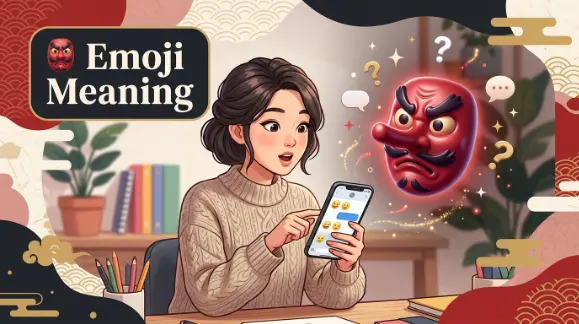
At first glance, the 👺 emoji looks a little scary, but its message isn’t always meant to be serious. The 👺 Emoji Meaning is commonly associated with a Japanese goblin or mythical creature called a tengu. In everyday texting, however, people may use it to express anger, mischief, annoyance, naughtiness, or a playful “evil” mood.
You might come across 👺 in a joke, meme, teasing conversation, or message where someone wants to act intimidating without actually being threatening. Friends may use it to show that they’re being mischievous, while others might send it when they’re irritated or pretending to be angry. The surrounding conversation usually gives you the biggest clue.
In this guide, you’ll discover the 👺 Emoji Meaning in texting, social media, friendships, and everyday conversations. We’ll also explain its origin, common uses, and different interpretations with simple examples so you can understand exactly what this unusual emoji is trying to express.
What Does the 👺 Emoji Mean?
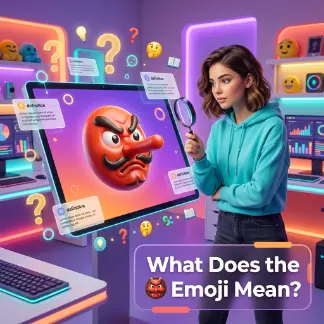
The 👺 emoji usually represents a goblin-like or tengu-like face with a red complexion and an exaggerated angry expression. Its appearance makes it useful when someone wants to make a message look more intense, mischievous, dramatic, or humorous.
In modern conversations, 👺 can mean:
- Mischief or troublemaking
- Playful anger
- A joking threat
- Being annoyed
- A devilish or naughty mood
- Sarcasm
- Teasing
- Acting intimidating for fun
- A strange or creepy feeling
- Humorous frustration
For example:
“You ate my fries again 👺”
Here, the sender probably is not genuinely threatening the other person. The emoji makes the complaint dramatic and playful.
Another example is:
“Just wait until I see you 👺”
Depending on the relationship, this could sound threatening, but the emoji may turn it into a playful warning between friends.
The most important point is that 👺 does not have one fixed emotional meaning. The surrounding words, relationship, and tone determine how readers understand it.
👺 Emoji Meaning in Texting
In text messages, 👺 often adds an exaggerated emotional tone. Someone may use it when ordinary words feel too plain to express their mood.
For instance:
“You really did that 👺”
This could mean, “I can’t believe you did that,” with a mischievous or mock-angry tone.
Another example:
“I’m coming for your snacks 👺”
This sounds like a playful threat rather than a serious one.
People also use 👺 when they want to make themselves sound like a troublemaker:
“I may have eaten the last slice 👺”
The emoji gives the sentence a cheeky personality.
Common Texting Meanings of 👺
| Meaning | Example | Likely tone |
| Mischief | “I have a plan 👺” | Playful |
| Mock anger | “You stole my seat 👺” | Funny |
| Teasing | “You thought I wouldn’t notice 👺” | Playful |
| Fake threat | “You’re in trouble 👺” | Dramatic |
| Irritation | “Stop doing that 👺” | Annoyed |
| Sarcasm | “Great job breaking it 👺” | Humorous |
| Naughty mood | “Guess what I did 👺” | Cheeky |
Context matters more than the emoji itself. A serious conversation can make 👺 feel aggressive, while a casual conversation can make exactly the same emoji feel funny.
👺 Emoji Meaning on Social Media
On social media, 👺 is often used for humor, trolling, mischief, exaggerated anger, and dramatic reactions.
You might see it in a comment such as:
“Bro really thought nobody would notice 👺”
Here, the emoji adds a mischievous or mocking tone.
A person might also post:
“Me pretending I didn’t eat the whole cake 👺”
The emoji suggests that the person knows they did something cheeky and is joking about it.
On platforms where memes and short reactions are common, 👺 can work almost like a visual punchline. The unusual face makes the message feel more exaggerated.
👺 in Comments
Someone might comment:
“You knew exactly what you were doing 👺”
This could mean the person is teasing someone for intentionally causing a funny situation.
Another example:
“That’s evil 👺😂”
Here, 👺 does not necessarily mean actual evil. It can simply make the comment more dramatic.
👺 Emoji Meaning in Friendship
Among friends, 👺 usually has a playful and humorous meaning. Close friends often use exaggerated emojis to pretend they are angry with one another.
For example:
Friend: “I told everyone your embarrassing story 👺”
You: “I’m blocking you.”
In this situation, 👺 can signal that the friend is deliberately being mischievous.
Another example:
Friend: “I finished your chocolate 👺”
This likely means, “I did something naughty, and I know you’ll be annoyed.”
The emoji can therefore create a sense of playful conflict without making the conversation genuinely hostile.
However, you should still consider the friendship. If someone normally uses emojis seriously, 👺 may carry more irritation than humor.
👺 Emoji Meaning From a Girl
When a girl sends 👺, the meaning depends on what she says and the relationship you share. The emoji alone does not prove that she is flirting, angry, or interested.
She might use it to show:
- Playful anger
- Teasing
- Mischief
- A joking threat
- Sarcasm
- Annoyance
- A funny reaction
For example:
“You ignored my message again 👺”
She could be playfully calling you out.
Or:
“I know what you did 👺”
This could suggest teasing or joking suspicion.
If she sends:
“Just wait 👺”
the message may sound like a playful warning, especially if you were already joking with each other.
The best way to understand the message is to look at the conversation before and after the emoji rather than assuming a romantic meaning.
👺 Emoji Meaning From a Guy
A guy may use 👺 in much the same way. It can show that he is jokingly angry, acting mischievous, teasing someone, or making a fake threat.
For example:
“You took my last cookie 👺”
This probably expresses mock anger.
Another example:
“I know where you live 👺”
Among friends, this could simply be exaggerated humor. In a serious or unfamiliar conversation, however, the same sentence could feel uncomfortable.
The emoji changes the tone, but it does not automatically make every message harmless. Always consider the actual words and the relationship between the people involved.
👺 Emoji Meaning From a Crush
If your crush sends 👺, it can be tempting to assume that the emoji has a romantic meaning. Usually, that conclusion is too strong.
A crush might use 👺 while teasing you:
“You really thought you could beat me 👺”
Or:
“I saw that message 👺”
In these cases, the emoji may create playful tension.
If the conversation already contains flirting, jokes, or teasing, 👺 can fit that style. But the emoji itself is not a standard flirting emoji.
Look at the broader communication pattern. The words, timing, conversation topic, and your existing relationship provide much more information than one emoji.
👺 Emoji Meaning in Romantic Relationships
Couples may use 👺 to add humor to minor arguments, teasing, or playful competition.
For example:
“You said I could have the last piece 👺”
This might be a funny complaint between partners.
Or:
“I’m stealing your hoodie tonight 👺”
Here, the emoji can make the sentence sound cheeky and mischievous.
Some couples also use 👺 when pretending to be a villain:
“I have a surprise for you 👺”
The emoji can make the surprise sound mysterious or playful.
Still, 👺 is not inherently romantic. Its romantic meaning comes from the relationship and surrounding conversation, not from the emoji itself.
👺 Emoji Meaning From a Partner
When a partner sends 👺, it can represent a playful mood, mock anger, teasing, or a mischievous idea.
For example:
“You better save me some dessert 👺”
This could be a humorous warning.
Another example:
“I’m stealing all the blankets tonight 👺”
The emoji gives the sentence a playful villain-like personality.
If your partner sends it during an actual argument, however, the meaning may change. It could communicate frustration or sarcasm instead.
That is why reading the whole message is important.
Is 👺 a Flirty Emoji?
👺 can appear in flirting, but it is not specifically a flirty emoji.
Someone might use it while teasing a person they like:
“You looked at my story three times 👺”
The emoji makes the statement playful and slightly provocative.
Another example:
“You think you’re getting away with that? 👺”
If the conversation is already flirtatious, the emoji may add playful tension.
But you should not interpret 👺 alone as a sign of romantic interest. Other clues in the conversation matter more.
Is 👺 a Bad or Negative Emoji?
👺 can have a negative meaning because its face looks angry and intimidating. However, negative does not always mean serious.
It may represent:
- Anger
- Frustration
- Irritation
- Threatening language
- Evil or villain-like behavior
- Aggression in a fictional context
But it can also be completely humorous.
For example:
“You took my charger 👺”
This may be playful.
Compare that with:
“Don’t contact me again 👺”
The second message has much stronger negative wording. The emoji may reinforce an angry tone rather than create a joke.
Therefore, the words usually provide the emotional context, while 👺 adds visual emphasis.
👺 Emoji as a Playful Threat
One of the most common modern uses of 👺 is a fake or playful threat.
Imagine your friend says:
“I’m taking your last slice of pizza 👺”
The sender probably does not intend a real threat. They are acting like a mischievous villain for comedic effect.
Other examples include:
“I’m stealing your seat 👺”
“You better watch your snacks 👺”
“I’ll get you back for that 👺”
These messages often appear between people who already understand each other’s humor.
If you do not know the sender well, though, be more careful about interpreting threatening language as a joke.
👺 Emoji Meaning as a Sarcastic Reaction
👺 can also make sarcasm more obvious.
For example:
“Wow, you remembered my birthday 👺”
If the person actually forgot the birthday, the emoji emphasizes the sarcastic tone.
Another example:
“Nice job deleting the file 👺”
The sender may be jokingly blaming someone for a mistake.
In these situations, 👺 acts almost like an exaggerated facial expression. It tells the reader not to take the sentence completely at face value.
👺 Emoji Meaning When Someone Is Annoyed
Sometimes 👺 genuinely expresses annoyance.
For example:
“You’ve asked me that five times 👺”
The sender may actually be irritated.
Another example:
“Why are you always late 👺”
Here, the emoji can reinforce frustration.
Whether the annoyance is serious depends on the rest of the conversation. A laughing emoji or playful wording may soften it, while short and blunt sentences can make the message feel more serious.
👺 Emoji Meaning in Memes
Memes often use 👺 because its exaggerated face works well with dramatic or absurd situations.
For example:
“Me after someone touches my food 👺”
The humor comes from exaggerating a normal reaction.
Another meme-style use might be:
“When the group chat starts exposing everyone 👺”
The emoji represents the chaotic or mischievous mood.
Because memes often exaggerate emotions, 👺 can represent a fictional villain, angry character, troublemaker, or chaotic personality.
👺 Emoji Meaning in Gaming
Gamers may use 👺 when talking about competition, revenge, trolling, or an opponent’s behavior.
For example:
“You took my loot 👺”
Or:
“Round two. I’m ready 👺”
The emoji can make the message sound like a playful challenge.
A gamer might also use it when describing an especially difficult enemy or villain:
“That boss is terrifying 👺”
In this context, the emoji may be closer to its frightening or monster-like appearance than its everyday texting meaning.
👺 Emoji Meaning in Different Situations
The same emoji can communicate different emotions depending on the situation.
| Situation | Possible meaning |
| Friend jokes with you | Mischief or teasing |
| Partner sends it | Playful annoyance or cheekiness |
| Crush sends it | Teasing, possibly playful flirting |
| Serious argument | Anger or frustration |
| Meme | Exaggerated humor |
| Gaming chat | Challenge or villain-like attitude |
| Social media comment | Sarcasm or playful mockery |
| Someone you barely know | Could feel intimidating or aggressive |
This is why there is no single answer that fits every 👺 emoji meaning question.
Friendly Meaning of 👺
In a friendly conversation, 👺 often means:
“I’m being mischievous.”
For example:
“I took your favorite chair 👺”
The sender is probably being playful.
It can also mean:
“I’m teasing you.”
The emoji helps communicate that the sender is deliberately exaggerating their attitude.
Romantic Meaning of 👺
The romantic meaning of 👺 is usually indirect. Unlike ❤️, 😘, 🥰, or 😍, it does not naturally communicate love or affection.
Instead, it can add playfulness, teasing, or mischievous energy to romantic conversations.
For example:
“Come over here 👺”
could sound playful or teasing between partners.
But outside a romantic context, the same message could have a completely different meaning.
Emotional Meaning of 👺
Emotionally, 👺 can represent a mixture of feelings rather than one emotion.
Someone may use it when they feel:
- Annoyed but amused
- Angry but joking
- Mischievous
- Playfully aggressive
- Sarcastic
- Dramatic
- Cheeky
- Suspicious
Its exaggerated appearance allows people to express emotions that are difficult to capture with ordinary words.
Positive and Negative Meanings of 👺
The emoji can have both positive and negative interpretations.
Positive or Playful Uses
In a positive context, 👺 may show:
- Humor
- Playfulness
- Friendly teasing
- Mischief
- Excitement about a prank
- A silly villain persona
Example:
“I have a surprise planned 👺”
Negative Uses
In a negative context, it may show:
- Anger
- Irritation
- Hostility
- A threatening attitude
- Strong sarcasm
Example:
“Don’t do that again 👺”
The difference comes from context. The emoji does not automatically tell you whether the sender is joking or serious.
👺 vs 😈: What’s the Difference?
👺 and 😈 can both communicate mischief, but they have different visual and cultural associations.
😈 is the smiling devil emoji. It more directly suggests devilish behavior, naughty thoughts, mischief, or playful wickedness.
Compare:
“I have a plan 😈”
This sounds openly devilish or naughty.
“I have a plan 👺”
This sounds more bizarre, dramatic, or villain-like.
👺 vs 👹: What’s the Difference?
These two emojis are especially easy to confuse.
👺 is the goblin or tengu-like face, while 👹 is commonly associated with an ogre or Japanese oni.
Both have red faces and fierce expressions, but their visual designs differ.
In everyday texting, people may use either emoji for anger, monsters, mischief, or dramatic humor. However, the specific character represented by each emoji is different.
👺 vs 😡
The 😡 emoji has a much clearer meaning: anger.
If someone sends:
“I’m angry 😡”
the emotional message is direct.
With 👺:
“I’m angry 👺”
the emotion may feel more theatrical, mischievous, or exaggerated.
So, 😡 is generally more straightforward, while 👺 can add humor, strangeness, or a villain-like tone.
Common Misunderstandings About 👺
It Does Not Always Mean Anger
The face looks angry, but people frequently use it jokingly. A friend may send it after doing something silly.
It Is Not Automatically Flirty
Someone sending 👺 does not necessarily mean they like you romantically. Look at the full conversation.
It Does Not Always Mean Something Evil
The emoji can represent mischievous behavior without implying actual wrongdoing.
It Is Not the Same as 😈
Both can represent mischief, but they have different designs and associations.
Context Changes Everything
A message from a close friend can sound completely different from the same message sent by a stranger.
How to Respond When Someone Sends 👺
Your response should match the tone of the conversation.
If a Friend Sends 👺
You can respond playfully:
“What are you planning? 😂”
Or:
“I know that look 👀”
If Your Crush Sends 👺
You can keep the teasing energy:
“Should I be worried? 😂”
Or:
“Okay, now I’m curious 👀”
If Your Partner Sends 👺
A playful response works well:
“You’re definitely up to something 😂”
Or:
“I knew you were trouble 😏”
If the Message Seems Serious
Do not automatically joke back. If the words sound genuinely angry or threatening, respond to the actual situation instead of focusing on the emoji.
For example:
“Are you actually upset with me?”
This can clear up confusion quickly.
How to Know What 👺 Means in Your Conversation
When you are unsure about an emoji, check five things.
First, read the words. The message usually provides the strongest clue.
Second, look at the previous messages. A joke may explain why someone suddenly uses 👺.
Third, consider your relationship. Friends often use exaggerated emojis differently from strangers.
Fourth, notice other emojis. 😂, 🤣, 😭, 😏, or ❤️ can change the overall tone.
Finally, consider the person’s normal texting style. Some people use unusual emojis simply because they like them.
For example, if someone regularly sends 👺 when joking, you probably should not interpret it as serious anger every time.
Real-Life Text Examples Using 👺
Here are several realistic examples that show how the emoji can change meaning.
Example 1 — Mischief
“I ate your fries 👺”
Meaning: The sender admits to doing something cheeky.
Example 2 — Playful warning
“You’re going to regret challenging me 👺”
Meaning: A dramatic but possibly friendly challenge.
Example 3 — Mock anger
“You watched the episode without me 👺”
Meaning: The sender is pretending to be angry.
Example 4 — Sarcasm
“Thanks for helping me clean 👺”
Meaning: The sender probably means the opposite if the other person did not help.
Example 5 — Gaming
“I’m coming for your rank 👺”
Meaning: A competitive challenge.
Example 6 — Relationship teasing
“I’m stealing your hoodie again 👺”
Meaning: A playful, cheeky message between people who are close.
Example 7 — Genuine irritation
“I already told you not to do that 👺”
Meaning: The sender may actually be annoyed.
These examples demonstrate why the emoji itself cannot provide the complete meaning.
Why Does 👺 Look So Angry?
The design is intentionally exaggerated. Its red face, pronounced nose, eyebrows, and expression create a fierce appearance.
The character is associated with tengu, supernatural beings from Japanese folklore. The modern emoji design gives people a recognizable face for expressing exaggerated anger, mischief, or a monster-like personality.
In digital conversations, users often separate an emoji from its original cultural context. As a result, 👺 may simply become a visual symbol for “I’m being mischievous” or “I’m pretending to be scary.”
That does not mean every person using it is referring to Japanese folklore.
Does 👺 Mean “I’m Evil”?
Not necessarily.
Someone might use 👺 to jokingly present themselves as a villain:
“I hid the remote 👺”
The person is not necessarily saying they are actually evil. They are using the emoji to exaggerate a small act of mischief.
In memes and casual conversations, this kind of exaggeration is common.
When Should You Use 👺?
You can use 👺 when you want to add a mischievous, dramatic, teasing, or mock-threatening tone to a message.
It works especially well when:
- You are joking with close friends.
- You are teasing someone.
- You are pretending to be a villain.
- You are making a playful threat.
- You want to exaggerate annoyance.
- You are reacting to something chaotic or funny.
- You are sharing a mischievous plan.
However, avoid relying on it to soften genuinely threatening language. An emoji cannot guarantee that another person will understand your intention as a joke.
When Should You Avoid 👺?
You may want to avoid 👺 in formal communication, professional emails, serious complaints, or sensitive conversations.
For example, sending:
“I expect this issue to be fixed immediately 👺”
could make a professional message sound strange or unnecessarily aggressive.
Likewise, if someone is already upset, adding 👺 may make the situation worse because they could interpret it as mockery.
When clarity matters, simple words are often better than relying on an emoji.
Frequently Asked Questions About 👺 Emoji Meaning
What does 👺 mean in texting?
The 👺 emoji usually means mischief, playful anger, teasing, sarcasm, or a joking threat. Its exact meaning depends on the message and relationship between the people communicating.
What is the 👺 emoji called?
👺 is commonly known as the Goblin emoji. Its appearance is based on the Japanese tengu, a supernatural figure from Japanese folklore.
Is 👺 a bad emoji?
Not necessarily. It can represent anger or intimidation, but people often use it humorously to show mischief, teasing, or mock anger.
What does 👺 mean from a girl?
A girl may use 👺 to tease you, show playful annoyance, act mischievous, or make a dramatic joke. It does not automatically indicate flirting or romantic interest.
What does 👺 mean from a guy?
A guy may use 👺 to show playful anger, sarcasm, mischief, or a joking threat. The surrounding conversation determines the intended tone.
Is 👺 a flirty emoji?
👺 is not specifically a flirty emoji. It can appear in a flirtatious conversation when someone is teasing or joking, but the emoji alone does not establish romantic interest.
What is the difference between 👺 and 👹?
👺 represents a goblin or tengu-like face, while 👹 is generally associated with an ogre or oni. Both can be used for dramatic, scary, angry, or mischievous reactions.
How should I respond to 👺?
Match the sender’s tone. If they are joking, you can reply with humor such as “What are you planning? 😂” If they seem genuinely angry, address their words instead of assuming the emoji is playful.
Conclusion:
The 👺 emoji meaning is usually connected with mischief, playful anger, teasing, sarcasm, mock threats, or a dramatic villain-like attitude. Its fierce red face can make a message look intimidating, but people often use it simply for humor.
In texting, 👺 can mean “I’m being naughty,” “I’m jokingly angry,” “I’m planning something,” or “You better watch out.” In friendships, it often adds playful energy.

I am William Parker, a passionate writer dedicated to creating informative, engaging, and meaningful content for readers around the world. I enjoy exploring different topics, sharing valuable insights, and presenting ideas in a simple and easy-to-understand way. I am committed to providing well-researched articles that help readers learn, grow, and discover new perspectives.