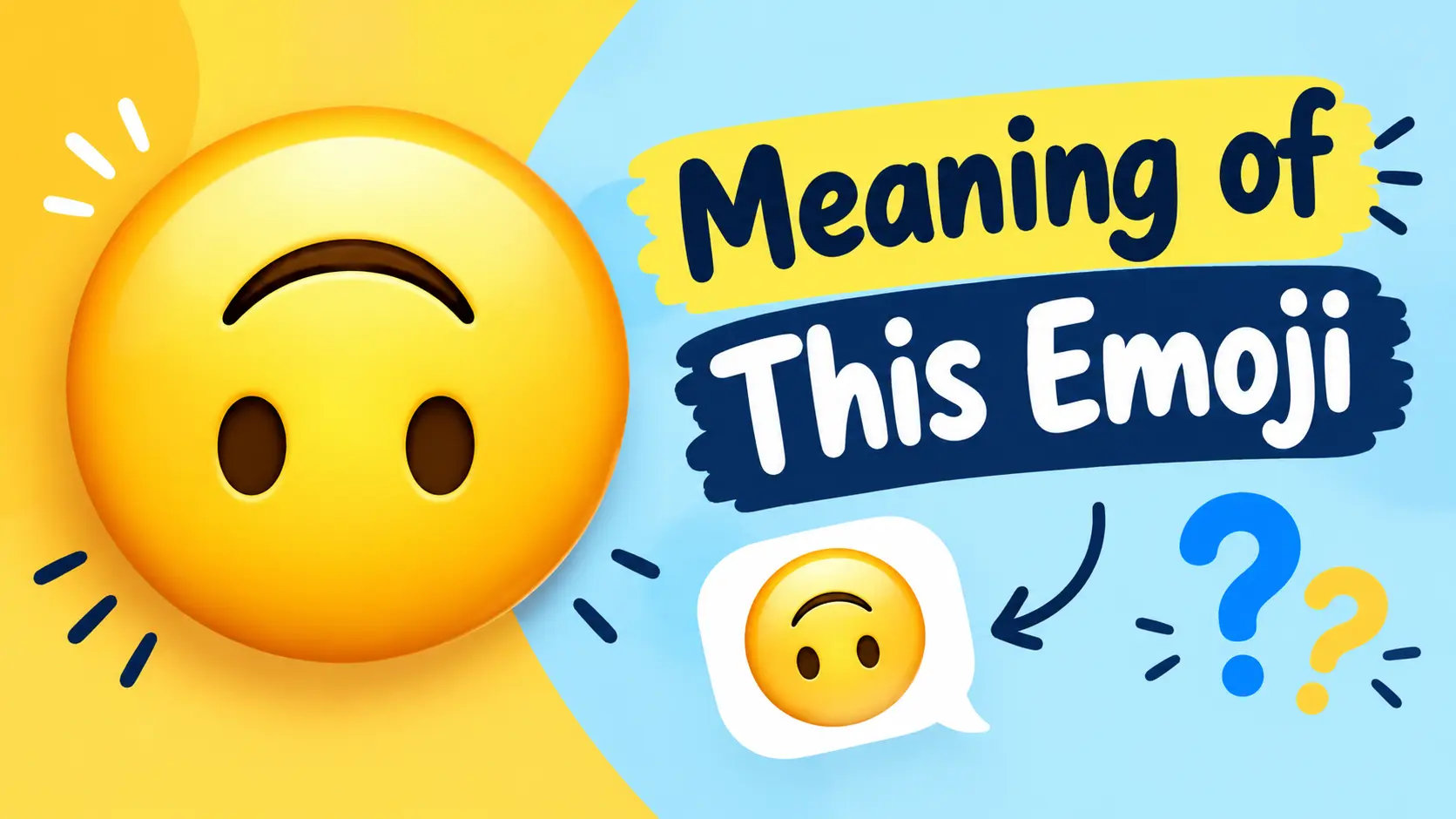
Not every smile means that everything is going perfectly. 🙃 can look cheerful at first, yet it often carries a more complicated message underneath. The 🙃 Meaning of This Emoji can include sarcasm, awkwardness, irony, playful frustration, or a sense of “well, that happened.”
People often use the upside-down face when a situation feels strange or mildly frustrating but they want to respond in a lighthearted way.
For example, someone might send 🙃 after making an awkward mistake, dealing with an annoying situation, or joking about something that did not go as planned. In some conversations, it can also create a teasing or slightly passive-aggressive tone.
🙃 Meaning of This Emoji at a Glance
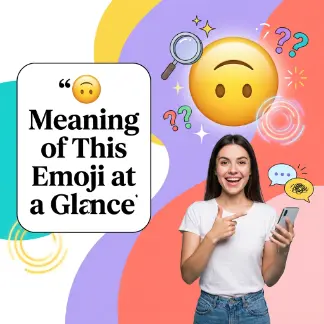
The upside-down face emoji generally communicates a feeling that is playful, ironic, awkward, sarcastic, or emotionally mixed.
Here are some common meanings:
| Meaning | What it can suggest |
| Sarcasm | “Sure, everything is great.” |
| Irony | Something turned out differently than expected |
| Awkwardness | A strange or uncomfortable moment |
| Mild frustration | Something annoying happened |
| Playfulness | Joking without sounding too serious |
| Embarrassment | Laughing at your own mistake |
| Resignation | “Well, I guess this is my life now.” |
| Mixed emotions | Finding something funny and frustrating at once |
| Forced positivity | Pretending to be fine |
| Dark or dry humour | Making light of an unfortunate situation |
The exact 🙃 emoji meaning comes from context. A friend may use it to joke about a bad day, while a partner could use it to express playful frustration.
What Does 🙃 Mean in Texting?
In texting, 🙃 often adds a layer of irony to a sentence. The words may appear positive on their own, but the emoji tells you that the sender means something slightly different.
For example:
“Love being stuck in traffic for an hour 🙃”
The words say “love,” but the upside-down face suggests the person actually dislikes the situation. It turns the sentence into sarcasm.
Another example:
“I studied all night and the exam covered everything I skipped 🙃”
Here, 🙃 expresses frustration mixed with humour. The sender is probably annoyed but does not want the message to sound overly serious.
Common Texting Uses of 🙃
People often send 🙃 when they:
- Make a sarcastic comment
- Experience an awkward situation
- Make a silly mistake
- Deal with mild frustration
- Want to soften a complaint
- Joke about bad luck
- Pretend everything is fine
- Express an ironic reaction
- Make a conversation less serious
The emoji can therefore function almost like a tone marker. It helps the reader understand that the sentence should not necessarily be taken literally.
🙃 Meaning in Social Media
On social media, 🙃 frequently appears in captions, comments, replies, memes, and posts about everyday problems.
Someone might post:
“Woke up late, missed the bus, and forgot my homework. Great start to the day 🙃”
The emoji gives the post an ironic tone. The person clearly does not think it is a great start.
It can also appear after a relatable statement:
“Me pretending I didn’t spend all my money this weekend 🙃”
Here, the emoji creates humour by showing that the person knows the situation is ridiculous.
On platforms such as Instagram, TikTok, Snapchat, X, or Facebook, people often use 🙃 because it communicates a complicated reaction without requiring a long explanation.
🙃 Meaning From a Girl
When a girl sends 🙃, the meaning depends heavily on what she says before or after it.
She might use it playfully:
“You really forgot my birthday? 🙃”
That could indicate mild annoyance, teasing, or disappointment. It does not automatically mean she is seriously angry.
She could also use it when discussing an embarrassing situation:
“I waved back at someone who wasn’t waving at me 🙃”
In that case, she is probably expressing embarrassment and laughing at herself.
Does 🙃 From a Girl Mean She Is Mad?
Not necessarily.
The upside-down face can communicate mild frustration, but it does not automatically mean anger. Look at the surrounding conversation.
For example:
“You said you’d call me yesterday 🙃”
This could suggest disappointment or annoyance.
But:
“I just dropped my phone on my face 🙃”
is more likely self-deprecating humour.
The words and situation matter more than the emoji alone.
🙃 Meaning From a Guy
A guy may use 🙃 to express sarcasm, awkwardness, frustration, or humour.
For example:
“My car broke down again 🙃”
This probably means that he is frustrated but making light of the situation.
Or:
“Yeah, I totally meant to send that to you 🙃”
That could suggest embarrassment or playful sarcasm.
Some people also use 🙃 when they want to communicate that something is ridiculous without sounding overly serious.
Does 🙃 From a Guy Mean He Is Being Sarcastic?
It can.
Sarcasm is one of the most common interpretations, especially when the emoji follows a sentence that obviously contradicts reality.
For example:
“I absolutely love getting homework at midnight 🙃”
The sender almost certainly does not mean that literally.
However, you should not assume every 🙃 from a guy is sarcastic. It can also express awkwardness, frustration, embarrassment, or playful humour.
🙃 Meaning From a Crush
If your crush sends 🙃, it can feel difficult to know whether the message is friendly, flirty, sarcastic, or something else.
Usually, the emoji itself does not prove romantic interest.
For example:
You: “Did you really forget our plans?”
Crush: “I thought we were meeting tomorrow 🙃”
This could simply be an awkward apology.
On the other hand:
You: “You looked really good today.”
Crush: “Stoppp 🙃”
could have a playful or slightly embarrassed tone.
The surrounding conversation provides much stronger clues than the emoji alone.
Is 🙃 Flirty?
Sometimes, but not inherently.
The upside-down face can appear in playful flirting because it gives messages a teasing or slightly awkward tone.
For example:
“Maybe I wanted you to notice me 🙃”
That could sound flirty because of the words and context. The emoji supports the playful tone, but it does not create the flirtation by itself.
🙃 Meaning From a Partner
Partners may use 🙃 to communicate playful frustration, teasing, embarrassment, or irony.
For example:
“You said you’d clean the kitchen today 🙃”
Depending on the relationship, this could be a gentle reminder or playful complaint.
Another example:
“I ordered your favourite food and you already ate dinner 🙃”
The emoji can make the complaint sound humorous rather than genuinely hostile.
In romantic relationships, tone can be especially dependent on the couple’s communication style. One person’s 🙃 may mean “I’m joking,” while another person’s may mean “I’m slightly annoyed.”
🙃 Meaning in Friendship
Friends often use 🙃 when joking about everyday problems.
For example:
“You told everyone my embarrassing story 🙃”
This could be playful teasing.
Another example:
“We said we’d save money this month and immediately bought pizza 🙃”
Here, 🙃 expresses shared humour and a little self-awareness.
Because friends usually understand each other’s communication habits, the emoji can carry an inside-joke quality that would be difficult for an outsider to interpret.
🙃 Friendly Meaning
The emoji can have a completely friendly meaning.
A friend might say:
“I forgot my keys again 🙃”
There is no romantic message here. The sender is simply laughing at their own mistake.
It can also soften a complaint:
“You still owe me that coffee 🙃”
The sender may be reminding you while keeping the conversation light.
So, 🙃 is not automatically romantic or flirty.
🙃 Romantic Meaning
In romantic conversations, 🙃 can sometimes communicate:
- Playful teasing
- Shyness
- Awkward flirting
- Light embarrassment
- A joking complaint
- Mixed emotions
For example:
“You know exactly what you’re doing 🙃”
Depending on the conversation, this could sound teasing and flirtatious.
However, the same emoji could appear in a completely non-romantic conversation. You should consider the relationship, words, timing, and previous messages before interpreting it romantically.
🙃 Sarcastic Meaning
Sarcasm is one of the clearest uses of 🙃.
Imagine someone says:
“My internet stopped working during an important meeting 🙃”
The sender is not happy about the internet failure. The emoji signals an ironic reaction.
Another example:
“Nothing like waking up at 6 AM for a meeting that gets cancelled 🙃”
Again, the emoji highlights the contrast between the situation and the apparent attitude.
Why Does 🙃 Work for Sarcasm?
The upside-down face looks cheerful even when the situation is not cheerful. That visual contradiction makes it useful for ironic statements.
It can essentially communicate:
“I’m smiling, but this situation is ridiculous.”
🙃 Meaning for Awkward Situations
People often use 🙃 when something feels socially uncomfortable.
For example:
“I called my teacher ‘Mom’ today 🙃”
The sender is probably embarrassed but finds the mistake funny.
Another example:
“I walked into the wrong classroom and sat down before noticing 🙃”
The emoji shows embarrassment without making the situation sound dramatic.
This is why 🙃 often appears in stories about mistakes, social confusion, or uncomfortable moments.
🙃 Meaning for Frustration
The emoji can express frustration, especially when the frustration is relatively mild.
For example:
“The website crashed right before I submitted my assignment 🙃”
The person is obviously annoyed. However, the emoji adds humour and prevents the message from sounding extremely angry.
A useful way to think about it is:
🙃 can mean “This is frustrating, but I’m trying to laugh about it.”
🙃 Meaning for Mixed Emotions
Sometimes a person feels two things at once.
They might be happy that something worked out but annoyed about how it happened:
“I finally got the job, but they made me wait three months 🙃”
The sender may feel happy, relieved, and frustrated simultaneously.
The upside-down face works well because it can capture that emotional contradiction.
Positive and Negative Meanings of 🙃
The emoji can carry both positive and negative emotional shades.
| Situation | Possible interpretation |
| Funny mistake | Playful embarrassment |
| Bad luck | Frustrated humour |
| Teasing a friend | Playfulness |
| Awkward date | Nervous or uncomfortable humour |
| Unexpected problem | Irony |
| Romantic teasing | Playful or flirty tone |
| Complaint | Mild annoyance |
| Serious argument | Possible frustration or sarcasm |
The important point is that negative does not always mean hostile. Someone can be annoyed while still trying to keep the conversation friendly.
🙃 vs 🙂: What’s the Difference?
The regular smiling face 🙂 generally communicates straightforward friendliness, positivity, politeness, or warmth.
The upside-down face 🙃 often introduces irony or emotional contradiction.
| Emoji | Common tone |
| 🙂 | Friendly, calm, positive |
| 🙃 | Ironic, awkward, sarcastic, playful |
| 😊 | Warm, happy, appreciative |
| 😅 | Nervous laughter, relief, awkwardness |
| 😏 | Smugness, suggestiveness, teasing |
| 😐 | Neutral or unimpressed |
| 😬 | Awkwardness or tension |
For example:
“I passed my exam 🙂”
sounds genuinely positive.
“I passed my exam 🙃”
could suggest something unusual about the situation, such as passing despite barely studying.
🙃 vs 😅
The 😅 smiling face with sweat often communicates nervousness, relief, embarrassment, or “that was close.”
The 🙃 upside-down face more often emphasizes irony, awkward humour, or a strange situation.
Compare:
“I almost missed my flight 😅”
This sounds like relief.
“I missed my flight 🙃”
This sounds more like frustrated humour or resignation.
Of course, people can use either emoji differently, so context still matters.
🙃 vs 😏
The 😏 smirking face can have a teasing, confident, mischievous, or suggestive tone.
The 🙃 upside-down face usually feels more awkward, ironic, or self-aware.
For example:
“You know you like me 😏”
sounds openly teasing or flirtatious.
“You really noticed that 🙃”
can sound more shy, awkward, or playful.
🙃 vs 😐
The neutral face 😐 usually communicates little emotion, silence, awkwardness, or unimpressedness.
By contrast, 🙃 contains a smile. That smile can make a complaint or awkward situation feel more humorous.
Compare:
“You forgot again 😐”
This can sound serious or unimpressed.
“You forgot again 🙃”
This can sound more playful, sarcastic, or resigned.
Common Situations Where People Use 🙃
The upside-down face can appear in many everyday conversations.
After Making a Mistake
“I sent the email without the attachment 🙃”
The person is embarrassed and laughing at their own mistake.
After Something Goes Wrong
“The power went out during my presentation 🙃”
The emoji adds ironic humour to an unfortunate event.
During Teasing
“You actually believed me? 🙃”
This can show playful teasing.
During Mild Complaints
“You ate the last slice again 🙃”
This could be a humorous complaint between friends or partners.
When Pretending Everything Is Fine
“Everything is completely under control 🙃”
The emoji can suggest that everything is actually chaotic.
When Something Is Ridiculous
“They changed the deadline the night before the deadline 🙃”
The emoji communicates disbelief and irony.
How to Respond When Someone Sends 🙃
Your response should depend on what the person is trying to communicate.
If they are joking, joke back. If they sound frustrated, acknowledge the situation. If you are unsure, respond to the actual words rather than trying to decode the emoji alone.
If a Friend Sends 🙃
You can respond casually:
“😂 What happened?”
or:
“That sounds like a disaster.”
This gives them a chance to explain the story.
If Your Crush Sends 🙃
Keep your response connected to the conversation.
For example:
“Okay, now I need the full story 😂”
Or, if they are teasing:
“You’re enjoying this way too much 🙃”
The best response depends on whether the conversation already has a playful or romantic tone.
If Your Partner Sends 🙃
If they seem annoyed, acknowledge it:
“Okay, okay, I get the hint 😂 I’ll fix it.”
If they are clearly joking, you can respond playfully:
“You love giving me that look, don’t you? 😂”
If You Do Not Understand the Meaning
There is nothing wrong with asking:
“Wait, what does the 🙃 mean here? 😂”
This is often better than assuming the person is angry, flirting, or upset.
How to Tell What 🙃 Means in a Conversation
Instead of focusing only on the emoji, examine the entire message.
Ask yourself:
What did they say?
The words usually provide the strongest clue.
What happened before the message?
An emoji after an argument may have a different tone from one used after a joke.
How do they normally text?
Some people use 🙃 constantly, while others use it only when something awkward happens.
What is your relationship?
A friend, colleague, crush, and partner may use the same emoji differently.
Are they joking?
If the message sounds exaggerated or contradictory, irony may be involved.
Are they complaining?
A complaint followed by 🙃 may indicate mild frustration rather than anger.
Common Misunderstandings About 🙃
“🙃 Always Means Sarcasm”
Not always.
Sarcasm is common, but the emoji can also express awkwardness, embarrassment, frustration, playfulness, or resignation.
“🙃 Means Someone Is Angry”
It can signal annoyance, but it does not automatically mean serious anger.
The difference often comes from the surrounding words.
“🙃 Is Always Flirty”
No.
The emoji can appear in romantic conversations, but it is also extremely common among friends and in ordinary everyday messages.
“🙃 Means Someone Is Fake”
Not necessarily.
Some people interpret the upside-down smile as fake happiness because the face looks cheerful despite a negative situation. However, the sender may simply be using irony or humour.
“🙃 Has Only One Meaning”
This is probably the biggest misunderstanding.
Emoji communication is flexible. Meaning changes with context, culture, relationship, personal habits, and tone.
Does 🙃 Mean “I’m Fine”?
Sometimes.
For example:
“Yeah, I’m totally fine 🙃”
The emoji can imply that the speaker is not really fine or is using humour to hide frustration.
But if someone says:
“I’m fine 🙃”
you should not automatically conclude that they are upset. They may simply be joking.
If the situation matters, ask them directly.
Does 🙃 Mean “I Give Up”?
It can sometimes communicate resignation.
For example:
“I’ve tried explaining this five times 🙃”
This may suggest:
“I don’t know what else to do.”
Similarly:
“Guess I’m working this weekend 🙃”
could mean the person has accepted an unwanted situation.
This is why the emoji can sometimes feel like a digital shrug.
Does 🙃 Mean “I’m Pretending to Be Happy”?
It can.
The upside-down smile creates a visual contrast between happiness and an uncomfortable reality.
For example:
“Another 12-hour shift today 🙃”
The sender may be smiling at the absurdity rather than genuinely enjoying the shift.
Still, this interpretation depends on the context.
Can 🙃 Be Passive-Aggressive?
Sometimes, yes.
For example:
“Thanks for telling me at the last minute 🙃”
This could be friendly sarcasm, but it could also communicate genuine irritation.
The same emoji can therefore soften a message while still carrying criticism.
If the conversation involves an actual disagreement, pay more attention to the wording than the emoji.
🙃 in Professional Messages
You may occasionally see 🙃 in workplace chats, especially among colleagues who have a relaxed communication style.
For example:
“The meeting has been moved to 7 AM 🙃”
The emoji probably communicates mild frustration.
However, professional communication requires some awareness of the audience. In a formal email to a client, the emoji could be interpreted differently from how it would be understood in a casual team chat.
How Culture and Personal Style Affect 🙃
Emoji meanings are not universal rules.
People from different backgrounds may use the same emoji in different ways. Age, online communities, friendship groups, regional communication styles, and personal habits can all influence interpretation.
Someone may use 🙃 almost every time something goes wrong. Another person might use it only for sarcasm.
That is why you should avoid treating an emoji as a secret code with one guaranteed definition.
Examples of 🙃 in Real Conversations
Example 1: Bad Luck
Person A: “Did you get home safely?”
Person B: “Almost. My tyre went flat 🙃”
Meaning: Person B is frustrated but trying to make the situation sound lighter.
Example 2: Embarrassment
Person A: “How was your presentation?”
Person B: “I called the manager by the wrong name 🙃”
Meaning: Embarrassment mixed with humour.
Example 3: Sarcasm
Person A: “Are you enjoying the rain?”
Person B: “Absolutely love getting soaked 🙃”
Meaning: Clearly sarcastic.
Example 4: Friendship
Person A: “Did you remember to bring snacks?”
Person B: “Nope 🙃”
Meaning: Playful admission of forgetting.
Example 5: Romantic Teasing
Person A: “You were definitely staring at me.”
Person B: “Maybe a little 🙃”
Meaning: Potentially playful or flirtatious, depending on the relationship.
Example 6: Mild Complaint
Person A: “Can you help me clean?”
Person B: “After you promised you’d do it yesterday 🙃”
Meaning: Playful frustration or a gentle complaint.
Example 7: Resignation
Person A: “Are you coming to the party?”
Person B: “I have to work tonight 🙃”
Meaning: Disappointment or resignation.
When Should You Avoid Using 🙃?
Although 🙃 works well in casual conversations, it may not fit every situation.
Be cautious when discussing:
- Serious personal problems
- Bereavement
- Major conflicts
- Formal complaints
- Important professional matters
- Sensitive misunderstandings
Because the emoji can sound sarcastic, someone may misunderstand your intention.
For example, saying:
“Sorry about your loss 🙃”
would obviously create the wrong tone.
When the situation is serious, clear words are usually better than relying on an emoji to communicate emotion.
Why Is the Upside-Down Face So Popular?
The appeal of 🙃 comes from its ability to express a feeling that is hard to describe with words.
Life often produces situations that are neither completely funny nor completely serious. You might be annoyed but laughing. Embarrassed but amused. Disappointed but trying to stay positive.
The upside-down face captures that emotional middle ground.
It is almost like saying:
“Well… this is awkward.”
or:
“I guess we’re doing this now.”
or:
“I’m laughing because otherwise I’d be frustrated.”
That flexibility explains why the emoji appears so often in casual digital communication.
Quick Guide to the 🙃 Emoji Meaning
If you need a simple interpretation, use this guide:
| If 🙃 appears after… | It may mean… |
| A joke | Playful humour |
| A mistake | Embarrassment |
| A complaint | Mild frustration |
| A contradictory statement | Sarcasm or irony |
| A bad situation | Resignation |
| A romantic tease | Possible flirting |
| An awkward story | Social awkwardness |
| “I’m fine” | Possibly “I’m not really fine” |
| A friend’s teasing | Playful sarcasm |
| A serious message | Potential frustration, but context is essential |
Frequently Asked Questions
What is the 🙃 meaning of this emoji?
The 🙃 emoji, known as the upside-down face, commonly expresses sarcasm, irony, awkwardness, playful humour, mild frustration, embarrassment, or resignation. Its exact meaning depends on the conversation.
What does 🙃 mean in texting?
In texting, 🙃 often adds an ironic or playful tone. Someone may use it after a mistake, awkward situation, mild complaint, or sarcastic statement.
Does 🙃 mean sarcasm?
It can mean sarcasm, especially when the words say something positive but the situation is clearly negative. However, 🙃 can also express awkwardness, frustration, embarrassment, or humour.
What does 🙃 mean from a girl?
It can mean many things from a girl, including sarcasm, awkwardness, teasing, frustration, or embarrassment. It does not automatically indicate flirting or anger.
What does 🙃 mean from a guy?
A guy may use 🙃 to show sarcasm, awkward humour, mild frustration, embarrassment, or playful teasing. The surrounding message is important for understanding his intention.
Is 🙃 a flirty emoji?
🙃 can appear in flirting, especially when someone is teasing or acting playfully shy. However, the emoji itself is not inherently flirty.
What does 🙃 mean from a crush?
From a crush, 🙃 may support a playful, awkward, teasing, or potentially flirty message. You should look at the full conversation rather than assuming the emoji alone indicates romantic interest.
Is 🙃 a negative emoji?
Not necessarily. It often carries a mildly negative or uncomfortable situation wrapped in humour. It can communicate frustration, but it can also be completely playful.
Conclusion
The 🙃 meaning of this emoji is usually connected to sarcasm, irony, awkwardness, playful frustration, embarrassment, or mixed emotions. Its upside-down smile creates a contrast between what looks happy and what may actually be inconvenient, strange, or frustrating.
In texting, friends may use 🙃 after making mistakes. Couples may use it for playful complaints. A crush may use it during awkward teasing. On social media, people often add it to posts about bad luck, everyday problems, or situations that are funny precisely because they went wrong.

I am Grace Wilson, a passionate writer dedicated to creating helpful, engaging, and informative content for readers around the world. I am committed to sharing well-researched ideas, practical knowledge, and meaningful stories that inspire and educate. With a focus on clarity and authenticity, I am always exploring new topics and bringing valuable insights to my audience.