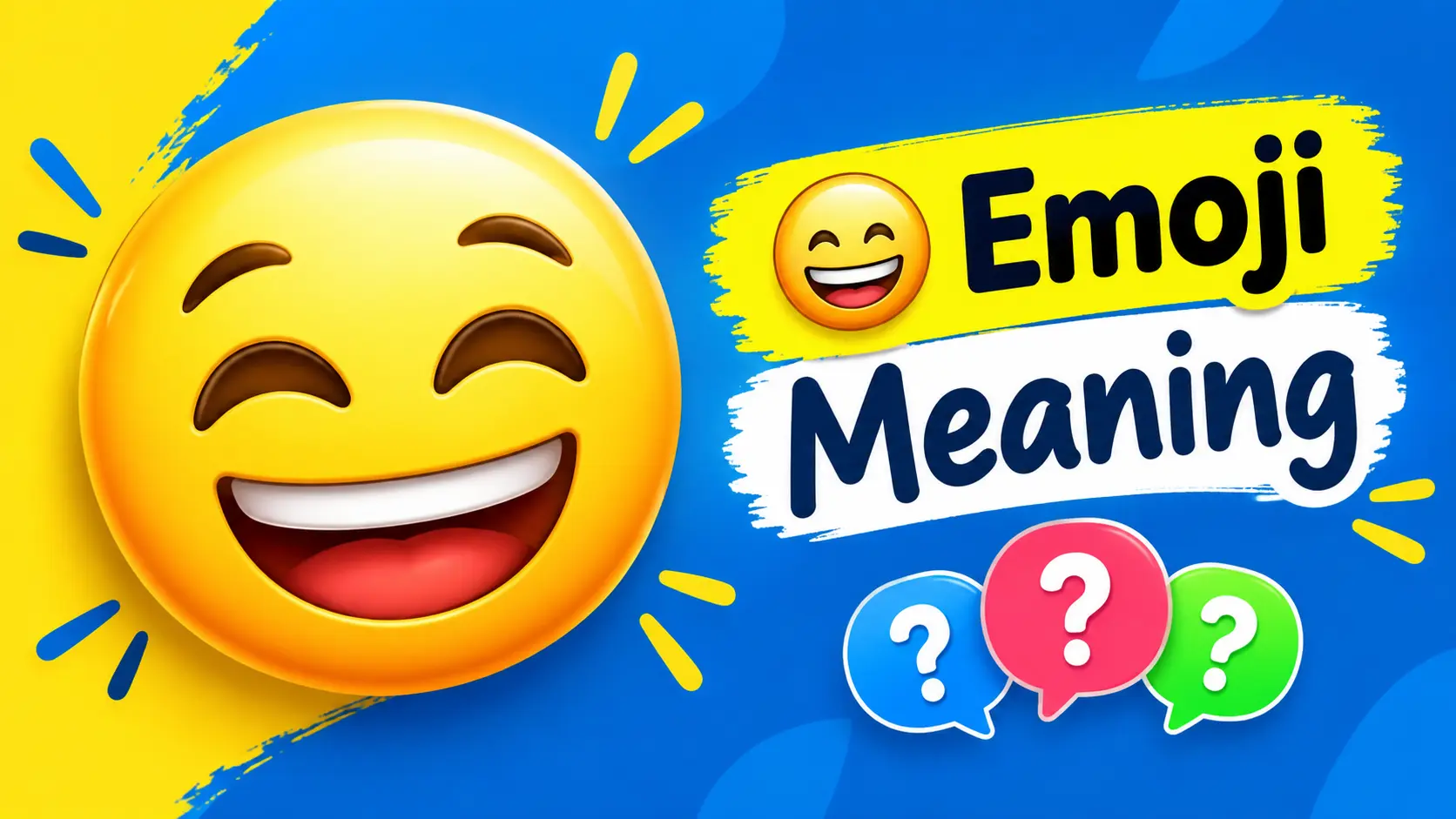
One cheerful face can instantly make a text feel more friendly. 😀 is one of the most recognizable smiling emojis, and its wide grin often adds a sense of happiness, friendliness, excitement, or positive energy to a message. However, the exact 😀 Emoji Meaning can depend on the words around it and the tone of the conversation.
People may use 😀 when they are genuinely happy, reacting positively, greeting someone, or trying to keep a conversation upbeat. It can also soften a statement and make it sound less serious or formal. In some situations, the emoji simply shows that the sender is smiling.
In this guide, we’ll explain the 😀 Emoji Meaning in simple terms. You’ll learn what this smiling face means in texting and social media, how people commonly use it, and what it may suggest when sent by a guy, girl, friend, or romantic partner.
What Does 😀 Mean?
😀 is called the Grinning Face emoji. Its basic appearance is a smiling face with an open mouth and visible teeth.
People commonly use it to communicate:
- Happiness
- Friendliness
- Cheerfulness
- Excitement
- Positive feelings
- Amusement
- Warmth
- Lightheartedness
- Satisfaction
- A simple smile
The most straightforward interpretation is, “I’m happy,” “That’s good,” or “I’m smiling.”
For instance:
“I finally finished my homework 😀”
Here, 😀 adds a feeling of relief and happiness.
Likewise:
“We’re going to the beach tomorrow 😀”
The emoji makes the sentence sound excited and cheerful.
However, you should not interpret 😀 by itself. The surrounding message can completely change the tone.
😀 Emoji Meaning in Texting
In texting, 😀 usually makes a conversation feel positive, friendly, and relaxed.
Someone may add it to a message because they genuinely feel happy. They may also use it to soften their wording. A sentence without an emoji can sometimes look serious, while the same sentence with 😀 can feel warmer.
Consider these examples:
“Thanks for helping me 😀”
This sounds genuinely appreciative and friendly.
“Okay, see you tomorrow 😀”
The person is probably confirming the plan while keeping the conversation pleasant.
“I passed my exam 😀”
Here, the emoji clearly supports excitement and happiness.
“You remembered! 😀”
This can show pleasant surprise or appreciation.
The emoji does not necessarily communicate a deep emotion. Sometimes it is simply a digital equivalent of smiling while talking.
😀 Meaning on Social Media
On social media, 😀 can communicate a positive reaction without requiring a long comment.
Someone might use it under a funny post, happy announcement, personal achievement, or positive update. It can also make a comment look more welcoming.
For example:
Post: “I got my first job today!”
Comment: “Congratulations 😀”
Here, 😀 adds warmth and happiness.
Another example:
Post: “Weekend plans are finally ready!”
Comment: “Looks like a good time 😀”
The emoji reinforces the positive tone.
On social media, the meaning can also depend on the community and the person’s usual style. Some people use emojis frequently, while others use them only when they want to emphasise an emotion.
😀 Meaning in Friendship
Among friends, 😀 usually has a friendly and cheerful meaning.
A friend might send it when they are happy about seeing you, agreeing with a plan, joking around, or responding positively to your news.
For example:
Friend: “Movie tonight?”
You: “Absolutely 😀”
The emoji makes the response enthusiastic.
Another example:
Friend: “I saved you some pizza 😀”
That can communicate generosity, friendliness, and playful happiness.
If a friend sends 😀 after telling you something exciting, it often means they want to share that positive mood with you.
Is 😀 a Friendly Emoji?
Yes. 😀 is commonly used as a friendly emoji.
It can help make everyday messages feel less formal or distant. People may use it with friends, classmates, colleagues, relatives, and online acquaintances.
For example:
“Hope you have a great day 😀”
This generally sounds warm and friendly rather than romantic.
😀 Meaning in a Romantic Relationship
In romantic conversations, 😀 can show happiness, affection, excitement, or comfort. However, it is not automatically a romantic emoji.
A partner might write:
“I can’t wait to see you 😀”
Here, 😀 supports the affectionate and excited tone.
Another example:
“You always make me laugh 😀”
The emoji reinforces the positive emotion.
Still, if someone uses 😀 with a romantic message, the romantic meaning usually comes from the words and relationship, not from the emoji alone.
Compare:
“Thanks for sending that 😀”
This can be completely friendly.
With:
“I really miss you 😀❤️”
The combination of words and emojis creates a much more affectionate tone.
😀 Meaning From a Girl
If a girl sends 😀, it commonly means that she is feeling happy, friendly, amused, or positive about the conversation.
For example:
“That was actually so funny 😀”
She is probably showing genuine amusement.
Or:
“Okayyy, I’ll see you tomorrow 😀”
This can indicate a pleasant, relaxed attitude toward the plan.
However, 😀 alone does not prove that she is flirting. You need to consider what she said, how she normally texts, and the relationship you have with her.
If she sends:
“You’re really sweet 😀”
That could be friendly, appreciative, playful, or potentially affectionate depending on the broader conversation.
Does 😀 From a Girl Mean She Likes You?
Not necessarily.
A girl using 😀 can mean that she feels comfortable and positive while talking to you. But an emoji by itself is not reliable evidence of romantic interest.
Look at the complete conversation instead. If the messages include personal interest, affectionate language, invitations to spend time together, or other clear signals, those details provide more context than 😀 alone.
😀 Meaning From a Guy
When a guy sends 😀, it usually communicates happiness, friendliness, amusement, or a positive reaction.
For example:
“Bro, we actually won 😀”
The emoji shows excitement.
Or:
“Yeah, I can help you with that 😀”
Here, it makes the response sound friendly and cooperative.
A guy may also use 😀 when he wants to avoid making a message sound too serious.
For example:
“You owe me one 😀”
Depending on the conversation, this could be playful rather than demanding.
Again, the emoji itself does not automatically indicate flirting.
😀 Meaning From a Crush
If your crush sends 😀, it can be tempting to assume that the emoji has a hidden romantic message. Usually, that is too strong an interpretation.
😀 may simply mean your crush feels happy, comfortable, amused, or friendly during the conversation.
For example:
“I had a really good time today 😀”
If this comes after you spent time together, it shows a positive feeling about the experience. But it does not, by itself, confirm romantic interest.
On the other hand:
“I wish you were here 😀❤️”
has a more affectionate tone because the words and additional emoji provide more information.
Is 😀 Flirty?
😀 can appear in a flirty conversation, but it is not inherently flirty.
The surrounding words matter more.
Compare:
| Message | Likely tone |
| “Good morning 😀” | Friendly or cheerful |
| “You’re funny 😀” | Amused and positive |
| “You looked really good today 😀” | Potentially flirtatious |
| “I want to see you again 😀❤️” | Affectionate or romantic |
| “Thanks for helping 😀” | Friendly and appreciative |
The emoji does not create the romantic meaning on its own.
😀 Meaning From a Partner
A partner may use 😀 to show everyday happiness and comfort.
For example:
“Dinner is ready 😀”
This is a simple, cheerful message.
Or:
“I got tickets for Saturday 😀”
The emoji can express excitement about the shared plan.
Partners often use a mixture of emojis. Therefore, 😀 may have a lighter, more casual role than hearts, kisses, or affectionate emojis.
If your partner sends:
“Miss you 😀”
the words communicate the main emotion. The emoji makes it feel lighter and warmer, although some people might find the combination unusual depending on their texting habits.
😀 Emotional Meaning
Emotionally, 😀 generally communicates positive energy.
It can represent:
- Happiness
- Joy
- Excitement
- Relief
- Contentment
- Amusement
- Friendly enthusiasm
The intensity depends on the situation.
For example:
“I found my lost keys 😀”
This might express relief.
“I got the job 😀”
This expresses happiness and excitement.
“You finally understood it 😀”
This might express amusement or satisfaction.
So, while 😀 is fundamentally positive, the specific emotion can vary.
😀 Positive Meaning
The positive uses of 😀 are especially common.
Someone might use it to show:
Happiness:
“Today was such a good day 😀”
Excitement:
“Concert tickets are booked 😀”
Gratitude:
“Thanks so much 😀”
Friendliness:
“Nice talking to you 😀”
Relief:
“Everything worked out 😀”
Encouragement:
“You’ve got this 😀”
In these examples, the emoji makes the emotional tone easier to understand.
Can 😀 Have a Negative or Sarcastic Meaning?
Yes. Although 😀 normally has a positive meaning, people sometimes use it sarcastically.
This usually happens when the words themselves suggest frustration, irony, or annoyance.
For example:
“Great, another assignment 😀”
If the person dislikes having another assignment, the emoji may be sarcastic.
Another example:
“You forgot my birthday again 😀”
Here, 😀 could make the message feel ironic rather than genuinely happy.
The key is the mismatch between the sentence and the smile. If the words sound negative but the person adds a cheerful face, they may be joking or expressing sarcasm.
Still, do not automatically assume sarcasm. Some people use 😀 casually even when discussing an ordinary problem.
😀 Meaning When Someone Is Joking
😀 can make a joke feel more obvious or friendly.
For example:
“I’m definitely not eating the whole cake 😀”
If the person is clearly joking, the emoji can reinforce the playful mood.
It can also signal that a statement should not be taken too seriously:
“Fine, you win this time 😀”
This might be playful competition between friends.
The emoji acts like a visual smile that tells the reader, “I’m keeping this light.”
😀 vs 😃: What Is the Difference?
😀 and 😃 are both positive smiling emojis, but their visual styles can create slightly different impressions.
In everyday messaging, both can communicate happiness and enthusiasm. The difference is often subtle.
| Emoji | Common impression |
| 😀 | Simple happiness, friendly grin |
| 😃 | Cheerful excitement, enthusiastic smile |
For example:
“Good news 😀”
feels like a straightforward happy reaction.
“Good news 😃”
can feel slightly more energetic.
However, there is no universal emotional scale that says one emoji must always be more excited than the other. Personal texting style matters.
😀 vs 😄
😀 and 😄 are also easy to confuse.
😄 is known as Grinning Face with Smiling Eyes. Its smiling eyes can make it appear warmer or more openly delighted.
A simple comparison:
😀 — cheerful grin or general happiness
😄 — happy grin with a warmer, more expressive appearance
Both are positive, and people often choose between them based on personal preference.
😀 vs 🙂
The difference between 😀 and 🙂 can feel more noticeable.
🙂 is a slightly smiling face, while 😀 has a broad grin with visible teeth.
In casual texting:
😀 often feels more openly cheerful.
🙂 can feel calmer, softer, or more restrained.
For example:
“Thanks 😀”
sounds openly happy.
“Thanks 🙂”
can sound gentle and polite.
However, 🙂 can sometimes carry different meanings depending on the conversation, including awkwardness or restrained emotion. Context is especially important with this emoji.
😀 vs 😁
😁 is the Beaming Face with Smiling Eyes. It usually looks like a bigger, more energetic grin.
You might use 😀 for ordinary happiness:
“Nice! 😀”
while 😁 can suggest stronger excitement:
“We did it! 😁”
The distinction is not absolute. People frequently use the emojis interchangeably.
Common Situations Where People Use 😀
The grinning face emoji works in many everyday situations.
Saying Hello
“Hey! How are you? 😀”
It gives a simple greeting a cheerful tone.
Sharing Good News
“I passed my test 😀”
The emoji supports the happiness in the message.
Thanking Someone
“Thanks for helping me 😀”
It makes the appreciation sound warm.
Making Plans
“See you at 7 😀”
The emoji makes the confirmation feel friendly.
Responding to a Joke
“That was hilarious 😀”
It communicates amusement.
Celebrating
“We won the match 😀”
The emoji reinforces excitement.
Making a Message Less Serious
“You owe me lunch 😀”
The emoji can make the statement feel playful rather than demanding.
How to Respond When Someone Sends 😀
Your response should depend on the conversation.
You do not need to send another emoji simply because the other person used one. A natural response works best.
If a Friend Sends 😀
You can respond casually:
“Haha, glad you’re happy!”
“Same here 😀”
“That’s what I like to hear.”
If Your Crush Sends 😀
Keep the response connected to what they said.
“I’m glad I made you smile.”
Or, if the conversation is already playful:
“That smile looks good on you 😄”
If Your Partner Sends 😀
You can respond warmly:
“I’m happy you’re smiling ❤️”
Or:
“Can’t wait to see you!”
In a Casual Conversation
A simple reply is enough:
“Exactly!”
“Haha, yes!”
“Sounds good 😀”
The important thing is to respond to the message, not just the emoji.
How to Know What 😀 Really Means
If you are trying to understand someone’s message, ask yourself a few simple questions.
What Did They Say?
The words surrounding the emoji provide the strongest clue.
“Thank you 😀” has a different purpose from “You forgot again 😀.”
What Is Your Relationship?
A friend, colleague, family member, crush, and partner may use the same emoji differently.
How Do They Normally Text?
If someone adds 😀 to nearly every message, it may simply be part of their normal communication style.
If they rarely use emojis and suddenly send 😀, the change might deserve more attention.
What Happened Before the Message?
Conversation history can reveal whether the emoji expresses excitement, relief, amusement, or sarcasm.
Are Other Emojis Included?
A heart, kiss, laughing emoji, or other affectionate symbol can change the overall tone.
Common Misunderstandings About 😀
One common mistake is assuming that every smile means romantic interest.
😀 does not automatically mean “I like you.” It is primarily a general positive or cheerful emoji.
Another mistake is assuming that every use is completely sincere. People can use smiling emojis jokingly or sarcastically.
A third mistake is treating emoji meanings like a fixed dictionary. Although emojis have commonly recognised meanings, real conversations are flexible. People develop personal habits and use emojis in creative ways.
Does 😀 Mean Happiness?
Usually, yes. Happiness is one of the most common interpretations of 😀.
However, happiness can take different forms. It might express excitement, relief, amusement, satisfaction, or simple friendliness.
The exact emotion depends on the situation.
Does 😀 Mean Someone Is Being Friendly?
Often, yes.
😀 can make a message sound approachable and positive. It is especially common in friendly conversations where the sender wants to communicate warmth without making the message romantic.
For example:
“It was nice meeting you 😀”
This usually sounds friendly and welcoming.
Does 😀 Mean “I’m Fine”?
It can.
If someone asks:
“How are you?”
and the person responds:
“I’m good 😀”
the emoji reinforces the idea that they feel positive or okay.
However, the emoji does not prove that the person is genuinely feeling fine. It is simply part of how they express the message.
Can 😀 Mean Excitement?
Yes.
For example:
“Tomorrow is finally the big day 😀”
Here, 😀 can show anticipation and excitement.
It is especially common after good news, successful results, plans, celebrations, or enjoyable events.
Can 😀 Mean Sarcasm?
Sometimes.
Sarcasm usually becomes apparent because the words conflict with the cheerful expression.
For example:
“Fantastic, my phone died again 😀”
The writer may not actually be happy. They could be using the emoji to make the complaint humorous or ironic.
Still, you should consider the sender’s personality and the conversation before deciding that it is sarcasm.
Cultural and Personal Differences in Emoji Use
Emoji communication is not identical for everyone.
People from different age groups, cultures, online communities, and social circles can develop different habits. Some users place emojis at the end of almost every sentence. Others use them only for strong emotions.
Even two close friends may interpret the same emoji differently.
That is why the 😀 emoji meaning should always be understood alongside the message itself.
An emoji is more like body language in a text conversation than a word with one strict definition. The same smile can communicate genuine happiness in one conversation and playful irony in another.
😀 Emoji Meaning at a Glance
| Situation | Possible meaning |
| Texting | Happiness or friendliness |
| Friendship | Cheerfulness and warmth |
| Romantic conversation | Happiness or affection |
| From a girl | Friendly or positive reaction |
| From a guy | Friendly, happy, or playful |
| From a crush | Positive mood, but not proof of flirting |
| From a partner | Everyday happiness or affection |
| Social media | Positive reaction or cheerful comment |
| Joke | Amusement or playful tone |
| Good news | Excitement and happiness |
| Negative sentence | Possible sarcasm or irony |
| Casual reply | Warmth and friendliness |
Examples of 😀 in Real Conversations
Example 1: Friends
Alex: “Want to grab coffee after class?”
Sam: “Sure 😀”
Meaning: Sam sounds positive and comfortable with the plan.
Example 2: Good News
Alex: “I got the job!”
Sam: “That’s amazing 😀”
Meaning: Genuine happiness and congratulations.
Example 3: Romantic
Alex: “I’ll see you tonight.”
Sam: “Can’t wait 😀❤️”
Meaning: Excitement and affection. The romantic feeling comes from the whole message, not just 😀.
Example 4: Crush
Alex: “I really enjoyed talking to you.”
Sam: “Me too 😀”
Meaning: A positive response, although it does not by itself confirm romantic interest.
Example 5: Sarcasm
Alex: “The internet stopped working during my meeting.”
Sam: “Perfect 😀”
Meaning: Likely irony or sarcasm because “perfect” conflicts with the situation.
Example 6: Gratitude
Alex: “I sent you the notes.”
Sam: “Thank you 😀”
Meaning: Friendly appreciation.
Example 7: Celebration
Alex: “We finished the project!”
Sam: “Finally 😀”
Meaning: Relief and happiness after completing something.
When Should You Use 😀
You can use 😀 when you want your message to feel cheerful, warm, or positive.
It works well after:
- Good news
- Friendly greetings
- Thank-you messages
- Congratulations
- Happy updates
- Casual jokes
- Plans you are excited about
- Positive reactions
For example:
“Good luck with your presentation 😀”
“Congratulations on your new job 😀”
“See you tomorrow 😀”
“That sounds great 😀”
These uses are natural because the emoji matches the positive tone.
When Might 😀 Be Misunderstood?
A smile can sometimes create confusion when the words sound negative.
For example:
“You forgot again 😀”
The receiver may wonder whether you are joking, annoyed, or genuinely smiling about the mistake.
Likewise:
“I guess you were right 😀”
could be sincere, playful, embarrassed, or sarcastic.
If the message involves an important disagreement or serious emotion, clear words are usually better than relying on an emoji to communicate your intention.
Why Context Matters More Than the Emoji Alone
There is no reliable way to understand a message by looking only at one emoji.
Imagine receiving:
“You’re coming with us 😀”
That could be friendly excitement.
Now imagine:
“You’re late again 😀”
That could be playful teasing or irritation.
The emoji is identical, but the meaning changes because the words and situation change.
This is why you should consider the complete conversation before deciding what someone means.
Frequently Asked Questions
What does 😀 mean in texting?
😀 usually means happiness, friendliness, excitement, amusement, or a cheerful reaction. The exact meaning depends on the words and situation surrounding it.
What does 😀 mean from a girl?
From a girl, 😀 commonly shows that she feels happy, friendly, amused, or positive about the conversation. It does not automatically indicate flirting or romantic interest.
What does 😀 mean from a guy?
From a guy, 😀 usually communicates happiness, friendliness, amusement, or a positive attitude. It can also make a casual message sound warmer.
Is 😀 a flirty emoji?
😀 can appear in a flirty conversation, but it is not inherently flirty. The romantic meaning usually comes from the words, relationship, and other signals in the conversation.
Does 😀 mean someone likes you?
Not necessarily. Someone may use 😀 simply because they are happy, friendly, amused, or trying to make a message sound positive. One emoji cannot reliably establish romantic interest.
What does 😀 mean from a crush?
😀 from a crush generally indicates a positive or cheerful tone. It may show that they enjoyed the conversation, but the emoji alone does not prove romantic feelings.
Is 😀 a positive emoji?
Yes. 😀 is generally considered a positive emoji associated with smiling, happiness, friendliness, excitement, and cheerful communication.
Can 😀 be sarcastic?
Yes. Someone can use 😀 sarcastically when the words or situation conflict with the happy expression. However, you need the surrounding context to determine whether sarcasm is intended.
Conclusion:
The 😀 emoji meaning is mainly connected with happiness, friendliness, cheerfulness, excitement, amusement, and positive communication. It is a simple smile that can make texts and social media messages feel warmer and more relaxed.
However, 😀 does not have one fixed meaning in every conversation. A friend might use it to show friendliness, a partner might use it to express everyday happiness, and a crush might use it simply because they enjoyed talking to you. In some situations, the same emoji can even be playful or sarcastic.

I am William Parker, a passionate writer dedicated to creating informative, engaging, and meaningful content for readers around the world. I enjoy exploring different topics, sharing valuable insights, and presenting ideas in a simple and easy-to-understand way. I am committed to providing well-researched articles that help readers learn, grow, and discover new perspectives.